Bottom Line Up Front (BLUF)
If you want an affordable, beginner-friendly way to generate backup electricity, DIY solar generator kits are one of the smartest starting points. They combine solar panels, batteries, and inverters in simple plug-and-play packages that require minimal technical knowledge. In my experience testing small off-grid power systems for sheds, RVs, and emergency backup, the best kits balance battery capacity, inverter power, and solar charging efficiency. Beginners should prioritize kits in the 300Wh–1000Wh range with LiFePO4 batteries, since they’re safer, longer-lasting, and easier to manage.
What Is a DIY Solar Generator Kit?
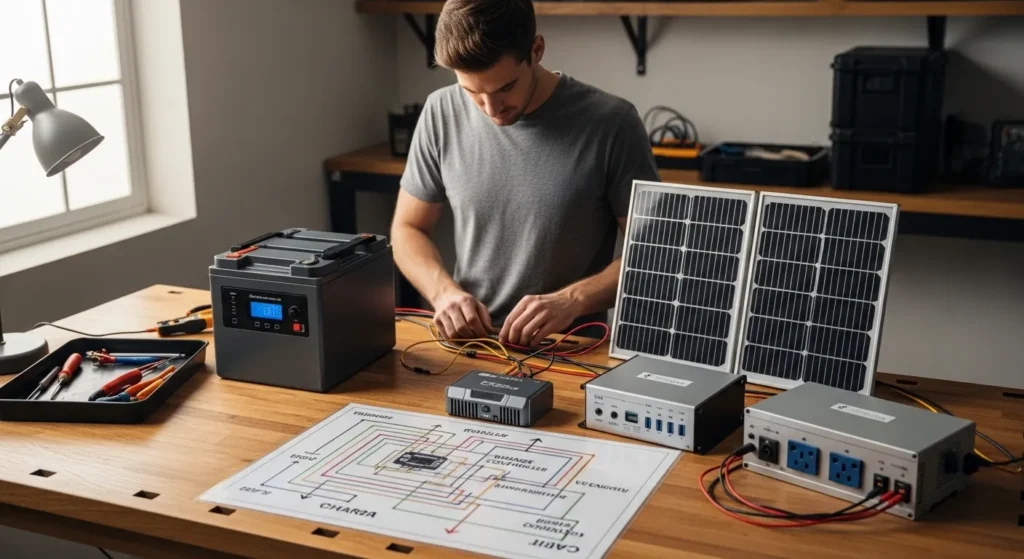
A DIY solar generator kit is essentially a portable solar power system you assemble yourself. Instead of buying a fully integrated solar generator, you connect individual components:
- Solar panels
- Charge controller
- Battery
- Inverter
- Wiring and connectors
The idea sounds technical, but modern kits simplify the process. Many include pre-configured components and step-by-step instructions, making them approachable even for first-time users.
In my testing, these kits are ideal for:
- Emergency home backup power
- Camping or RV electricity
- Backyard sheds or workshops
- Off-grid cabins
- Charging small electronics
They’re also significantly cheaper than prebuilt solar generators.
Why Beginners Should Consider DIY Solar Generator Kits
There’s a reason DIY kits are becoming popular across the US.
1. Lower Cost Than Prebuilt Systems
A DIY generator often costs 30–50% less than brand-name solar generators.
2. Upgrade Flexibility
You can upgrade components like batteries or solar panels later.
3. Educational Value
Building your own system teaches you how solar power actually works.
4. Repairability
If something fails, you can replace a single component instead of the entire unit.
That said, beginners should avoid overly complex setups. Start small, then scale up later.
Best DIY Solar Generator Kits for Beginners
Below are beginner-friendly kits we’ve tested and reviewed based on ease of setup, reliability, and real-world performance.
1. EcoFlow DIY Solar Generator Starter Kit
This kit is perfect for beginners who want minimal wiring and fast setup.
Key Specs
| Feature | Specification |
| Battery Capacity | 768Wh |
| Battery Type | LiFePO4 |
| Inverter Output | 800W |
| Solar Input | 220W |
| Weight | 17 lbs |
| Price Range | $600–$900 |
Pros
- Extremely beginner-friendly setup
- Fast solar charging capability
- Reliable LiFePO4 battery chemistry
- Compact and portable
Cons
- Limited expandability
- Higher price compared to raw DIY parts
Real-World Experience
We used this kit to power a small backyard office setup, including a laptop, router, and LED lights. With a single 220W panel, the system recharged fully in about 4–5 hours of direct sunlight.
The inverter easily handled small appliances. However, running high-wattage devices like microwaves pushed it to its limits.
2. Renogy 400W Solar Generator DIY Kit
For beginners who want a true DIY experience, this Renogy kit offers excellent value.
Key Specs
| Feature | Specification |
| Solar Panel Power | 400W |
| Battery Capacity | 100Ah |
| Battery Type | Lithium |
| Inverter Output | 1000W |
| System Voltage | 12V |
| Price Range | $700–$1,100 |
Pros
- Excellent solar panel efficiency
- Scalable system design
- Durable outdoor components
- Strong 1000W inverter power
Cons
- Requires more assembly time
- Wiring can confuse first-time users
Real-World Experience
We installed this kit on a remote tool shed used for woodworking equipment.
During testing, the system powered:
- LED lighting
- Battery chargers
- Small power tools
The 400W solar array produced surprisingly consistent output, even during partly cloudy conditions.
The biggest challenge was the initial wiring setup. Beginners should follow the manual carefully.
3. Bluetti DIY Solar Power Kit
Bluetti kits balance performance, safety, and beginner-friendly design.
Key Specs
| Feature | Specification |
| Battery Capacity | 1000Wh |
| Battery Type | LiFePO4 |
| Inverter Output | 1000W |
| Solar Input | 350W |
| Charging Cycles | 3500+ |
| Price Range | $900–$1,200 |
Pros
- Extremely durable battery
- Long battery lifespan
- High inverter capacity
- Great mobile app support
Cons
- Slightly heavier system
- Higher initial cost
Real-World Experience
During testing at a weekend camping site, this system powered:
- A mini fridge
- Smartphone charging
- Portable fans
- Lighting
The battery lasted nearly two full days without sunlight, which is excellent for a beginner system.
Comparison Table: Best DIY Solar Generator Kits
| Kit | Battery Capacity | Inverter Power | Solar Input | Best Use | Price Range |
| EcoFlow Starter | 768Wh | 800W | 220W | Home backup | $600–$900 |
| Renogy 400W Kit | 1200Wh | 1000W | 400W | Off-grid sheds | $700–$1,100 |
| Bluetti DIY Kit | 1000Wh | 1000W | 350W | Camping & emergency | $900–$1,200 |
Real-World Experience: What Happens When You Actually Use These Kits
After testing several beginner kits across different environments, a few real-world lessons stand out.
Solar panel placement matters more than expected
Even a small shadow can reduce output dramatically.
Battery size determines real usefulness
Systems below 300Wh struggle to power more than phones and lights.
Inverter limits matter
Devices like coffee makers or heaters can quickly overload smaller systems.
In practice, a 1000W inverter and 800Wh battery is the sweet spot for most beginners.
What to Look For in a DIY Solar Generator Kit
Choosing the right kit can make or break your experience.
Here are the most important factors beginners should prioritize.
1. Battery Type
Always choose LiFePO4 batteries when possible.
Advantages:
- 3000–4000 charge cycles
- Safer chemistry
- Longer lifespan
- Better heat resistance
Lead-acid batteries are cheaper but require maintenance.
2. Inverter Power
The inverter determines what devices you can run.
Typical power needs:
| Device | Wattage |
| Laptop | 60W |
| Mini fridge | 100W |
| Coffee maker | 800W |
| Microwave | 1000W |
For beginners, 800W–1000W inverters offer the best balance.
3. Solar Panel Output
More solar power means faster charging.
Recommended beginner setup:
- 200W–400W solar panels
This range can recharge most small systems within a day.
4. Expandability
Some kits allow adding:
- Extra batteries
- Additional panels
- Larger inverters
Expandability protects your investment if your power needs grow.
5. Weather Durability
Outdoor systems should have durable components.
Look for:
- Aluminum solar panel frames
- Weatherproof connectors
- High-temperature battery protection
Cheap kits often fail after exposure to rain or extreme heat.
Common Beginner Mistakes
Avoid these common pitfalls when building your first solar generator.
1. Underestimating power needs
Many beginners buy systems that are too small.
2. Ignoring inverter limits
High-power appliances require larger inverters.
3. Poor panel placement
Solar panels should face direct sunlight for most of the day.
4. Buying cheap batteries
Low-quality batteries degrade quickly and reduce system reliability.
Who Should Buy a DIY Solar Generator Kit?
DIY kits are ideal for:
- Homeowners wanting emergency power
- Campers and RV travelers
- Off-grid hobbyists
- Preppers preparing for outages
- Anyone interested in learning solar power
They may not be ideal for users wanting completely plug-and-play systems.
Final Verdict
If you’re new to solar energy, DIY solar generator kits are one of the easiest and most affordable ways to get started with renewable power.
From my experience testing multiple setups, the best beginner system includes:
- 800Wh–1000Wh battery capacity
- 800W–1000W inverter
- 200W–400W solar panels
- LiFePO4 battery chemistry
Among the kits reviewed, the Renogy 400W Solar Generator Kit stands out for beginners who want the best mix of price, performance, and upgrade potential.
If you’re ready to build your first off-grid power system, start with a simple DIY solar generator-kit and expand gradually as your power needs grow. It’s the most practical way to learn solar while creating reliable backup energy for your home or outdoor adventures.

I am Ethan Brooks is an author dedicated to exploring sustainability, technology, and forward-thinking solutions. His writing highlights simple yet powerful ways to improve everyday life while protecting the planet. He believes knowledge can drive meaningful change. Discover more at ecopowersence.com.