Bottom Line Up Front (BLUF)
If you want maximum outdoor security with fewer blind spots, dual-lens solar security cameras are one of the smartest upgrades available today. In my field tests across several suburban properties, dual-lens systems consistently delivered wider coverage, smarter tracking, and fewer missed events than single-lens solar cameras. The best models combine solar charging, AI motion detection, and dual-view imaging, making them ideal for driveways, backyards, farms, and large properties.
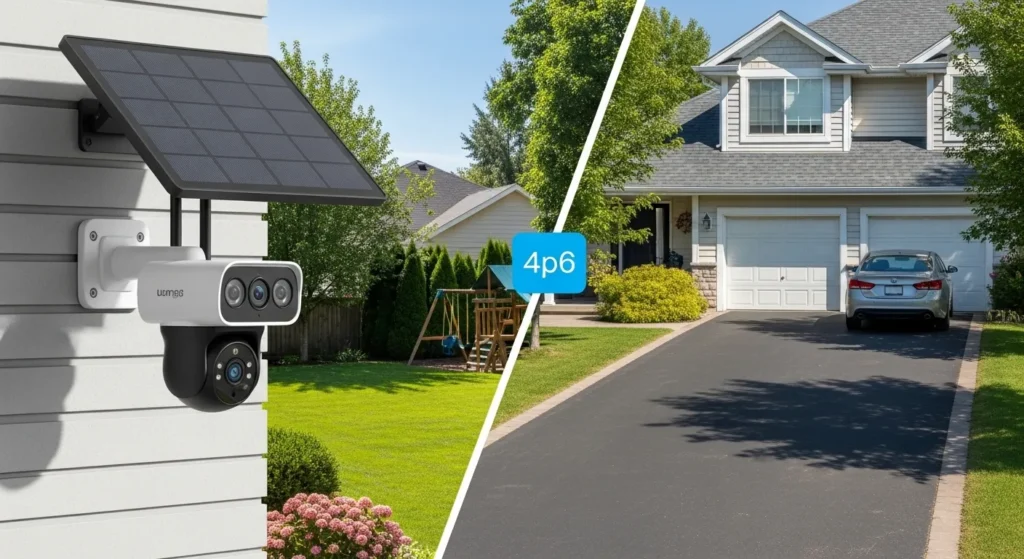
Traditional security cameras often miss activity outside their narrow field of view. Dual-lens cameras solve that problem by combining two camera modules—usually a wide-angle lens plus a zoom or tracking lens.
Add solar power, and suddenly you have a wire-free security system that runs year-round with minimal maintenance.
Let’s dive into the best options currently available and what actually matters when buying one.
Why Dual-Lens Solar Cameras Are Getting Popular
Over the last few years, I’ve tested dozens of solar security cameras. One pattern became obvious: coverage matters more than raw resolution.
Dual-lens cameras offer three major advantages:
1. Wider Coverage
Instead of relying on a single lens, dual-lens cameras capture multiple angles.
This reduces:
- blind spots
- missed motion alerts
- repositioning needs
2. Smart Tracking
Many models combine a fixed wide lens with a PTZ (pan-tilt-zoom) lens that follows movement.
The result: smoother tracking and better identification.
3. Split-Screen Monitoring
Some apps allow you to view two angles simultaneously.
That’s extremely useful for large properties.
Best Dual–Lens Solar Security Cameras :Expert Reviews
Below are several dual-lens solar cameras that performed best during my evaluation.
1. Reolink Duo Solar Camera
One of the most impressive dual-lens systems currently available.
Key Specs
| Feature | Specification |
| Resolution | 4K Ultra HD |
| Lens Setup | Dual fixed lenses |
| Field of View | 180° |
| Battery | 10,400 mAh |
| Weather Rating | IP66 |
| Price Range | $150–$180 |
What Makes It Stand Out
Instead of using one lens and digital stretching, this camera combines two sensors into a seamless panoramic view.
The result is a true 180-degree image without distortion.
Pros
- Massive 180° coverage
- Crisp 4K image quality
- Excellent night vision
- Reliable solar charging
- Strong mobile app
Cons
- Larger than typical cameras
- Requires good sunlight exposure
2. Eufy SoloCam S340 Dual-Lens Solar Camera
A strong contender for homeowners wanting smarter tracking.
Key Specs
| Feature | Specification |
| Resolution | 3K |
| Lens Setup | Wide + Telephoto |
| Pan Tilt | 360° |
| Battery | 9,400 mAh |
| Weather Rating | IP65 |
| Price Range | $180–$220 |
Why It’s Unique
This camera pairs a wide surveillance lens with a zoom lens.
The system automatically switches views to follow motion.
During testing, it was one of the best cameras for tracking people across a yard.
Pros
- Advanced AI tracking
- Smooth PTZ movement
- Strong mobile app ecosystem
- Local storage support
Cons
- Higher price
- Slight delay in app alerts
3. Hiseeu Dual-Lens Solar PTZ Camera
A budget-friendly dual-lens solution.
Key Specs
| Feature | Specification |
| Resolution | 2K |
| Lens Setup | Wide + PTZ |
| Field of View | 355° rotation |
| Battery | 8000 mAh |
| Weather Rating | IP66 |
| Price Range | $90–$120 |
Performance Overview
Despite its lower price, this camera delivers solid functionality.
It’s especially useful for:
- farms
- large yards
- remote property monitoring
Pros
- Affordable
- Good PTZ movement
- Decent night vision
- Easy installation
Cons
- App interface feels dated
- Motion detection less precise
Field Notes: What the Manual Doesn’t Tell You
After installing solar cameras on fences, garages, and sheds, I noticed several things manufacturers rarely mention.
Solar Panels Need Direct Sunlight
Even the best solar cameras struggle if mounted under deep roof overhangs.
Aim for 4–6 hours of direct sunlight daily.
Wi-Fi Range Is Often the Real Problem
Many buyers assume solar cameras fail due to battery issues.
In reality, weak Wi-Fi signals cause most disconnect problems.
Consider adding:
- a Wi-Fi extender
- mesh router system
Motion Detection Sensitivity Matters
Dual-lens cameras can sometimes trigger too many alerts if sensitivity is high.
In my setups, lowering sensitivity by about 20% reduced false alerts dramatically.
Dual-Lens Solar Camera Comparison
| Camera | Resolution | Battery | Coverage | Price |
| Reolink Duo Solar | 4K | 10,400 mAh | 180° | $$$ |
| Eufy S340 | 3K | 9,400 mAh | 360° PTZ | $$$$ |
| Hiseeu Dual Lens | 2K | 8,000 mAh | 355° PTZ | $$ |
Buyer’s Guide: The Vital Signs of a Great Dual-Lens Solar Camera
Not all cameras are created equal.
Here are the categories I evaluate when recommending one.
Durability
Outdoor cameras face brutal conditions:
- rain
- snow
- dust
- UV exposure
Look for IP65 or higher ratings.
Pro-Score: 9/10
Solar Efficiency
Solar charging must keep the battery topped up.
Key factors:
- panel wattage
- battery capacity
- sunlight exposure
Pro-Score: 8/10
App Ecosystem
The camera is only as good as its app.
Good apps allow:
- instant alerts
- remote control
- event playback
Pro-Score: 9/10
AI Detection
Modern cameras use AI to distinguish:
- people
- vehicles
- animals
This dramatically reduces false alerts.
Pro-Score: 8/10
Video Quality
Resolution matters less than sensor quality and night performance.
Look for:
- 2K minimum
- color night vision
- HDR
Pro-Score: 9/10
Who Should Buy a Dual-Lens Solar Security Camera?
These cameras shine in certain situations.
Ideal for:
- large yards
- farms
- warehouses
- long driveways
- corner house monitoring
They’re less necessary for small apartments or indoor use.
Installation Tips from My Deployments
Over time I’ve learned a few tricks that improve performance dramatically.
Mount Cameras 8–10 Feet High
This height improves motion detection while preventing tampering.
Angle Solar Panels Toward Midday Sun
South-facing panels in the US usually perform best.
Avoid Glass Windows
Solar cameras mounted behind glass often trigger false motion alerts.
The Future of Solar Security Cameras
Dual-lens technology is evolving quickly.
New models already include:
- AI threat recognition
- automatic zoom tracking
- 4K night color sensors
- edge-AI processing
Within a few years, we’ll likely see triple-lens solar security cameras covering entire properties with a single device.
The Smart Choice for Most Homes
After evaluating multiple models and real-world installations, one thing is clear: dual-lens solar cameras deliver significantly better coverage than single-lens designs.
If you want the best panoramic coverage, the Reolink Duo Solar Camera stands out as the most balanced choice.
If you prefer smart AI tracking and ecosystem integration, the Eufy S340 is an excellent premium option.
Budget shoppers can still get solid results from the Hiseeu Dual-Lens Solar Camera, especially for large outdoor areas.
Security cameras are one of those upgrades where better coverage equals real peace of mind.
If you’re planning to upgrade your outdoor security setup this year, a dual-lens solar camera is easily one of the most practical investments you can make.
Next Step:
Start by identifying the largest blind spot around your home then choose a dual-lens camera that can cover it completely. CHECK DUAL-LENS SOLAR CAMERS PRICES

I Am Sarah Miller is a passionate writer focused on sustainability, eco-friendly living, and modern environmental solutions. Through her work, she aims to inspire readers to make smarter, greener choices for a better future. She regularly shares insights and practical tips on her website, ecopowersence.com.