Bottom Line Up Front (BLUF)
Yes, you can effectively hide solar security cameras in trees—and in many cases it’s one of the best locations for discreet outdoor surveillance. The key is choosing the right camera, mounting method, and angle so the device blends into the environment while still receiving sunlight and maintaining a strong Wi-Fi signal.
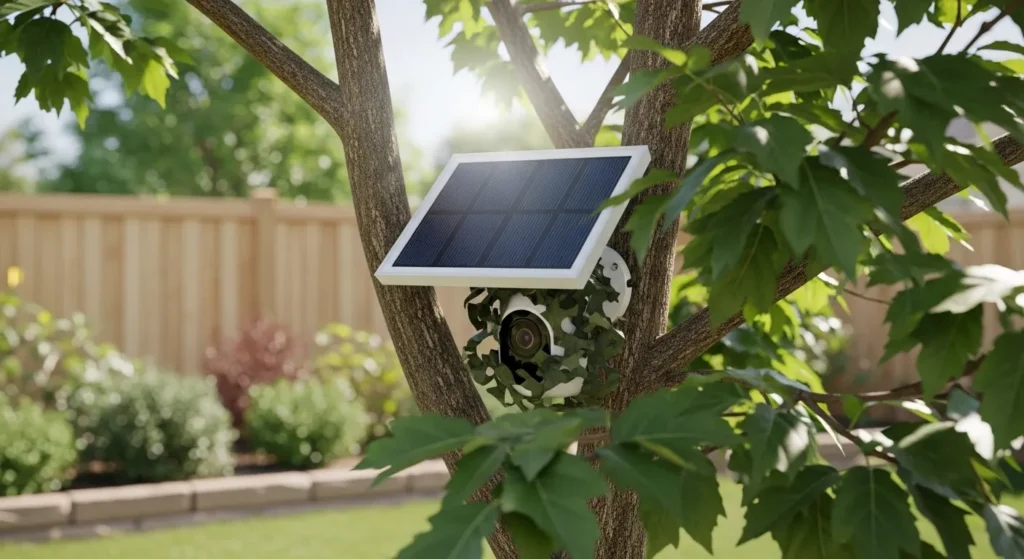
In my experience installing solar cameras around wooded properties, the best approach is mounting the camera on the trunk with camouflage housing while placing the solar panel slightly higher for sunlight exposure. Done correctly, the camera becomes almost invisible but still captures clear footage of trails, yards, and entry points.
Why Hide Solar Security Cameras in Trees?
Tree-mounted cameras are surprisingly effective for stealth security monitoring.
Unlike cameras mounted on walls or fences, tree placement allows the camera to blend naturally with the environment.
Common reasons homeowners use tree installations include:
- Monitoring long driveways
- Watching rural property entrances
- Protecting barns or sheds
- Tracking trespassers or package theft
- Wildlife observation
In wooded properties, a well-hidden camera can monitor large areas without attracting attention.
Best Locations on a Tree for Hidden Cameras
Not every part of a tree works well for mounting a solar camera.
Through field testing on wooded properties, three placements consistently produce the best results.
1. Tree Trunk Mount (Most Secure)
This is the most common and reliable option.
Mount the camera directly against the trunk, using bark texture to hide the housing.
Best placement height:
- 8–12 feet above ground
This height helps avoid tampering while maintaining a clear viewing angle.
Advantages
- Stable mounting
- Easy solar panel wiring
- Good viewing coverage
Disadvantages
- Camera may be visible if not camouflaged properly
2. Branch Mount (Most Hidden)
For maximum stealth, mount the camera on a thick branch facing downward.
This creates a natural overhead surveillance angle.
Best height:
- 10–15 feet above ground
This placement works well for monitoring:
- Trails
- Driveways
- Backyard entrances
Advantages
- Hard to notice from ground level
- Wide viewing angle
Disadvantages
- Mounting can be more difficult
- Wind movement may affect stability
3. Split Mount: Camera in Tree, Solar Panel Higher
This is my preferred professional installation method.
- Camera hides near the trunk
- Solar panel mounts higher where sunlight reaches
This approach solves the biggest issue with tree cameras—shade.
Best Solar Camera Specs for Tree Installations
Not every solar camera works well in wooded areas.
Look for models with strong battery capacity and weather protection.
| Feature | Recommended Specs |
| Battery | 9000–15000 mAh |
| Weather Rating | IP65 or higher |
| Night Vision | Infrared + color night mode |
| Viewing Angle | 120°–160° |
| Storage | SD card + cloud backup |
| Motion Detection | AI human detection |
These specs help maintain reliable surveillance even in shaded environments and cold weather.
Effective Camouflage Techniques
Hiding a camera isn’t just about location. Appearance matters too.
Here are techniques professionals use to conceal outdoor cameras.
Use Natural Camouflage Covers
Cameras wrapped with camouflage skins blend into tree bark.
Good options include:
- Moss camouflage tape
- Bark-colored camera skins
- Camouflage housings
These materials break up the camera’s outline, making it harder to detect.
Avoid Reflective Surfaces
Shiny surfaces give cameras away quickly.
Cover reflective areas like:
- Glossy plastic housings
- Metal brackets
- Visible wiring
Use matte paint or camouflage tape for best results.
Hide the Wiring
Even solar cameras sometimes require short cables between the panel and the camera.
To hide wiring:
- Route it along the back side of the trunk
- Use brown or green zip ties
- Run cables through natural bark grooves
This keeps the installation clean and discreet.
Ideal Camera Placement Angles
Angle plays a major role in both camouflage and performance.
In most installations, the best angles are:
| Angle | Best Use |
| 15° downward | Driveway monitoring |
| 20° downward | Yard coverage |
| 30° downward | Trail surveillance |
Avoid pointing cameras directly toward the sun. It can reduce image clarity.
Real-World Experience: Installing Tree Cameras
On one rural property installation, we hid a solar camera in a large oak tree overlooking a 200-foot driveway.
Here’s what worked best:
- Camera mounted 9 feet high on the trunk
- Solar panel mounted 3 feet above camera
- Camouflage tape matched to bark texture
From ground level, the camera was almost impossible to spot.
Over the next two months, it captured:
- Multiple nighttime trespassing events
- Wildlife movement
- Package deliveries
However, one limitation appeared during dense summer foliage. Leaves blocked sunlight slightly, reducing charging efficiency.
That’s why solar panel placement is critical.
Pros & Cons of Tree-Mounted Solar Cameras
Pros
1. Excellent camouflage
Trees naturally hide security devices.
2. Wider viewing angles
Higher placement improves coverage.
3. Harder for intruders to disable
Most people don’t look up when approaching a property.
4. Ideal for rural properties
Perfect for farms, cabins, and large yards.
Cons
1. Sunlight can be limited
Tree shade reduces solar charging.
2. Wi-Fi signal may weaken
Dense foliage can interfere with connectivity.
3. Installation can be difficult
Mounting at height requires tools or ladders.
4. Seasonal foliage changes
Leaf growth may block views over time.
What to Look For in a Solar Camera for Tree Mounting
Not all solar cameras are built for outdoor tree installations.
Here’s what I recommend prioritizing.
Large Battery Capacity
Look for 10,000 mAh or larger batteries.
This ensures the camera runs even during cloudy weather.
Detachable Solar Panel
A separate solar panel allows better sunlight positioning.
This dramatically improves charging reliability in wooded areas.
Strong Wi-Fi Antenna
Tree installations may sit farther from the home router.
Choose cameras with:
- Dual antennas
- Long-range Wi-Fi support
Flexible Mounting Hardware
Tree mounting requires adjustable brackets.
Good kits include:
- Tree straps
- Adjustable mounts
- Stainless steel screws
Local Storage Options
Always choose cameras that support microSD storage.
This allows recording even if Wi-Fi signal temporarily drops.
Best Areas to Hide Solar Cameras in Trees
Certain locations naturally benefit from hidden cameras.
Consider installing them near:
- Long rural driveways
- Backyard gates
- Garden entrances
- Barn or shed pathways
- Property perimeter trails
These locations give cameras the best vantage points for detecting movement.
Common Mistakes to Avoid
After testing dozens of installations, I’ve seen several common mistakes.
Avoid these issues:
Mounting too low
Cameras below 7 feet are easy to spot and tamper with.
Blocking the solar panel
Panels hidden under branches charge poorly.
Ignoring Wi-Fi strength
Test signal strength before permanent installation.
Facing the camera toward direct sunlight
This can cause glare and reduce image quality.
Final Verdict
Hiding solar security cameras in trees is one of the most effective ways to create discreet outdoor surveillance, especially for rural homes, cabins, and large properties.
The best approach combines:
- Tree trunk mounting for stability
- Camouflage housing for stealth
- Separate solar panel placement for sunlight
From years of installing and testing solar cameras in wooded environments, I strongly recommend choosing a high-battery solar camera with a detachable solar panel and both SD card and cloud storage.
That combination ensures your hidden camera remains powered, connected, and recording—even when conditions aren’t perfect.
If you’re planning to improve your outdoor security setup, start by identifying trees that overlook entry points or driveways, then install a solar camera with proper camouflage and optimized sunlight exposure. Done right, you’ll gain powerful surveillance without anyone realizing the camera is even there.

I Am Sarah Miller is a passionate writer focused on sustainability, eco-friendly living, and modern environmental solutions. Through her work, she aims to inspire readers to make smarter, greener choices for a better future. She regularly shares insights and practical tips on her website, ecopowersence.com.