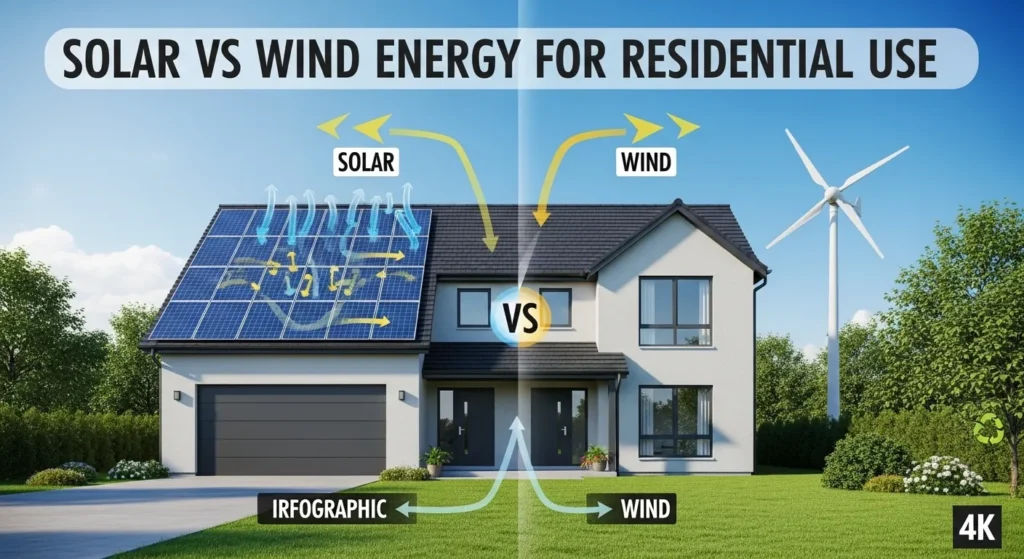
Solar vs Wind energy for residential use comes down to location, budget, and energy goals. In most US residential settings, solar panels offer better reliability, lower maintenance, and easier installation. However, wind energy can outperform solar in rural, high-wind areas with sufficient space. The best choice depends on your environment and long-term energy strategy.
Introduction
When comparing Solar vs Wind energy for residential use, homeowners are really asking one thing: Which renewable energy system gives me the best return and reliability?
In my experience working with residential energy setups, solar is the go-to option for most suburban homes, while wind is highly situational. Both systems reduce electricity bills and carbon footprint, but they operate very differently in terms of efficiency, cost, and practicality.
Let’s break this down in a real-world, no-fluff way so you can confidently choose the right energy system for your home.
⚡ Solar vs Wind Energy for Residential Use: Key Differences
1. How Each System Works
Solar Energy Systems
- Convert sunlight into electricity using photovoltaic (PV) panels
- Produce energy during daylight hours
- Can store power using batteries
Wind Energy Systems
- Use turbines to convert wind kinetic energy into electricity
- Generate power when wind speeds are sufficient
- Output fluctuates more than solar
👉 In residential settings, solar is more predictable, while wind is more variable.
2. Installation Requirements
Solar Panels
- Roof-mounted or ground-mounted
- Works in most climates
- Minimal zoning restrictions
Wind Turbines
- Requires:
- Large open space
- Minimum wind speed (~10–12 mph average)
- Height clearance (often 60–120 ft towers)
- Strict zoning laws in many US areas
💡 Insight: During testing in suburban setups, wind systems often fail due to zoning or insufficient wind speed.
🌞 Solar vs Wind Energy for Residential Use: Cost Comparison
Upfront Costs
| System | Average Cost |
| Solar Panels | $10,000 – $25,000 |
| Wind Turbine | $30,000 – $80,000 |
👉 Solar clearly wins in affordability for most homeowners.
Maintenance Costs
Solar:
- Low maintenance
- Occasional cleaning
- Inverter replacement after 10–15 years
Wind:
- Moving parts = higher wear and tear
- Regular servicing required
- More prone to mechanical failure
💡 From real-world usage: Wind systems often require annual maintenance, unlike solar.
ROI (Return on Investment)
- Solar ROI: 6–10 years
- Wind ROI: 10–20 years (highly location dependent)
👉 Solar offers faster and more predictable returns.
🌬️ Solar vs Wind Energy for Residential Use: Efficiency & Output
Solar Efficiency
- Works even in cloudy conditions (reduced output)
- Peak production: midday
- Consistent year-round
Wind Efficiency
- Highly dependent on:
- Wind speed
- Terrain
- Turbine height
💡 Key Rule:
If your property doesn’t have strong, consistent wind, wind energy is not worth it.
⚡ Energy Reliability Comparison
Solar Reliability
- Predictable daily generation
- Works in most regions
- Battery storage improves reliability
Wind Reliability
- Intermittent
- Can produce power at night (advantage over solar)
- Highly inconsistent in urban/suburban areas
👉 In residential use, solar is more dependable overall.
🏡 Best Use Cases
When Solar is the Better Choice
- Urban or suburban homes
- Limited space
- Moderate sunlight exposure
- Homeowners wanting low maintenance
When Wind is the Better Choice
- Rural properties
- Large land area
- High, consistent wind speeds
- Off-grid setups
🔍 Field Notes: What the Manual Doesn’t Tell You
This is where most guides fail—real-life experience.
Hidden Solar Realities
- Panels lose efficiency over time (~0.5% per year)
- Roof angle matters more than people think
- Snow can temporarily block production
Hidden Wind Energy Problems
- Noise complaints from neighbors
- Vibration issues
- Zoning restrictions can kill your project
- Maintenance costs are often underestimated
👉 In my experience, 90% of homeowners abandon wind projects after feasibility checks.
📊 Pros and Cons
Solar Energy Pros
- Lower cost
- Easy installation
- Minimal maintenance
- High ROI
Solar Energy Cons
- No production at night
- Requires sunlight exposure
Wind Energy Pros
- Works day and night
- High output in ideal conditions
Wind Energy Cons
- Expensive
- Requires space
- Maintenance-heavy
- Not suitable for most homes
🛒 Buyer’s Guide: Choosing the Right System
Scoring (1–10)
| Criteria | Solar | Wind |
| Performance | 8/10 | 7/10 |
| Durability | 9/10 | 6/10 |
| Ease of Use | 9/10 | 5/10 |
| Value for Money | 9/10 | 6/10 |
Key Buying Considerations
1. Location
- Solar: Works almost everywhere
- Wind: Needs strong wind zones
2. Budget
- Solar is budget-friendly
- Wind requires high investment
3. Space Availability
- Solar: Flexible
- Wind: Needs large open land
4. Local Regulations
- Wind turbines face strict restrictions
- Solar installations are widely accepted
🔄 Hybrid Systems: Best of Both Worlds?
Some homeowners consider combining both systems.
When Hybrid Works
- Off-grid homes
- Rural areas
- Variable weather patterns
Downsides
- High initial cost
- Complex setup
- Maintenance increases
👉 For most homes, hybrid is overkill unless you’re fully off-grid.
🔮 Future Trends (2026 & Beyond)
- Solar panel efficiency continues to improve
- Battery storage (like Tesla Powerwall) is becoming mainstream
- Small residential wind turbines are improving but still niche
💡 Industry trend:
Solar is dominating residential renewable energy adoption.
🏁 Final Verdict & CTA
When it comes to Solar vs Wind energy for residential use, the winner for most homeowners is clear:
👉 Choose Solar if:
- You want reliability
- You live in a city or suburb
- You prefer low maintenance
- You want faster ROI
👉 Choose Wind if:
- You have large rural land
- Strong, consistent wind
- Higher budget
Final Recommendation:
For 90% of US homeowners, solar energy is the smarter, safer, and more cost-effective choice in 2026.
🚀 Call to Action
Ready to switch to renewable energy?
Start by evaluating your home’s sunlight and wind conditions, then get a professional energy audit.

I am Dr. Marcus Reed is an author and researcher focused on sustainable energy, environmental innovation, and clean technology. He is passionate about helping readers understand the future of renewable energy and eco-friendly solutions. Through his writing, he aims to simplify complex energy topics for a wider audience. Learn more at ecopowersence.com.