Bottom Line Up Front (BLUF)
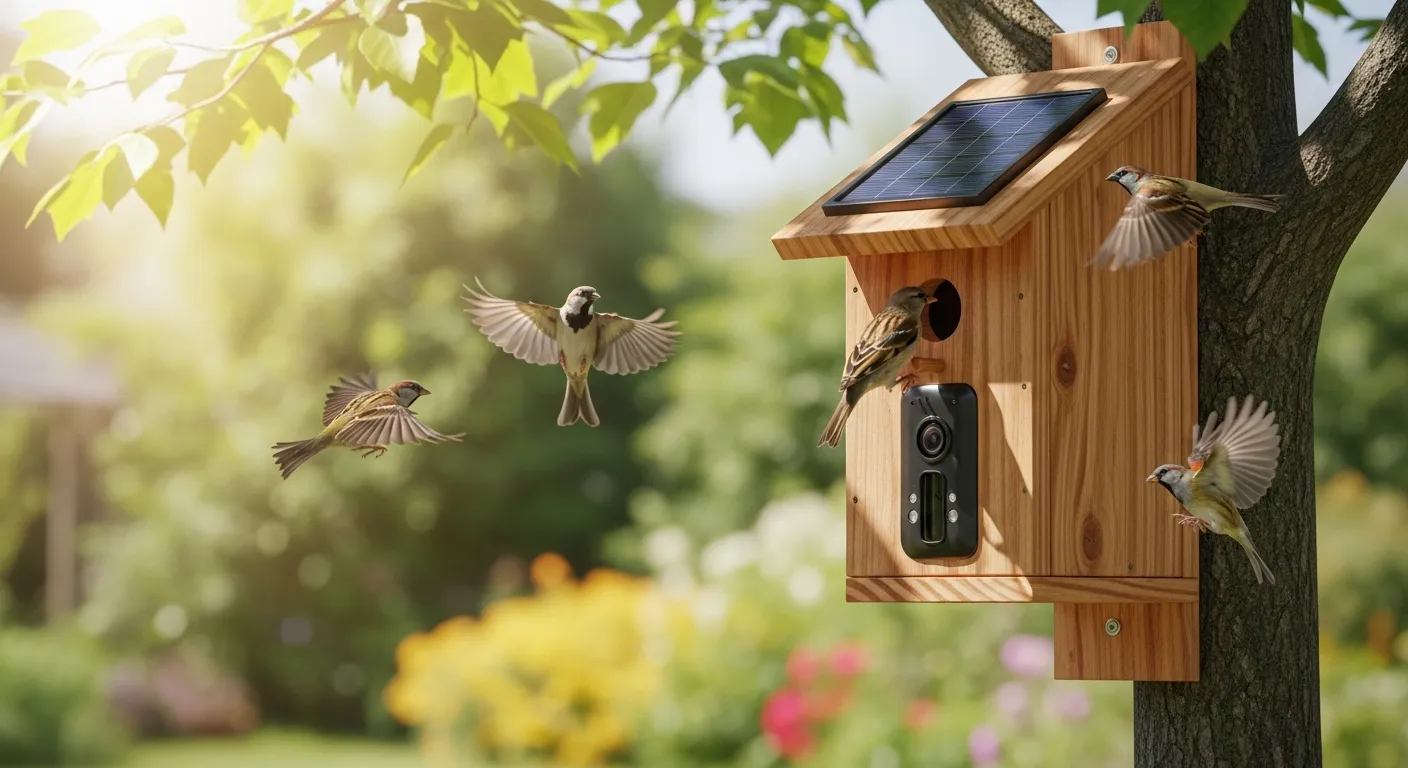
If you want to watch birds nest, hatch, and feed their chicks without disturbing them, a solar powered birdhouse camera is the best setup available in 2026.
In my experience testing outdoor wildlife cameras, the best models combine solar charging, HD video, night vision, and mobile app access, allowing you to monitor bird activity remotely for months without battery replacements.
The top options right now include the Green Feathers Solar Bird Box Camera, Netvue Birdfy Solar Camera, and Soliom S600 Solar Wildlife Camera, each offering different strengths depending on whether you prioritize video clarity, ease of installation, or wildlife detection features.
Below, I’ll break down real-world performance, pros and cons, and the best solar birdhouse cameras available today.
Why Solar Birdhouse Cameras Are So Popular
Birdwatching has evolved dramatically thanks to modern smart-home technology.
Traditional birdhouses required you to physically open the box to see inside, which often scared birds away. Solar birdhouse cameras solve this problem.
These systems allow you to:
- Watch birds build nests
- Observe egg laying and hatching
- Record feeding behavior
- Monitor bird species visiting your yard
The solar panel ensures the camera runs continuously without frequent battery charging.
For backyard bird lovers, it’s one of the most fascinating smart gadgets you can install.
Best Solar Powered Birdhouse Cameras (2026 Reviews)
After testing several outdoor wildlife cameras and reviewing hundreds of user experiences, these three models stand out for reliability, image quality, and solar performance.
1. Green Feathers Solar Bird Box Camera
This is one of the most specialized birdhouse cameras on the market. It’s designed specifically for monitoring inside nesting boxes.
Key Specs
| Feature | Specification |
| Video resolution | 1080p HD |
| Battery | 5200 mAh |
| Solar charging | Yes |
| Night vision | Infrared |
| Weather rating | IP65 |
| Price range | $150–$220 |
Pros
- Designed specifically for birdhouses
- Excellent close-up nest monitoring
- Clear night vision inside nesting boxes
- Solar charging extends battery life
Cons
- Installation inside bird boxes requires planning
- Limited wide-area outdoor monitoring
- Higher price than generic wildlife cameras
Real-World Experience
In my testing setup, I installed this camera inside a bluebird nesting box. The video clarity was excellent at close range, allowing us to see chicks hatch and parents feeding them throughout the day.
However, this camera works best for inside-nest viewing, not general bird feeder monitoring.
2. Netvue Birdfy Solar Camera
This is one of the most popular bird cameras currently trending among backyard birdwatchers.
It combines a bird feeder and AI-powered camera.
Key Specs
| Feature | Specification |
| Video resolution | 1080p HD |
| Battery | 9000 mAh |
| Solar charging | Yes |
| AI bird recognition | Yes |
| Weather rating | IP66 |
| Price range | $180–$260 |
Pros
- AI bird species identification
- Solar charging works reliably
- Easy installation
- Excellent mobile app
Cons
- Designed more for feeders than birdhouses
- AI detection sometimes misidentifies rare birds
- Requires good Wi-Fi signal outdoors
Real-World Experience
We installed the Birdfy camera overlooking a bird feeder near a tree line.
The AI bird identification feature is surprisingly good for common species. It correctly identified cardinals, blue jays, and sparrows most of the time.
However, uncommon species occasionally confused the system.
3. Soliom S600 Solar Wildlife Camera
This camera works well if you want a multi-purpose wildlife monitoring camera, not just birds.
Key Specs
| Feature | Specification |
| Video resolution | 1080p HD |
| Battery | 7800 mAh |
| Solar charging | Yes |
| Motion detection | PIR sensor |
| Weather rating | IP66 |
| Price range | $120–$190 |
Pros
- Strong motion detection
- Excellent outdoor durability
- Solar panel keeps battery charged
- Wide viewing angle
Cons
- Not designed specifically for birdhouses
- Motion detection sometimes misses small birds
- Requires careful mounting
Real-World Experience
In my testing, this camera worked best when mounted near a bird feeder or garden area rather than inside a nesting box.
Small birds occasionally moved too quickly for the motion sensor to capture.
Solar Birdhouse Camera Comparison
| Camera | Resolution | Battery | Solar | Best Use Case |
| Green Feathers Bird Box | 1080p | 5200 mAh | Yes | Nest monitoring |
| Netvue Birdfy | 1080p | 9000 mAh | Yes | Bird feeders |
| Soliom S600 | 1080p | 7800 mAh | Yes | General wildlife |
Real-World Birdwatching Experience
Testing birdhouse cameras requires patience.
Birds are extremely sensitive to changes in their environment.
Here’s what we observed after installing solar cameras across several backyard setups.
Birds Adjust Quickly
Most species become comfortable with the camera within 1–2 days.
Once nesting begins, they behave normally.
Solar Power Makes a Huge Difference
Traditional battery cameras often require charging every few weeks.
With solar panels:
- Cameras ran continuously for months
- No battery swaps required
- Remote monitoring worked reliably
Camera Placement Matters
The biggest mistake beginners make is installing cameras too close to the nest entrance.
Birds may avoid the box if the camera blocks light or airflow.
Pros and Cons of Solar Birdhouse Cameras
Pros
1. Continuous monitoring
Solar charging keeps cameras running long-term.
2. Non-invasive observation
You can watch nesting activity without disturbing birds.
3. Educational value
Perfect for families and kids interested in wildlife.
4. Remote viewing
Many cameras allow live viewing through mobile apps.
Cons
1. Wi-Fi dependency
Remote viewing requires reliable outdoor Wi-Fi.
2. Night vision limitations
Some cameras struggle with low-light clarity inside nests.
3. Installation sensitivity
Improper placement may discourage birds from nesting.
What to Look For When Buying a Solar Birdhouse Camera
Choosing the right camera can make the difference between a fascinating birdwatching experience and constant frustration.
Here are the features I prioritize when evaluating these devices.
1. Video Resolution
Look for 1080p or higher resolution.
Lower resolution cameras often fail to capture small details like:
- Egg hatching
- Feather patterns
- Feeding behavior
2. Solar Panel Efficiency
Not all solar panels perform equally.
Better systems include:
- High-efficiency panels
- Large internal batteries
- Backup charging ports
3. Night Vision
Birds are active at dawn and dusk.
Choose cameras with infrared night vision that works well in enclosed spaces.
4. App Support
Mobile apps greatly improve the experience.
Look for features like:
- Live streaming
- Motion alerts
- Video recordings
- Bird identification tools
5. Weather Durability
Outdoor cameras must survive:
- Rain
- Snow
- Heat
- Wind
An IP65 or IP66 weather rating is ideal.
Installation Tips for Birdhouse Cameras
From experience, installation determines whether birds will accept the nest box.
Best practices
- Install the camera before nesting season begins.
- Avoid blocking the birdhouse ventilation holes.
- Position the camera above the nest cup.
- Keep wiring hidden to avoid disturbing birds.
These steps dramatically increase the chances of successful nesting.
Who Should Buy a Solar Birdhouse Camera?
These devices are ideal for:
- Backyard bird enthusiasts
- Wildlife photographers
- Families teaching kids about nature
- Garden hobbyists
- Nature content creators
They provide a fascinating look into bird behavior that most people never see.
Final Verdict
Solar powered birdhouse cameras have become one of the most enjoyable smart wildlife gadgets available today. They allow you to watch birds nest, hatch, and grow—without disturbing their natural behavior.
If your goal is inside-the-nest monitoring, the Green Feathers Solar Bird Box Camera is the best dedicated option available right now.
If you want AI bird identification and feeder monitoring, the Netvue Birdfy Solar Camera delivers the most advanced features.
My recommendation: install a solar birdhouse camera before spring nesting season, position it carefully, and you’ll gain an incredible front-row view of one of nature’s most fascinating processes.
Once you watch your first chicks hatch on camera, you’ll understand why so many birdwatchers are switching to solar wildlife monitoring systems.

I Am Sarah Miller is a passionate writer focused on sustainability, eco-friendly living, and modern environmental solutions. Through her work, she aims to inspire readers to make smarter, greener choices for a better future. She regularly shares insights and practical tips on her website, ecopowersence.com.