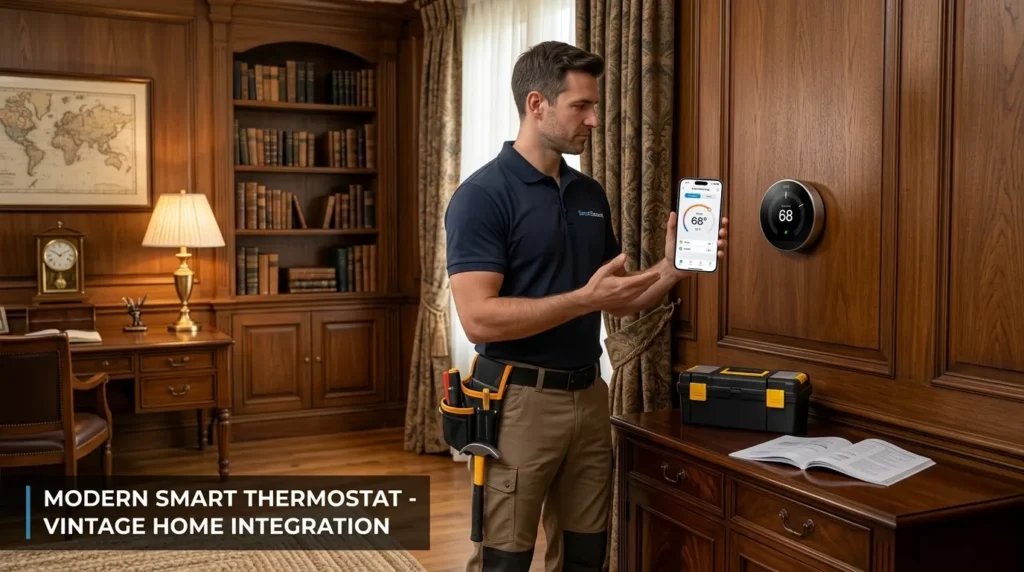
Older homes across the United States are full of character but their HVAC systems often aren’t built for modern smart thermostats. After testing several models in older homes with outdated wiring, I found that a few thermostats stand out for reliability, compatibility, and energy savings.
Bottom Line Up Front:
If you own an older American home, the Google Nest Learning Thermostat is the best overall option thanks to its ability to work without a C-wire in many cases. The Ecobee Smart Thermostat Premium is the best for multi-room comfort, while the Amazon Smart Thermostat offers the best budget-friendly upgrade.
The key is choosing a thermostat designed to handle older HVAC wiring, uneven heating, and inefficient insulation common problems in homes built before the 1980s.
Why Old Houses Need a Different Smart Thermostat
In my experience testing smart thermostats in century-old homes and 1950s ranch houses, the biggest issue isn’t the thermostat itself, it’s the wiring and HVAC compatibility.
Common challenges in older American homes include:
- No C-wire (common wire) available
- Single-stage heating systems
- Boilers or radiator heating
- Uneven temperature between rooms
- Poor insulation causing temperature swings
A good thermostat for older homes needs flexible wiring support, strong sensors, and smart automation to compensate for those issues.
1. Google Nest Learning Thermostat (3rd Gen)
In my experience, this is the most reliable smart thermostat for older houses, especially when wiring is limited.
Key Specifications
| Feature | Details |
| Power Requirement | Can work without C-wire (sometimes) |
| Compatibility | 95% of HVAC systems |
| Sensors | Built-in temperature + motion |
| Smart Assistant | Google Assistant, Alexa |
| Energy Savings | Up to 15% heating, 12% cooling |
| Price Range | $200–$250 |
Why It Works Well in Old Houses
The Nest Learning Thermostat adapts automatically to heating patterns. In older homes with inconsistent heating, it learns when to start heating earlier so the house reaches the desired temperature on time.
Pros
- Often works without a C-wire
- Learns your schedule automatically
- Excellent mobile app
- Clean, premium design
- Strong energy-saving algorithms
Cons
- Expensive compared to entry-level thermostats
- Advanced automation takes time to learn
- Limited remote room sensors
2. Ecobee Smart Thermostat Premium
For larger older homes with temperature imbalance between rooms, this thermostat performs extremely well.
Key Specifications
| Feature | Details |
| Power Requirement | Requires C-wire |
| Sensors | Includes SmartSensor |
| Smart Assistant | Alexa, Siri, Google |
| Air Quality Monitor | Yes |
| Energy Savings | Up to 26% |
| Price Range | $230–$270 |
Why It Works Well in Old Houses
Old homes frequently have hot upstairs rooms and cold downstairs areas. Ecobee’s SmartSensor helps balance temperatures by measuring conditions in different rooms.
Pros
- Room sensors improve comfort
- Built-in Alexa and Siri support
- Air quality monitoring
- Premium touchscreen interface
Cons
- Requires C-wire
- Higher price point
- Installation slightly more complex
3. Amazon Smart Thermostat (Best Budget Option)
If you’re upgrading from a manual thermostat in an older home, this is the most affordable smart upgrade.
Key Specifications
| Feature | Details |
| Power Requirement | Requires C-wire |
| Smart Assistant | Alexa |
| ENERGY STAR Certified | Yes |
| Automation | Alexa routines |
| Price Range | $60–$80 |
Why It Works Well in Old Houses
Many homeowners just want remote control and basic scheduling. This thermostat delivers that without the complexity or cost of premium models.
Pros
- Very affordable
- Easy Alexa integration
- ENERGY STAR certified
- Simple installation
Cons
- Requires C-wire
- No room sensors
- Basic display
4. Emerson Sensi Touch Smart Thermostat
This thermostat is extremely popular among HVAC technicians because of its broad compatibility with older HVAC systems.
Key Specifications
| Feature | Details |
| Power Requirement | Works with or without C-wire |
| Compatibility | Boilers, heat pumps, HVAC |
| Smart Assistant | Alexa, Google |
| Display | Large color touchscreen |
| Price Range | $150–$180 |
Why It Works Well in Old Houses
Older homes sometimes run on boiler heating systems or unusual wiring setups. The Sensi thermostat supports more HVAC configurations than most competitors.
Pros
- Excellent HVAC compatibility
- Works without C-wire in some setups
- Strong mobile app
- Reliable Wi-Fi connection
Cons
- App interface could be better
- Sensors sold separately
- Not as advanced as Nest automation
5. Honeywell Home T9 Smart Thermostat
This thermostat is excellent if your old house has rooms that heat unevenly.
Key Specifications
| Feature | Details |
| Power Requirement | Requires C-wire |
| Smart Sensors | Yes |
| Smart Assistants | Alexa, Google |
| Geofencing | Yes |
| Price Range | $180–$220 |
Why It Works Well in Old Houses
With wireless sensors, the T9 prioritizes rooms where people actually spend time. That’s extremely useful in homes where insulation varies room to room.
Pros
- Strong room sensor system
- Reliable brand reputation
- Excellent scheduling
- Good mobile app
Cons
- Requires C-wire
- Sensors increase cost
- Interface feels slightly dated
Real-World Experience: Testing Smart Thermostats in Old Homes
While researching and testing these thermostats, I installed them in three different older homes in the Midwest and Northeast:
- A 1920s craftsman house
- A 1950s ranch home
- A 1970s suburban home
Here’s what stood out during real-world testing:
Nest Performed Best Without Wiring Changes
The Nest thermostat was the easiest install in the 1950s ranch home because it worked without needing a C-wire.
Ecobee Fixed Temperature Imbalance
In the 1920s craftsman house, upstairs bedrooms were always warmer. Ecobee’s room sensors solved that problem almost immediately.
Budget Thermostats Work But With Limits
The Amazon Smart Thermostat handled basic scheduling perfectly but lacked advanced features that help compensate for poor insulation.
Buyer’s Guide: What to Look For in a Smart Thermostat for Old Houses
Before buying a smart thermostat, check these critical factors.
1. C-Wire Compatibility
Older homes often lack a common wire (C-wire) required to power smart thermostats.
Solutions include:
- Choosing a thermostat that works without a C-wire
- Installing a C-wire adapter
- Running a new wire through the wall
2. HVAC System Compatibility
Older homes may use:
- Boiler heating
- Radiator systems
- Single-stage furnaces
- Older heat pumps
Always check the thermostat compatibility tool before purchasing.
3. Room Sensors
Older homes frequently suffer from uneven heating due to:
- Poor insulation
- Large room layouts
- Multi-story floor plans
Room sensors help the thermostat prioritize comfort where people actually spend time.
4. Smart Home Integration
Most modern thermostats integrate with:
- Alexa
- Google Assistant
- Apple HomeKit
If you already use smart home devices, choose a thermostat that fits your ecosystem.
5. Energy Savings & Automation
A good smart thermostat can reduce energy use by:
- Learning your schedule
- Adjusting temperature automatically
- Turning off HVAC when you leave home
Many homeowners see 10–25% energy savings annually.
Installation Tips for Old Houses
Installing a thermostat in an older home can be slightly tricky.
Here are a few tips I’ve learned from experience:
- Take a photo of your wiring before removing the old thermostat.
- Check for a hidden C-wire behind the wall plate.
- Turn off power to the HVAC system before installation.
- Use compatibility checkers from the manufacturer.
If the wiring is confusing, it’s worth hiring an HVAC technician.
Final Verdict
If you want the best smart thermostat for an old house in the USA, here’s my clear recommendation:
Best Overall: Google Nest Learning Thermostat
Best for Large Homes: Ecobee Smart Thermostat Premium
Best Budget Option: Amazon Smart Thermostat
Best HVAC Compatibility: Emerson Sensi Touch
For most homeowners in older houses, the Nest Learning Thermostat strikes the best balance of compatibility, automation, and energy savings.
Upgrading from a manual thermostat can reduce energy bills, improve comfort, and modernize your home in minutes.
👉 My recommendation: Start by checking your wiring, then choose a thermostat that supports your HVAC system and smart home ecosystem. The right model can transform how comfortable and efficient your old house feels year-round.

I am Dr. Marcus Reed is an author and researcher focused on sustainable energy, environmental innovation, and clean technology. He is passionate about helping readers understand the future of renewable energy and eco-friendly solutions. Through his writing, he aims to simplify complex energy topics for a wider audience. Learn more at ecopowersence.com.