Discover how much it costs to pigeon proof solar panels in 2026. Compare bird mesh vs. spikes pricing, ROI on cleaning, and professional installation rates.
TL;DR: In 2026, the average cost to pigeon proof a standard residential solar array ranges from $450 to $1,200. This includes professional cleaning, mess removal, and the installation of galvanized steel or plastic-coated mesh. Prices vary based on roof steepness and the size of your system.
| Method | Material Cost (DIY) | Pro Install Cost | Durability | Effectiveness |
| Steel Bird Mesh | $150 – $350 | $500 – $1,100 | 10+ Years | High |
| Bird Spikes | $80 – $200 | $400 – $700 | 3-5 Years | Medium |
| Ultrasonic Repellers | $50 – $150 | N/A | 1-2 Years | Low |
| Bird Slopes/Valleys | $200 – $400 | $700 – $1,300 | 8+ Years | High |
The Real-World Cost Breakdown for 2026
In 2026, the average cost to pigeon proof solar panels ranges from $450 to $1,200. Professionals typically charge $15–$25 per linear foot of the array’s perimeter. This price includes panel cleaning, debris removal from under the panels, and the installation of high-grade mesh.
When calculating the cost to pigeon proof solar panels, you aren’t just paying for the wire. In 2026, labor remains the largest variable. For a typical 10-15 panel system, expect professional quotes to land around $600 to $950. This covers the ‘Big Three’: the physical barrier (usually PVC-coated galvanized steel mesh), the specialized clips that don’t pierce panel frames, and the risk-intensive labor of working on a pitched roof. If you have a multi-story home, expect a ‘steepness’ or ‘height’ premium of $150–$250 because crews now require enhanced fall-arrest systems under updated OSHA-style 2025/2026 safety regulations.
People Also Ask
Q: Is it worth proofing solar panels?
A: Yes, given that pigeon guano can reduce energy output by 20% and acidic droppings can damage wiring over time.
Why Mesh is the Standard for Solar Bird Proofing
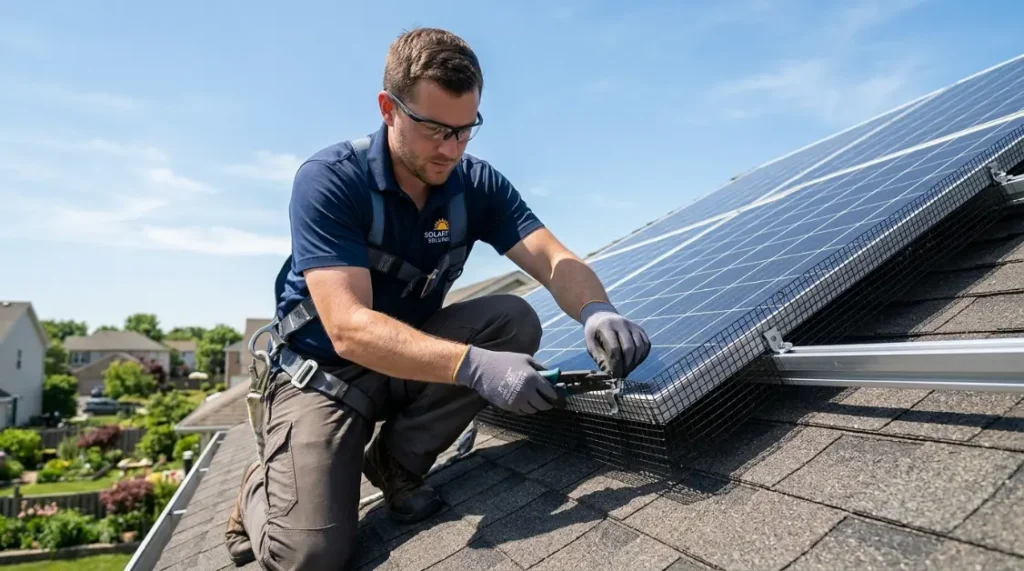
Solar panel mesh is the most effective pigeon proofing method in 2026, costing between $500 and $1,100 for professional installation. It uses non-invasive clips to secure galvanized steel around the perimeter, preventing nesting without damaging the solar equipment or voiding warranties.
Professional-grade mesh is the undisputed winner for 2026 because it creates a physical wall without voiding your panel warranty. Spikes are cheaper but pigeons often drop nesting material right on top of them, eventually creating a ‘fortress’ rather than a deterrent. Mesh, specifically the plastic-coated variety, typically costs about $2 to $5 per foot for materials alone. When pros install it, they use nylon clips that grip the underside of the panel flange. This is critical: if a contractor offers to drill into your panel frames to secure the mesh, tell them no—it will almost certainly void your manufacturer warranty.
People Also Ask
Q: Does bird mesh void solar warranties?
A: Not if installed with non-penetrating clips. Direct drilling into the frame will void most warranties.
Hidden Factors: Cleaning and Debris Removal Prices
Cleaning and debris removal typically adds $150 to $350 to the total cost. This step is mandatory to remove acidic guano and nesting materials that can cause hotspots on panels or fire hazards if left trapped behind the new bird mesh.
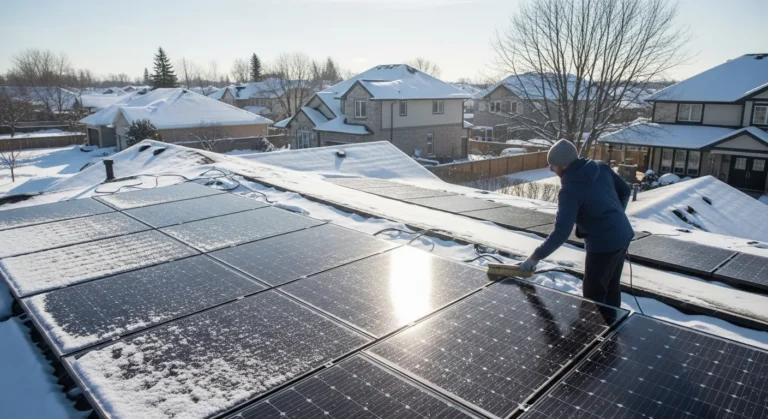
You cannot simply slap mesh over an existing mess. If pigeons have been nesting for months, there is a literal ‘biohazard’ under your panels. In 2026, pest control firms usually bundle cleaning into the total cost to pigeon proof solar panels, but it’s often listed as a $150–$300 line item. This involves pressure washing (at low PSI) and disinfecting the roof surface to remove pheromones that attract other birds. I’ve seen homeowners try to skip this to save $200, only to have pigeons spend weeks trying to peck through the new mesh because their scent is still buried under the array.
People Also Ask
Q: How long does pigeon proofing take?
A: A standard residential job takes 3 to 5 hours, including the initial cleaning and disinfect stage.
DIY vs. Professional Installation Cost Comparison
DIY solar bird proofing kits cost $150 to $300, while professional services range from $500 to $1,200. Professional installation is generally recommended due to roof safety risks, warranty protections, and the inclusion of a comprehensive cleaning and sanitation service.
The DIY route is tempting, with kits on Amazon or at local hardware stores retailing for $120 to $250. However, having done this myself, I can tell you the ‘hidden’ costs are significant. You’ll need a 24-foot ladder, a safety harness (don’t skip this), and specialized cutters for the galvanized steel. Total DIY hobbyist spend usually hits $400 once safety gear is included.
Compare that to a $750 professional job where the team has insurance and a 5-year guarantee against bird re-entry. In my experience, most DIYers struggle with the corners and ‘roll’ the mesh, which looks terrible from the street and reduces curb appeal. For those tracking structural health investments alongside utility metrics, data from organizations like the National Renewable Energy Laboratory reinforces that keeping hardware clear of micro-shading from debris is essential for maintaining optimal power generation.
People Also Ask
Q: Can I use chicken wire for solar panels?
A: No. Chicken wire rusts quickly and is too flimsy. Use only UV-rated PVC-coated galvanized steel mesh for solar arrays.
Geographic Price Variance: What to Expect in 2026
Geographic location affects bird proofing costs by 20–30%. Urban areas with higher labor costs and strict safety regulations typically see quotes starting at $800, while rural areas may be cheaper but often incur additional travel fees from specialized contractors.
Location dictates your labor rate more than the birds do. In high-cost-of-living areas, labor rates have surged due to demand for eco-maintenance. Expect to pay 20-30% more in urban centers where solar density is high. Rural homeowners may face ‘travel fees’ if specialized bird proofers aren’t nearby.
Interestingly, in 2026, some solar installation companies are now including bird proofing as a standard ‘add-on’ during the initial install. If you’re getting new panels, negotiating this at the start can drop the cost of solar panel bird deterrents to as little as $300. To check if local or national clean energy deployment initiatives provide secondary maintenance credits that might apply to pest-proofing, you can reference resource hubs like the Solar Energy Industries Association for regulatory changes.
People Also Ask
Q: Do pigeons leave on their own?
A: No. Pigeons are extremely territorial and will nest under panels year-round until a physical barrier is installed.
Frequently Asked Questions
Common questions regarding the cost to pigeon proof solar panels usually center on the ROI, the durability of materials like bird mesh, and how proofing affects existing solar panel warranties and system efficiency over the long term.
Navigating the costs and technicalities of solar bird proofing often brings up specific concerns about longevity and maintenance. Below are the most common questions homeowners ask when budgeting for this essential solar maintenance task in 2026.
Practical Use-Case Recommendations
- New Solar Panel Installation: Negotiate bird mesh as an add-on with your installer for a flat $300-$500 fee.
- Severe Pigeon Infestation (Nesting 1yr+): Prioritize a service that includes biohazard sanitation; expect to pay $800-$1,100.
- Flat Roof Installations: Use ‘Bird Slopes’ or specialized deterrents which may cost slightly more ($900+) but are more effective on flat surfaces.
- Budget-Conscious DIY: Purchase a 100ft roll of PVC-coated mesh and nylon clips ($180); ensure you have a spotter and harness.
Conclusion
Ultimately, the cost to pigeon proof solar panels is a protective investment rather than a simple expense. While $600 to $1,200 might seem high upfront, the ROI is realized within 2 to 4 years by preventing efficiency drops and avoiding costly wiring repairs. In 2026, professional mesh installation remains the gold standard for durability and warranty compliance.
Whether you choose to go the DIY route for $300 or hire a specialist for $800, the key is acting before nesting behavior becomes permanent. Pigeons won’t move on their own, and the acidic damage they leave behind only gets more expensive the longer you wait. According to structural guidelines listed by the Federal Emergency Management Agency, unchecked debris accumulation on residential roofing systems can severely complicate structural safety during extreme weather events. Secure your array now to ensure your clean energy output remains unencumbered for the next decade.
Frequently Asked Questions (Expanded)
Q: Will pigeon proofing damage my solar panels?
A: Not if done correctly. Professional installers use mesh clips that stay in place via tension on the panel’s inner frame, requiring no drilling or adhesive.
Q: How long does solar bird mesh last?
A: High-quality, PVC-coated galvanized steel mesh typically lasts 10 to 15 years, often outliving the financial break-even point of the mesh itself many times over.
Q: Does my home insurance cover pigeon damage?
A: Most standard policies view bird nesting as a ‘maintenance’ issue and do not cover damage to wiring or panels caused by pigeons. You can review standard homeowner coverage limits and structural exclusions explicitly outlined by the National Association of Insurance Commissioners to see how pest issues are categorized.
Q: Is there a cheaper alternative to mesh?
A: Spikes or plastic owls are cheaper (under $100), but they are far less effective for solar panels. Pigeons will eventually nest around or on top of them.
Q: Do I need to clean the panels before proofing?
A: Yes. If you install mesh over debris, the trapped nesting material becomes a fire hazard and blocks airflow, which can overheat your panels.

I Am Sarah Miller is a passionate writer focused on sustainability, eco-friendly living, and modern environmental solutions. Through her work, she aims to inspire readers to make smarter, greener choices for a better future. She regularly shares insights and practical tips on her website, ecopowersence.com.