
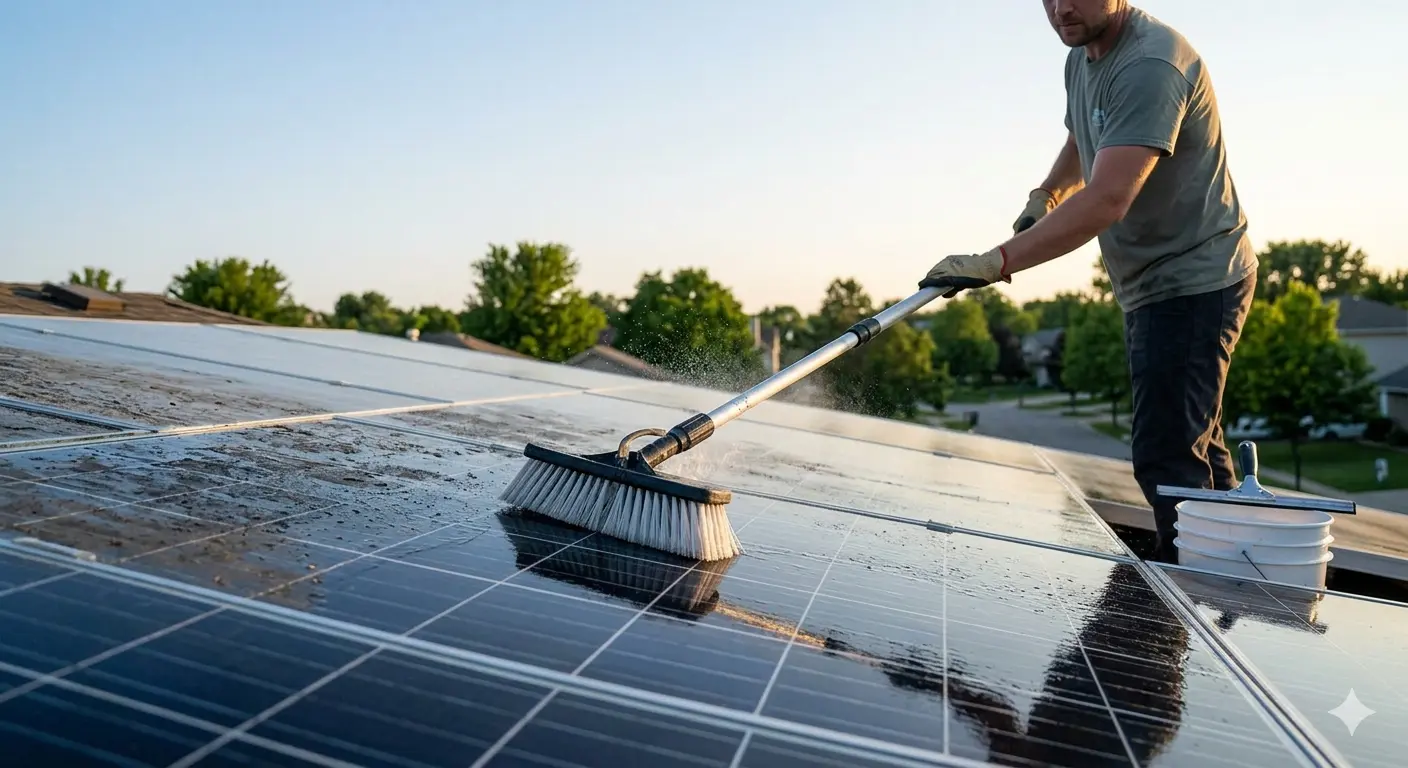
Learn how to properly clean solar panels to boost efficiency by 25%. Discover the best tools, safety tips, and 2026 expert techniques for max ROI.
TL;DR: Cleaning solar panels isn’t just about aesthetics; it’s about preventing ‘soiling’ which can tank your energy production by up to 30%. This guide covers the low-abrasion 2026 methods I use to keep systems running at peak performance without voiding warranties.
| Method | Effort Level | Cost | Efficiency Gain | Best For |
| Hose & Soft Squeegee | Moderate | $20 – $50 | 10-15% | Standard residential roofs |
| Deionized Water System | High | $150 – $400 | 20-25% | Areas with very hard water |
| Solar Cleaning Robot | Low (Auto) | $500+ | 25%+ | Large flat arrays / Commercial |
| Professional Service | Zero | $150 – $300 | 20-25% | High roofs / Multi-story |
Why You Need to Master How to Properly Clean Solar Panels
To properly clean solar panels, use a soft brush or microfiber cloth and plain water (preferably deionized). Avoid harsh chemicals and high-pressure sprayers. Clean during the early morning or evening when panels are cool to prevent glass cracking from thermal shock and to stop water from evaporating too quickly.
I’ve spent a decade on roofs, and if there is one thing I see homeowners ignore, it is the invisible film of grime. Dust, bird droppings, and industrial pollutants create a barrier that prevents photons from reaching the silicon cells. According to epa (NREL), soiling can reduce energy output significantly if left unaddressed. Understanding how to properly clean solar panels isn’t just a chore; it’s a financial strategy to protect your investment.
In my experience, many people assume rain does the job for them. While a heavy downpour helps, it often leaves a streak of dirt at the bottom edge of the frame. This ‘shading’ can cause hot spots that eventually degrade the panel’s lifespan. If you are tracking your output via 6 best solar monitoring apps in 2026, you will likely see a slow, agonizing dip in performance that only a physical scrub can fix.
Does Rain Clean Solar Panels Automatically?
A common question among property owners is whether natural rainfall is enough to maintain a photovoltaic system. Rain provides a basic rinse for loose surface dust, but it typically leaves behind heavy atmospheric dust streaks, sticky tree sap, and mineral deposits that require manual agitation to remove fully.
Relying solely on weather cycles means allowing stubborn residue to bake onto the glass underneath intense sunlight, which creates a long-term compound barrier against solar rays. For a true, comprehensive maintenance routine that keeps every component of your clean energy hardware working perfectly, combining clean panel glass with checking your ground-level landscape fixtures like the best solar ground lights for pavers ensures your property’s absolute energy performance isn’t being held back by simple environmental buildup.
The Golden Rule: Timing and Temperature
The ideal time to clean solar panels is early morning (before 8 AM) or late evening (after 7 PM). This prevents thermal shock—which can shatter the glass—and stops soapy residue from drying into baked-on streaks before you can rinse them off.
One of the biggest mistakes I see beginners make is spraying a hot solar panel with cold water at noon. Solar panels are dark and can reach temperatures exceeding 150°F in direct sun. Hitting that glass with cold water creates thermal shock, which can lead to microscopic fractures. The best time to clean is at dawn or dusk.
When you start early, the morning dew has already softened much of the bird droppings and sap, making your job much easier. If you are regularly keeping up with the ultimate solar panel maintenance checklist for 2026, you’ll know that temperature management is step one for safety. Plus, cleaning in the shade ensures that the water doesn’t evaporate instantly, which is the primary cause of unsightly water spots that block light.
Can I Clean Solar Panels in Direct Sunlight?
Attempting maintenance procedures under direct sunlight is highly counterproductive. When the sun is high, the tempered glass absorbs significant amounts of thermal radiation. Cleaning in direct sun causes water to evaporate almost instantly upon contact, leaving behind dense mineral deposits, soap film streaks, and hard water scale that block light photons worse than the original dust layer.
Furthermore, exposing extremely hot panels to cold liquid forces a rapid temperature drop, risking severe structural glass failure. If you want to maximize your overall solar energy home efficiency, always space out your wash cycles to match times when the cells are completely cool to the touch.
Required Tools for a Scratch-Free Finish
Essential solar cleaning tools include a soft-bristle brush, a telescopic pole, a microfiber squeegee, and a garden hose with a low-pressure nozzle. For best results, use a deionized water filter to ensure no mineral scale is left behind on the tempered glass surface.
You don’t need a PhD in engineering, but you do need the right kit. Stay away from Windex or abrasive kitchen sponges. I always recommend a high-quality telescopic pole with a soft-bristled head designed specifically for glass. If you’re managing multiple outdoor energy installations across your property, you’ll notice that specialized soft-touch tools prevent micro-scratches that diffuse light.
For the water source, if your tap water is ‘hard’ (high mineral content), consider using a portable water softener or deionized water filter. Hard water leaves calcium deposits that are harder to remove than the original dirt. Think of it like a professional car wash; the ‘spot-free rinse’ is often the most critical part of the process for long-term cell exposure.
Is It Okay to Use a Pressure Washer on Solar Panels?
Using a high-powered pressure washer on your photovoltaic system is highly discouraged. The extreme, concentrated pressure can easily force water past the anti-reflective rubber seals of the panel laminates, compromising the sensitive internal wiring layers.
Additionally, strong pressure jets can cause micro-cracks in the tempered glass panel surface, which will completely void your manufacturer’s warranty. Safe maintenance relies strictly on high water volume and low pressure, ensuring a soft rinse without adding physical structural stress to your infrastructure.
Step-by-Step: How to Clean Solar Panels on a High Roof Safely
To clean high-roof panels safely, use a telescopic pole from a sturdy ladder or the ground. Shut down the system first, dry brush loose debris, then apply water with a mild soap. Always finish by using a squeegee to prevent water spots and mineral buildup.
Safety is the elephant in the room. Every year, people hurt themselves trying to play Spider-Man on a 2:1 pitch roof. If you can’t reach the panels from a ladder or the ground, it is highly recommended to hire a professional crew. For those who can execute the process safely, learning how to clean solar panels on a high roof safely is a skill that pays for itself over the lifetime of your array.
Before climbing, make sure you properly secure your setup and follow these guidelines:
- System Shutdown: De-energize the DC side via your solar inverter or rapid-shutdown switch to ensure you aren’t working near live electricity while utilizing liquids.
- Dry Brush: Use your long-reach soft brush to gently flick away loose leaves, twigs, and dry debris.
- Rinse: Spray a gentle, low-pressure stream of water to wet the surface evenly.
- Agitate: For stubborn spots like bird droppings or tree sap, use the soft brush with a mixture of mild, neutral soap and water.
- Squeegee: Use a high-grade rubber squeegee to clear away all residual water. Leaving dirty droplets to air-dry acts like tiny magnifying lenses for dust to stick to.
Keeping your rooftop system clean ensures that your generation metrics hit their absolute maximum potential. It is the exact same concept as keeping secondary off-grid items operational; if you rely on distinct systems like 7 game changing solar powered pond aerators for small backyards, clean hardware directly equals stable output.
Environmental Factors: When to Clean Frequently
Cleaning frequency depends on your local environment. Most users need cleaning twice a year. However, if you live near dirt roads, heavy construction, agricultural areas, or in high-pollen zones, you may need a monthly rinse to prevent significant energy loss.
Where you live dictates your schedule. If you’re in the US Southwest, ‘caliche’ dust is your enemy. In the Northeast, it’s pollen and bird droppings. I’ve seen systems near highway construction lose 15% efficiency in just a single month. If you reside in an area prone to seasonal wildfires, the oily ash can bake onto the panels and requires immediate attention.
High particulate matter areas often require quarterly cleanings. Interestingly, I’ve found that homeowners who deploy high lumen solar street lights for private roads often notice their roof panels getting dirtier at the exact same rate as their ground-level path lighting. It’s all part of a cohesive maintenance cycle for any green-energy home.
How Do I Know If My Solar Panels Need Cleaning?
You do not need to guess when it is time to wash your solar array. The most definitive method is to monitor your monthly utility invoices and look into your inverter interface. If you notice a 10% or more drop in production on a perfectly clear, sunny day compared to the previous year’s metrics, it is a clear indicator that soiling has built up on the glass. Tracking these numbers allows you to schedule maintenance right before heavy efficiency drops hit your pocketbook.
Common Mistakes and How to Avoid Them
Avoid using abrasive sponges, metal scrapers, bleach, or high-pH detergents. Never lean on the panels or stand on them, as this causes micro-cracks in the silicon cells that aren’t visible to the naked eye but will cause long-term power failure.
I once saw a client use a metal scraper to get stubborn lichen off a panel. It was a $4,000 mistake. The tempered glass on a solar panel is tough against weather like hail, but it’s highly susceptible to deep scratching from metal tools or abrasive chemicals like bleach. Scratches create permanent shadows on the underlying silicon cells, reducing efficiency forever.
Another trap is assuming ‘biodegradable’ cleaners are automatically safe. Many contain heavy surfactants that leave a sticky residue behind, which actually attracts more flying dust over time. If you wouldn’t use it on a high-end camera lens, do not use it on your solar panels.
Can I Use Vinegar to Clean Solar Panels Safely?
Using vinegar solutions on your solar modules is not recommended. Vinegar is highly acidic and can potentially damage or strip the specialized anti-reflective chemical coatings applied to the tempered glass. Over time, run-off acid can also corrode the protective anodized aluminum frames, shortening the lifespans of the panels. Stick strictly to pH-neutral soaps or plain water to safeguard your infrastructure.
Practical Use-Case Recommendations
- Living in a Dusty/Desert Environment: Invest in a deionized water brush system and clean every 2-3 months to prevent dust ‘cementing’ into a hard crust.
- Standard Suburban Home with Occasional Birds: A simple garden hose and soft squeegee twice a year (Spring and Fall) is perfectly sufficient.
- Commercial Flat-Roof Installation: Look into automated robot cleaners or a quarterly professional contract to protect large-scale commercial ROI.
- Coastal Areas with Salt Spray: Rinse monthly with fresh water to prevent salt crystallization, performance drops, and frame corrosion.
Frequently Asked Questions
Q: How much does it cost to have solar panels professionally cleaned?
A: Residential professional cleaning usually ranges from $150 to $350 depending on the number of panels and the complexity of the roof access.
Q: Will cleaning my solar panels void the warranty?
A: As long as you follow the manufacturer’s guidelines—using soft tools and no harsh chemicals it will not. However, using a pressure washer almost always voids the warranty.
Q: Does snow need to be cleaned off solar panels?
A: Usually, the tilt of the panels and the internal heat they generate will cause snow to slide off naturally. Only remove heavy snow if it lingers for more than a few days, using a soft-head snow rake.
Q: Can I use Windex on my solar panels?
A: No. Windex and other household glass cleaners can leave a film that attracts dirt and may contain harsh chemicals that react poorly with the panel’s coating.
Q: How much more energy do clean solar panels produce?
A: On average, a thorough cleaning can increase energy production by 10% to 25%, depending on how much ‘soiling’ was present before the wash.
Conclusion
Mastering how to properly clean solar panels is one of the easiest ways to ensure your green energy investment pays for itself as quickly as possible. By following a structured schedule and using the right tools—specifically avoiding abrasive materials and high-pressure water—you can prevent the efficiency drains that plague neglected systems. Remember that the combination of safety, timing, and water quality is the ‘trifecta’ of solar maintenance. Whether you choose to tackle the job yourself with a telescopic pole or hire a professional for those hard-to-reach peaks, the goal remains the same: maximizing photon absorption for every square inch of your array. Keeping your system pristine is no longer optional for those serious about energy independence. Start your maintenance routine today and watch your production numbers climb back to their day-one glory.

I Am Sarah Miller is a passionate writer focused on sustainability, eco-friendly living, and modern environmental solutions. Through her work, she aims to inspire readers to make smarter, greener choices for a better future. She regularly shares insights and practical tips on her website, ecopowersence.com.