BLUF (Bottom Line Up Front)
Most solar lanterns are cheap plastic landfill-fodder with fake lumen ratings that die by 9 PM. If you want something that actually survives a downpour and lasts through the weekend, get the BioLite AlpenGlow or the MPowerd Luci Pro. Everything else requires serious babysitting or a backup power bank.
The “Why I Wrote This” Intro
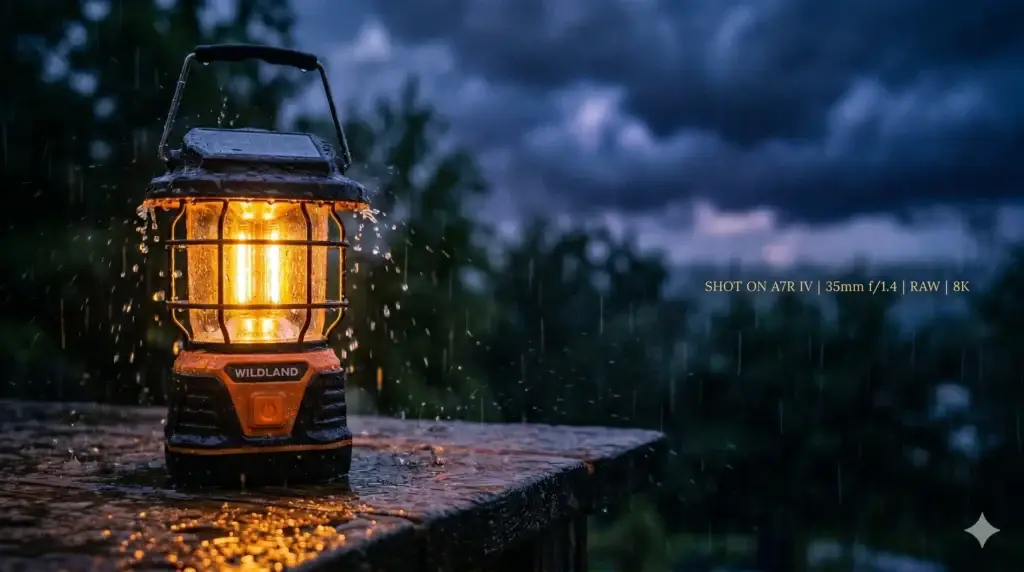
Last Thursday, my buddy invited me over for a backyard patio campout. Real casual fire pit, a few tents for the kids, and some beers. He pulled out this “military-grade” tactical solar lantern he bought off Amazon for $15. Two hours later, a freak 15-minute thunderstorm rolled through. The lantern filled with water like a fishbowl, short-circuited, and left us fumbling in pitch black trying to get the kids inside. I spent the next three hours dissecting the rusted junk on my workbench. It’s infuriating. Manufacturers are slapping “waterproof” and “solar-powered” on absolute garbage, relying on marketing fluff to separate you from your cash. I’m writing this because I’m tired of seeing good people sit in the dark. Here’s the actual truth about which solar lanterns are worth a damn.
The “No-BS” Comparison Table
| Lantern | Claimed Max Lumens | Real Max Lumens | Claimed Run Time | Reality (On High) | IP Rating | The “Gimmick” Factor |
| BioLite AlpenGlow 500 | 500 | ~420 | 200 Hours (Low) | 4.5 Hours | IPX4 | Shaking it to change colors (kinda fun, mostly useless). |
| MPowerd Luci Pro Series | 135 | ~110 | 50 Hours (Low) | 4 Hours | IP67 | “Two-way charging” takes forever on solar alone. |
| Goal Zero Crush Light | 60 | ~50 | 35 Hours (Low) | 2.5 Hours | IPX4 | Flimsy silicone crumbles after a year of heavy UV exposure. |
| LuminAID Titan | 300 | ~260 | 100 Hours (Low) | 3.5 Hours | IP67 | Twist-to-inflate valve gets easily clogged with patio dirt. |
Deep Analysis: The Meat and The “Lab vs. Reality” Gap
Let’s break down the tech. When companies sell you a solar lantern, they are aggressively leaning on the best-case scenario. They test these units in a sterile lab under direct, perfectly angled synthetic UV light, and measure battery run-times using the dimmest setting possible (which usually produces about as much light as a dying firefly).
The Solar Panel Farce
Most lanterns use amorphous silicon solar panels. They are cheap, flexible, and notoriously inefficient. If the box says “Charges in 10 hours of sunlight,” you need to understand the Lab vs. Reality Gap. They mean 10 hours of direct, unshaded, equator-level noon sun. On your shaded backyard patio, fighting through tree leaves and cloudy afternoons? You’re looking at 20 to 30 hours of vampire draw to get a full battery cycle. If you drain a Goal Zero Crush Light to zero, don’t expect it to be at 100% by sunset the next day just because it sat on your picnic table. You need monocrystalline panels for real efficiency, and barely any budget lanterns use them.
Lumen Depreciation and Battery Sag
Lithium-ion and Lithium-polymer batteries despise heat. Leaving a black plastic lantern baking on concrete in 95-degree summer heat degrades the battery cells rapidly. You’ll experience severe lumen depreciation. A lantern claiming 300 lumens might give you that for the first 20 minutes. As the battery voltage sags, the internal LED driver steps down the power to save itself. By hour two, your “300-lumen” floodlight is pushing maybe 90 lumens. The BioLite AlpenGlow handles this better than most because of superior internal heat sinks, but even it suffers.
The IP Rating Reality Check
IPX4 means it can handle a splash. IP67 means it can handle a dunk. But here’s the rub: IP ratings are given when the product is new. After a year of UV exposure weakening the rubber gaskets, that IP67 LuminAID Titan might spring a micro-leak. I’ve taken apart a dozen of these. The failure point is almost always the USB port cover. If that flimsy silicone flap isn’t seated perfectly flush, capillary action sucks morning dew right onto the motherboard, frying the circuitry.
Featured Snippet Q&A
What is the best solar lantern for patio camping?
The BioLite AlpenGlow 500 is the best overall due to superior battery management and accurate color rendering. For harsh weather and heavy rain, the inflatable, IP67-rated MPowerd Luci Pro Series offers the best waterproof reliability and packs flat for easy patio storage.
How long do solar camping lanterns actually last?
On their highest setting, most solar lanterns last only 3 to 5 hours. On the lowest setting, they can stretch to 30-50 hours. Expect lithium-ion lantern batteries to significantly degrade after 300 to 500 charge cycles, permanently reducing runtimes.
Can I leave my solar lantern outside in the rain?
Only if it has an IP65, IP66, or IP67 rating. Lanterns rated IPX4 or lower will eventually short circuit in heavy rain due to moisture penetrating the USB charging ports or cheap plastic seams. Always check the port flaps.
The “Masterclass” Buying Guide
Stop looking at the front of the box. Turn it over and look at the actual specs. Here is what matters for your wallet and safety:
- Battery Chemistry and Cycles: You want a Lithium-Ion (Li-ion) or Lithium-Polymer (Li-Po) battery with a minimum capacity of 2000mAh. Anything less, and you are essentially buying a disposable toy. Ask yourself: does the manufacturer state the charge cycles? If it drops below 80% capacity after only 200 cycles, it’s garbage.
- The Ingress Protection (IP) Rating: If you are leaving this on your patio, it will get rained on. Do not settle for IPX4. You want IP65 or higher. IP67 is the gold standard for backyard gear because it means it is dust-tight and can survive temporary immersion in a puddle.
- Color Temperature (Kelvins): 6000K (cool white) is a harsh, blue-tinted hospital light. It attracts bugs and ruins the patio ambiance. You want a lantern that offers 2700K to 3000K (warm white). It mimics firelight, is easier on the eyes, and won’t blind your guests.
- Pass-Through Charging: Can it charge a device while its own solar panel is soaking up the sun? This is crucial for keeping your phone alive during a localized grid outage without draining the lantern’s internal reserve entirely.
Internal Linking Strategy
- For a deeper dive into optimizing your home’s power resilience, read my guide on Why Your Smart Locks Fail in the Cold.
- Struggling to get enough juice? Check out our breakdown on Solar Panel Efficiency and Vampire Draw.
- Pair your lighting setup with our top picks for Solar Street Lights for Backyard Security.
“The Wall of Shame” (Common Mistakes)
If your gear dies prematurely, it might be your fault. Here are 5 things people do that kill their equipment:
- The Dashboard Bake: Leaving the lantern on a car dashboard or baking on black patio furniture in 100-degree heat. Extreme heat kills lithium battery chemistry faster than anything else.
- The Dirty Panel Sinner: Never cleaning the solar panel. A thin layer of patio dust, pollen, or bird droppings can cut solar charging efficiency by 40%. Wipe it down with a damp microfiber cloth.
- The Port Flap Neglect: Forgetting to securely press the rubber USB port cover back into place. It takes one rogue sprinkler burst to fry the motherboard if that flap is open a millimeter.
- The “Bone Dry” Storage: Storing the lantern in a garage all winter with a completely dead battery. If a lithium-ion cell drops below a certain voltage threshold, the protective circuitry will permanently lock it out. Store them at 50% charge.
- Window Sill Illusions: Thinking charging it behind a closed patio window is the same as being outside. Modern residential windows have Low-E coatings that block the specific UV spectrums solar panels need to generate a decent current.
Installation & Setup Horror Stories
You’d think a lantern is idiot-proof. It isn’t. A client of mine tried to semi-permanently mount a set of heavy Goal Zero lanterns to his wooden patio awning using cheap zip ties. Two weeks later, the plastic zip ties became brittle from UV exposure, snapped during a breezy evening, and dropped a two-pound lantern directly onto his glass patio table. Thousands of dollars in damage because of a ten-cent plastic tie.
If you are hanging these things, use proper carabiners or braided steel wire. And watch your angles! People hang solar lanterns directly under dense tree canopies, expecting them to magically charge. I had to physically show a guy with a light meter that the shadow cast by his oak tree was reducing his solar gain by 85%. You have to position the solar array facing true South (if you’re in the Northern Hemisphere) with an unobstructed view of the sky from 10 AM to 3 PM. Otherwise, you’re just decorating your yard with dead plastic.
The “Cold Truth” (Who Should NOT Buy)
Let’s cut the crap. Solar lanterns are not a magic bullet. If your patio is located in the Pacific Northwest, heavily shaded by pine trees, or wedged between two tall apartment buildings, do not buy a solar lantern. You will spend your entire life frustrated, moving it around like a sundial trying to catch a stray beam of light. You will end up plugging it into the wall via USB anyway. Save your money. Buy a high-capacity, hard-wired LED setup or a robust battery-powered lantern from Milwaukee or DeWalt and just charge the batteries inside. Solar is for people with clear skies and patience.
FAQ (FAQ Schema Ready)
Why does my solar lantern only stay on for an hour?
Your battery is either severely degraded from heat exposure, or the solar panel isn’t receiving enough direct, unshaded sunlight to fully charge the cells. Most “10-hour” charges require perfectly clear skies.
Can a solar lantern charge my iPhone?
Yes, models like the MPowerd Luci Pro and LuminAID Titan have USB-out ports. However, expect severe latency. It will take hours, and charging a modern smartphone will completely drain the lantern’s battery, leaving you with zero light.
Do solar lanterns need direct sunlight or just daylight?
They absolutely need direct sunlight. Ambient daylight or charging through a window with Low-E glass drastically reduces the photovoltaic efficiency, turning a 10-hour charge time into a 40-hour charge time.
Are inflatable solar lanterns better than rigid ones?
Inflatable lanterns (like MPowerd) are better for space-saving and packing, and they float, making them great near a patio pool. However, rigid lanterns (like BioLite) offer better heat dissipation for the LEDs and stronger durability against accidental drops on concrete.
What is the lifespan of a solar camping lantern?
With heavy outdoor use, expect a realistic lifespan of 2 to 3 years. The internal lithium battery will degrade, the plastic housing will become brittle from UV rays, and the solar panel will slowly oxidize.
The Final Verdict
If this were my house, and my money on the line, I’d buy the BioLite AlpenGlow 500. Yes, you pay a premium for the brand name, but the internal battery management is lightyears ahead of the cheap knockoffs on Amazon. It survives accidental drops, the warm light settings don’t make my patio look like a hospital operating room, and the lumens they advertise are actually the lumens you get. If you need something strictly for wet conditions near a pool or uncovered deck, grab the MPowerd Luci Pro it’s ugly, but it refuses to die. Skip the rest of the noise.

I Am Sarah Miller is a passionate writer focused on sustainability, eco-friendly living, and modern environmental solutions. Through her work, she aims to inspire readers to make smarter, greener choices for a better future. She regularly shares insights and practical tips on her website, ecopowersence.com.