A great fishing setup can fail because of one simple mistake: choosing the wrong fishing string. Although many anglers use the term “fishing string,” the correct name is fishing line. Nevertheless, both terms refer to the same critical piece of equipment.
The right fishing line improves casting distance, increases sensitivity, and helps land more fish. In contrast, a poor-quality line can snap under pressure and ruin an otherwise perfect day on the water.
This guide explains the best fishing string options for 2026, compares the main line types, and helps you select the ideal line for your target species.
What Is Fishing String?
Fishing string is the connection between your rod, reel, and hook or lure. Every bite, strike, and fight travels through this line.
Modern fishing lines use advanced materials that provide better durability and performance than older designs. As a result, anglers can fish more effectively in both freshwater and saltwater environments.
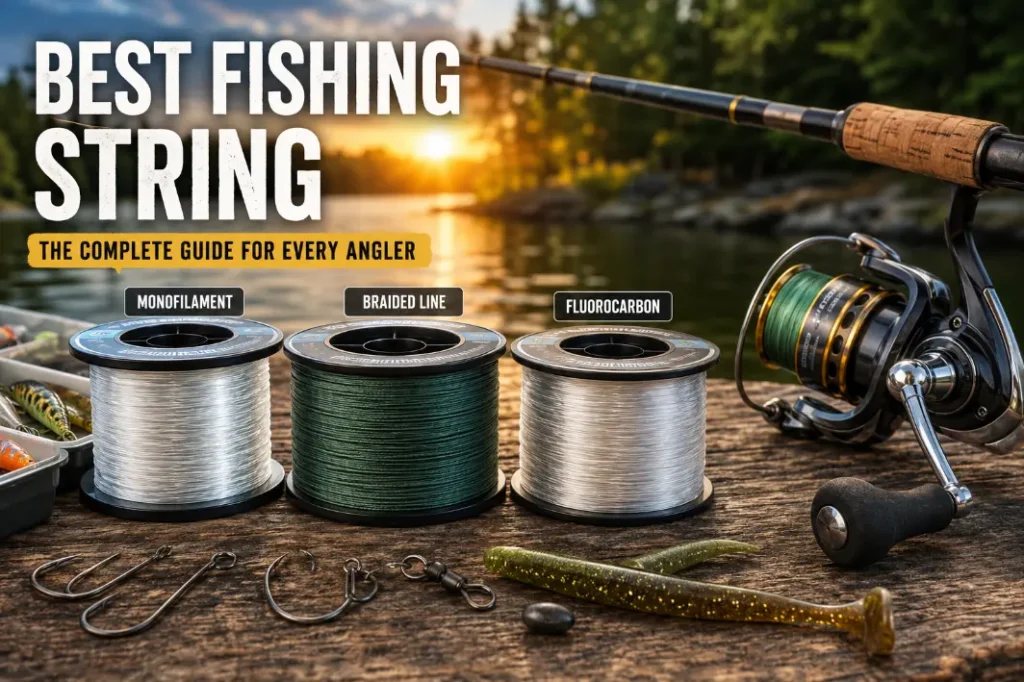
Today, most fishing strings fall into three major categories:
- Monofilament
- Fluorocarbon
- Braided Line
Each type serves a different purpose.
Why Choosing the Right Fishing String Matters
Many anglers focus on rods and reels first. However, the fishing line often has a greater impact on overall performance.
The correct line can:
- Increase casting accuracy
- Improve bite detection
- Reduce line breakage
- Enhance lure presentation
- Improve landing success
Furthermore, matching your line to the fishing conditions helps maximize results.
Types of Fishing String
Monofilament Fishing String
Monofilament remains one of the most popular choices worldwide.
Manufacturers create this line from a single strand of nylon. Consequently, it offers flexibility and ease of use.
Advantages
- Budget-friendly
- Easy knot tying
- Excellent shock absorption
- Floats naturally
- Beginner-friendly
Disadvantages
- More line stretch
- Lower sensitivity
- Higher visibility underwater
For most beginners, monofilament provides an excellent balance of affordability and performance.
Fluorocarbon Fishing String
Fluorocarbon has become increasingly popular among experienced anglers.
Unlike monofilament, fluorocarbon becomes nearly invisible underwater. Therefore, it works exceptionally well in clear lakes and rivers.
Advantages
- Low underwater visibility
- Excellent abrasion resistance
- Better sensitivity
- Fast sinking properties
Disadvantages
- Higher cost
- Slightly stiffer handling
As a result, many anglers use fluorocarbon when targeting cautious fish in clear water.
Braided Fishing String
Braided line delivers maximum strength and sensitivity.
Instead of a single strand, manufacturers weave multiple synthetic fibers together. Consequently, braided line achieves impressive strength while maintaining a thin diameter.
Advantages
- Exceptional strength
- Near-zero stretch
- Superior sensitivity
- Longer casting distance
Disadvantages
- More visible underwater
- Higher price
- Specialized knots required
Because of these benefits, braided line has become a favorite among bass anglers and offshore fishermen.
Best Fishing String for Different Species
Best Fishing String for Bass
Bass anglers often fish around vegetation, timber, and rocks.
Therefore, a braided main line paired with a fluorocarbon leader delivers excellent results.
Recommended line strength:
- 20-50 lb braid
- 10-20 lb fluorocarbon leader
Best Fishing String for Trout
Trout can become extremely line-shy.
For that reason, low-visibility lines perform best.
Recommended options include:
- 4-8 lb fluorocarbon
- 4-6 lb monofilament
Additionally, lighter lines create more natural bait presentations.
Best Fishing String for Catfish
Catfish fight hard and frequently inhabit rough environments.
Consequently, stronger lines become necessary.
Recommended options:
- 15-40 lb monofilament
- 30-65 lb braid
Best Fishing String for Saltwater Fishing
Saltwater species place enormous stress on tackle.
Therefore, anglers should prioritize strength and abrasion resistance.
Recommended setup:
- 30-80 lb braided main line
- Heavy fluorocarbon leader
This combination offers power without sacrificing sensitivity.
Understanding Pound Test Ratings
The pound test indicates how much force a fishing string can handle before breaking.
Choosing the correct pound test improves performance and reduces equipment failures.
| Fish Species | Recommended Pound Test |
|---|---|
| Panfish | 2-6 lb |
| Trout | 4-8 lb |
| Walleye | 8-12 lb |
| Bass | 8-20 lb |
| Catfish | 15-40 lb |
| Pike | 20-50 lb |
| Saltwater Species | 20-80+ lb |
In general, lighter lines improve casting while heavier lines provide greater strength.
Key Features to Look For
Abrasion Resistance
Fishing around rocks and structure can damage fishing line.
Therefore, abrasion resistance becomes a critical factor.
Fluorocarbon and braided lines usually outperform monofilament in harsh environments.
Knot Strength
Even the strongest fishing string can fail because of a poorly tied knot.
For best results, anglers should master:
- Palomar Knot
- Uni Knot
- Improved Clinch Knot
Sensitivity
Sensitive lines help detect subtle bites.
Since braided lines have almost no stretch, they offer the highest sensitivity.
Line Memory
Line memory refers to a line’s tendency to retain spool shape.
Lower memory improves casting distance and reduces tangles.
Therefore, many anglers prioritize low-memory lines when selecting monofilament.
Common Fishing String Mistakes
Many fishing failures stem from simple line-related errors.
Avoid these common mistakes:
- Using old fishing line
- Choosing the wrong pound test
- Ignoring abrasion damage
- Overfilling the reel spool
- Using improper knots
- Failing to replace worn leaders
Moreover, regular inspection can prevent unexpected line breaks.
How Often Should You Replace Fishing String?
Replacement schedules depend on usage and line type.
Monofilament generally requires replacement every season.
Meanwhile, fluorocarbon often lasts longer under normal conditions.
Braided lines can remain effective for several years if maintained properly.
However, anglers should inspect all lines regularly for damage.
Environmental Impact of Fishing Line
Discarded fishing line can harm wildlife and aquatic ecosystems.
Therefore, responsible disposal remains essential.
Many marinas and fishing locations now provide recycling stations specifically designed for used fishing line.
In addition, proper recycling helps reduce environmental damage and protects fish habitats.
Frequently Asked Questions
What is the best all-around fishing string?
Braided line with a fluorocarbon leader offers the best overall combination of strength, sensitivity, and versatility.
Is braided fishing string better than monofilament?
Not always. Braided line provides superior sensitivity. However, monofilament remains easier to use and more affordable.
What fishing string should beginners use?
Monofilament remains the best option for beginners because it is inexpensive, forgiving, and easy to handle.
What color fishing string works best?
Clear lines work well in most situations. Meanwhile, high-visibility lines help anglers monitor movement in low-light conditions.
Final Verdict
The best fishing string depends on where you fish, what species you target, and how you prefer to fish.
Monofilament remains ideal for beginners. Fluorocarbon excels in clear water. Meanwhile, braided line provides unmatched strength and sensitivity.
For most anglers, a braided main line combined with a fluorocarbon leader delivers the best overall performance. As a result, this setup continues to dominate modern fishing across freshwater and saltwater environments.Home

I Am Sarah Miller is a passionate writer focused on sustainability, eco-friendly living, and modern environmental solutions. Through her work, she aims to inspire readers to make smarter, greener choices for a better future. She regularly shares insights and practical tips on her website, ecopowersence.com.