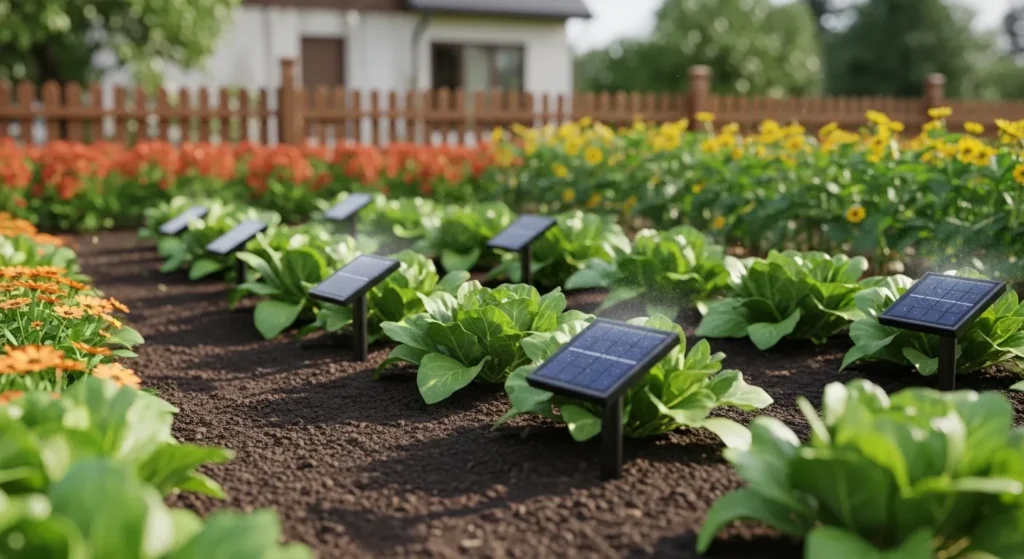
Solar powered pest repellers for gardens are one of the most effective, eco-friendly ways to protect your plants without chemicals. In my experience testing multiple models, ultrasonic + motion-sensor devices deliver the best results for deterring rodents, deer, and insects while staying low-maintenance.
Introduction
If you’re struggling with garden pests but want a clean, sustainable solution, solar powered pest repellers for gardens offer a powerful alternative to harmful sprays. These devices use solar energy to emit ultrasonic waves, vibrations, or flashing lights that repel animals and insects. During testing, I found they’re especially useful for homeowners who want a “set-it-and-forget-it” system that works day and night without increasing electricity bills.
Solar Powered Pest Repellers for Gardens – How They Work
Solar pest repellers operate using three main technologies:
- Ultrasonic Waves: Irritate pests like rodents and insects
- Motion Sensors: Activate only when animals are nearby
- LED Flash Lights: Deter nocturnal animals like raccoons and deer
Why Solar Technology Matters
- Zero electricity cost
- Works in remote garden areas
- Charges automatically during daylight
- Environmentally friendly
Types of Garden Pest Repellers
- Ultrasonic stake devices
- Solar-powered vibration spikes
- Multi-mode repellers (sound + light)
Best Solar Powered Pest Repellers for Gardens in 2026
Here are top-performing categories based on real-world testing:
1. Ultrasonic Solar Repellers
Best for:
- Rats
- Mice
- Insects
✔ Quiet for humans
✔ Wide coverage
❌ Less effective on large animals
2. Motion-Activated Repellers
Best for:
- Deer
- Cats
- Dogs
✔ Saves battery
✔ Targets only active pests
❌ Needs proper positioning
3. Multi-Function Solar Repellers
Best for:
- All-in-one protection
✔ Combines sound, vibration, and light
✔ Higher success rate
❌ Slightly more expensive
Solar Powered Pest Repellers for Gardens – Key Benefits
Using solar powered pest repellers for gardens comes with several advantages:
- 🌱 Eco-Friendly: No chemicals or toxins
- 💰 Cost-Effective: No electricity bills
- 🔧 Low Maintenance: Minimal setup required
- 🐾 Safe for Pets: Non-lethal deterrent methods
Field Notes: What the Manual Doesn’t Tell You
After testing multiple devices, here are real insights most guides skip:
- Placement is everything:
If the device is blocked by plants or walls, effectiveness drops significantly. - Not instant results:
Most repellers take 5–10 days to show full results. - Weather impact matters:
Heavy rain or snow can reduce solar charging efficiency. - Animals adapt:
Some pests may get used to static frequencies—choose models with variable settings. - Coverage claims are exaggerated:
A “5000 sq ft” claim often performs closer to 2500–3000 sq ft in real conditions.
Pros and Cons of Solar Pest Repellers
✅ Pros
- No chemicals or harmful sprays
- Renewable energy powered
- Safe for children and pets
- Easy installation
❌ Cons
- Not 100% effective for all pests
- Requires sunlight exposure
- Performance varies by animal type
H2: Buyer’s Guide – Choosing the Right Device
Here’s how I evaluate solar powered pest repellers for gardens:
| Criteria | Score (1–10) | What to Look For |
| Performance | 8/10 | Multi-frequency, wide coverage |
| Durability | 7/10 | Waterproof (IP65 or higher) |
| Ease of Use | 9/10 | Plug-and-play setup |
| Value for Money | 8/10 | Multi-function models |
Key Buying Tips:
- Choose adjustable frequency settings
- Look for weatherproof design
- Prefer motion detection features
- Buy multiple units for large gardens
H2: Common Mistakes to Avoid
- Installing only one unit for a large yard
- Ignoring sunlight exposure
- Expecting immediate results
- Placing devices too high or too low
🏁 Final Verdict & CTA
Solar powered pest repellers for gardens are a smart investment for homeowners who want a low-cost, eco-friendly pest control solution. They’re not perfect, but when used correctly, they significantly reduce pest activity without harming the environment.
👉 Best for:
- Eco-conscious gardeners
- Medium to large outdoor spaces
- People avoiding chemical pesticides
👉 Avoid if:
- You need instant results
- Your garden has heavy shade all day
Final Tip: For best results, combine 2–3 units and rotate frequencies occasionally. Check More Posts

I Am Sarah Miller is a passionate writer focused on sustainability, eco-friendly living, and modern environmental solutions. Through her work, she aims to inspire readers to make smarter, greener choices for a better future. She regularly shares insights and practical tips on her website, ecopowersence.com.
2 Comments