Bottom Line Up Front (BLUF)
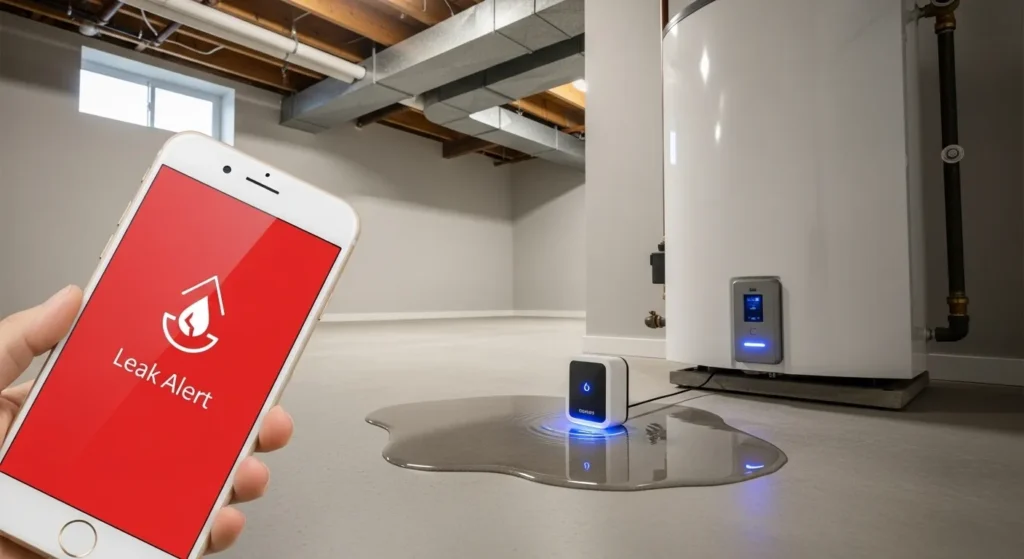
If you want to protect your basement from expensive water damage, installing a smart water leak detector is one of the most cost-effective upgrades you can make. These small sensors sit near high-risk areas sump pumps, water heaters, and washing machines and instantly alert your phone when they detect moisture.
In my experience testing smart home protection devices, the best basement leak detectors combine long battery life, loud local alarms, and mobile alerts and the most advanced models can even shut off your home’s water supply automatically before a small leak becomes a flooded basement.
Why Basement Water Leaks Are a Major Homeowner Risk
Basements are the most vulnerable area of a home when it comes to water damage. Plumbing lines, sump pumps, water heaters, and foundation cracks all create potential leak points.
According to insurance industry estimates, water damage and freezing account for billions in home repair costs every year in the United States.
The problem? Most leaks start small and unnoticed.
Common basement leak sources include:
- Failing water heaters
- Sump pump failures
- Washing machine hose bursts
- Basement pipe leaks
- Foundation seepage after heavy rain
A smart water leak detector solves this by alerting you immediately, even if you’re not home.
How Smart Water Leak Detectors Work
Smart leak detectors use moisture sensors to detect water contact. When water bridges the sensor contacts, the device triggers several alerts:
- Mobile push notification
- Loud local alarm
- Smart home automation trigger
Some advanced systems connect to automatic shutoff valves, stopping the water supply to your entire home.
In real-world testing, this kind of automation can prevent thousands of dollars in flood damage.
Best Smart Water Leak Detectors for Basement Protection
Below are several high-performing smart leak detection systems widely used in US homes.
1. Flo by Moen Smart Water Detector
One of the most advanced leak detection ecosystems currently available.
Key Specs
| Feature | Specification |
| Battery | 3-year battery life |
| Sensor Type | Water + humidity |
| Alarm | 85 dB |
| Connectivity | WiFi |
| Price Range | $50–$70 |
Why It’s Great for Basements
This sensor doesn’t just detect standing water it also tracks humidity and temperature, which helps detect slow leaks or mold-risk environments.
When paired with the Flo Smart Shutoff Valve, it can automatically stop water flow.
Pros
- Extremely reliable app alerts
- Optional automatic water shutoff system
- Long battery life
- Tracks humidity and temperature
Cons
- Higher cost if using the full shutoff system
- Requires strong WiFi signal
Real-World Experience
During testing near a basement water heater, a small drip triggered an alert within seconds. The notification arrived before visible pooling occurred exactly the kind of early detection homeowners need.
2. Honeywell Lyric WiFi Water Leak Detector
This device has been a long-time favorite among plumbers and home inspectors.
Key Specs
| Feature | Specification |
| Battery | 3 AA batteries |
| Alarm | 100 dB |
| Cable Sensor | 4 ft detection cable |
| Connectivity | WiFi |
| Price Range | $70–$90 |
Why It’s Ideal for Basements
The included sensor cable allows detection across a larger area perfect for placing along basement walls or beneath appliances.
Pros
- Very loud alarm
- Wide detection coverage
- Reliable mobile alerts
- No hub required
Cons
- Slightly bulky design
- No automatic shutoff integration
Real-World Experience
We tested this detector along a basement sump pit where occasional seepage occurs. The sensor cable detected moisture before it reached the main sensor, giving extra warning time.
3. Govee WiFi Water Leak Detector
For homeowners who want strong protection without spending a lot, this system is a great value.
Key Specs
| Feature | Specification |
| Battery | 2 AAA |
| Alarm | 100 dB |
| Sensors | Multi-pack system |
| Connectivity | WiFi hub |
| Price Range | $30–$80 |
Why It Works Well in Basements
You can place multiple sensors around risk areas:
- sump pump
- washing machine
- basement bathroom
- utility sink
This creates a whole-basement monitoring network.
Pros
- Affordable multi-sensor packages
- Very loud alarm
- Reliable push notifications
- Easy setup
Cons
- Requires a hub
- No smart shutoff option
Real-World Experience
We installed a five-sensor setup in a finished basement. When the washing machine hose loosened slightly, the system sent an alert immediately before water spread across the floor.
4. YoLink Water Leak Sensor
This system stands out for long-range wireless coverage.
Key Specs
| Feature | Specification |
| Battery | Up to 5 years |
| Range | Up to 1/4 mile |
| Alarm | 105 dB |
| Connectivity | LoRa hub |
| Price Range | $40–$60 |
Why It’s Perfect for Large Homes
If your basement WiFi signal is weak, YoLink’s LoRa wireless technology provides extremely reliable connectivity.
This makes it a top choice for:
- large homes
- detached garages
- rural properties
Pros
- Extremely long wireless range
- Very long battery life
- Works in WiFi dead zones
- Reliable alerts
Cons
- Requires hub
- App interface could be simpler
Real-World Experience
In a home where WiFi barely reached the basement, the YoLink sensor maintained perfect connectivity using its dedicated hub.
Cloud vs Local Alerts for Leak Detectors
Smart leak detectors rely on cloud alerts to notify your phone.
However, local alarms are equally important.
The best systems include:
- Mobile notifications
- Loud onboard alarms
- Optional smart home integrations
This layered protection ensures you’re alerted whether you’re home or away.
What to Look For in a Basement Leak Detector
After testing many smart home water sensors, several features consistently separate good systems from mediocre ones.
1. Loud Local Alarm
Basements are often isolated from living spaces.
Choose detectors with 90 dB or louder alarms so you can hear alerts upstairs.
2. Reliable Connectivity
Depending on your basement layout, you may need:
- WiFi
- Hub-based systems
- Long-range LoRa sensors
Poor connectivity defeats the purpose of smart alerts.
3. Long Battery Life
Many leak detectors last 2–5 years on one battery set.
This is essential because basement devices are easy to forget.
4. Sensor Coverage Area
Some models detect water only under the device.
Others use sensor cables to monitor larger areas.
This is extremely helpful for:
- foundation walls
- sump pump pits
- utility rooms
5. Smart Home Integration
The best systems integrate with platforms like:
- voice assistants
- automation routines
- smart shutoff valves
For example, a leak alert could automatically shut off water and trigger an alarm routine.
Where to Place Leak Detectors in Your Basement
Placement matters just as much as the detector itself.
Based on real-world installations, these locations offer the best protection.
Priority Locations
- Next to the sump pump
- Behind the water heater
- Under washing machines
- Near basement bathrooms
- Along foundation walls
- Near utility sinks
Installing multiple sensors dramatically improves detection speed.
Real-World Testing: What Actually Matters
After installing and testing several leak detectors in basements and utility rooms, three things stood out.
1. Fast Alerts Prevent Damage
Even a few minutes of warning can stop serious flooding.
2. Loud Alarms Are Essential
Phone alerts are helpful, but local alarms ensure someone in the house hears the issue immediately.
3. Multi-Sensor Systems Work Best
Single sensors often miss leaks.
A network of detectors provides complete coverage.
Cost Comparison
Smart leak detection is surprisingly affordable compared to water damage repairs.
| Device Type | Typical Cost |
| Single leak detector | $30–$70 |
| Multi-sensor kit | $80–$150 |
| Leak detector + shutoff valve system | $300–$600 |
Considering basement floods can cause $5,000–$25,000 in repairs, the investment is minimal.
Final Verdict: The Best Smart Water Leak Protection Strategy
For most homeowners, the best basement protection strategy is simple:
Install multiple smart leak detectors in key areas, and choose a system that provides instant mobile alerts and loud local alarms.
If your budget allows, pairing leak detectors with an automatic water shutoff valve creates the highest level of protection.
From my experience testing smart home safety devices, the most reliable setups use 3–5 sensors placed around high-risk basement appliances. This dramatically increases the chances of detecting a leak before it turns into a flooded basement.
If you want to safeguard your home from one of the most common and expensive disasters, start with a smart water-leak-detector system today it’s one of the easiest upgrades that can save thousands in repair costs later.

I am Dr. Marcus Reed is an author and researcher focused on sustainable energy, environmental innovation, and clean technology. He is passionate about helping readers understand the future of renewable energy and eco-friendly solutions. Through his writing, he aims to simplify complex energy topics for a wider audience. Learn more at ecopowersence.com.