If you’re looking for an affordable way to brighten dark rooms, solar tubes are one of the most effective daylighting solutions available today. Unlike traditional skylights, solar tubes bring natural sunlight into your home through a reflective tube, helping reduce daytime reliance on electric lighting. Also known as tubular skylights, sun tunnels, or light tubes, these systems have become increasingly popular among homeowners who want more natural light without the higher cost and installation complexity of standard skylights.
In this guide, you’ll learn how solar tubes work, how much they cost in 2026, their advantages and disadvantages, and whether they’re worth installing in your home.
What Are Solar Tubes?
Solar tubes are roof-mounted daylighting systems designed to transport sunlight from the roof into interior spaces.
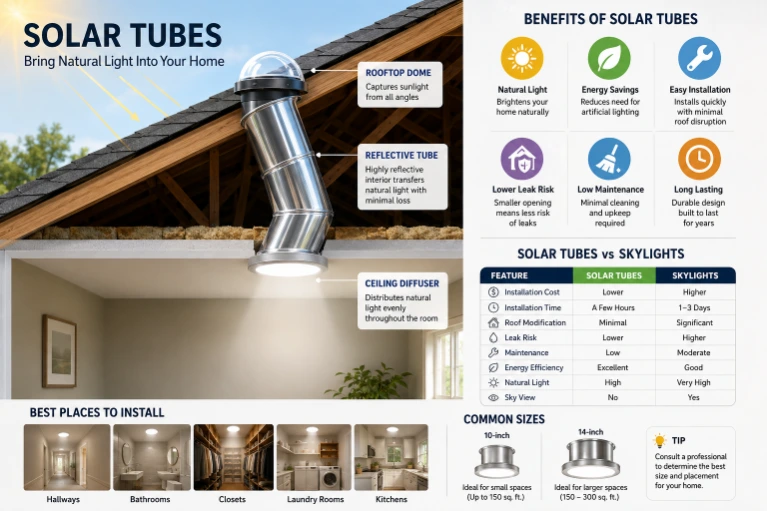
A typical solar tube consists of:
- A rooftop collector dome
- A highly reflective tube
- A ceiling diffuser
The collector captures sunlight, the reflective tube channels that light through the attic space, and the diffuser distributes it evenly throughout the room.
Because solar tubes require less roof modification than traditional skylights, they are often easier and more affordable to install.
Many manufacturers also offer advanced features such as:
- Integrated LED lighting
- Solar-powered ventilation
- Smart dimmers
- UV filtering technology
How Solar Tubes Work
Understanding how solar tubes work helps explain why they are so effective.
Sunlight Collection
A clear dome installed on the roof captures sunlight from multiple angles throughout the day.
Light Transfer
The captured sunlight enters a highly reflective aluminum tube. Premium solar tubes use reflective coatings that preserve most of the available light.
Light Distribution
The sunlight reaches a diffuser mounted in the ceiling, which spreads the light evenly throughout the room.
The result is natural illumination that can brighten spaces ranging from small bathrooms to large kitchens.
For homeowners interested in learning more about daylighting principles, the U.S. Department of Energy offers helpful resources:
https://www.energy.gov/energysaver/daylighting
Solar Tubes vs Skylights
Many homeowners compare solar tubes and skylights before choosing a daylighting solution.
| Feature | Solar Tubes | Skylights |
| Cost | Lower | Higher |
| Installation | Easier | More Complex |
| Leak Risk | Lower | Higher |
| Maintenance | Low | Moderate |
| Energy Efficiency | Excellent | Good |
| Roof Modification | Minimal | Significant |
| Sky View | No | Yes |
When Solar Tubes Are Better
Solar tubes are often the better choice when:
- You need daylight in interior rooms.
- Budget is a concern.
- You want lower maintenance.
- Energy efficiency is a priority.
When Skylights Are Better
Skylights may be preferable if:
- You want outdoor views.
- Architectural design is important.
- You prefer larger openings.
For many homes, solar tubes provide the best balance of affordability and performance.
Solar Tubes Cost in 2026
The cost of solar tubes varies depending on tube size, roof type, and installation requirements.
Solar Tube Kit Cost
Most solar tube kits cost between:
$250–$900
Installation Cost
Professional installation typically ranges from:
$400–$1,500
Total Installed Cost
Most homeowners spend:
$650–$2,500
for a complete solar tube installation.
Although premium systems can cost more, solar tubes remain significantly less expensive than many traditional skylight installations.
Benefits of Solar Tubes
There are several reasons why solar tubes continue to grow in popularity.
Increased Natural Light
Solar tubes can dramatically brighten dark hallways, closets, bathrooms, and laundry rooms.
Improved Energy Efficiency
By reducing the need for electric lighting during the day, solar tubes contribute to overall energy savings.
Additional home-efficiency resources are available through Energy Star:
Quick Installation
Many solar tube installations can be completed in a single day.
Lower Leak Risk
Because solar tubes require smaller roof openings than skylights, leak risks are generally lower.
Minimal Maintenance
Most systems require only occasional cleaning and periodic inspections.
Drawbacks of Solar Tubes
While solar tubes offer many advantages, there are some limitations.
No Outdoor View
Unlike skylights, solar tubes do not provide views of the sky.
Daytime Lighting Only
Without integrated LED options, solar tubes only provide light during daylight hours.
Performance Varies
The effectiveness of solar tubes depends on:
- Roof orientation
- Weather conditions
- Tube length
- Nearby tree coverage
Best Places to Install Solar Tubes
Certain rooms benefit more than others.
Solar Tubes for Hallways
Hallways often lack windows and rely heavily on artificial lighting.
Solar Tubes for Bathrooms
Bathrooms gain natural light while maintaining privacy.
Solar Tubes for Walk-In Closets
Closets become brighter and easier to use throughout the day.
Solar Tubes for Laundry Rooms
Daylight can make laundry spaces feel larger and more comfortable.
Solar Tubes for Kitchens
Additional daylight improves visibility and enhances the overall appearance of the room.
Are Solar Tubes Worth It?
For many homeowners, solar tubes are absolutely worth considering.
Solar tubes are ideal if you:
- Want more natural light.
- Need a lower-cost alternative to skylights.
- Have dark interior spaces.
- Prefer low-maintenance upgrades.
- Want better energy efficiency.
However, if your main goal is enjoying outdoor views or creating a dramatic architectural feature, a traditional skylight may be a better option.
For most households, solar tubes offer an excellent balance of cost, performance, and simplicity.
You can also pair daylighting upgrades with other indoor energy-saving improvements, such as a best water leak sensor
Solar Tubes FAQ
Do solar tubes really work?
Yes. Properly installed solar tubes can provide significant daylight for interior rooms.
How much light do solar tubes provide?
Most solar tubes can effectively illuminate areas between 100 and 300 square feet.
Can solar tubes leak?
When professionally installed, solar tubes generally have a lower leak risk than traditional skylights.
Do solar tubes work on cloudy days?
Yes. Light output decreases, but useful daylight is still available.
How long do solar tubes last?
Most quality solar tubes last 20–25 years or longer with proper maintenance.
Can solar tubes increase home value?
Natural lighting improvements may improve a home’s overall appeal and marketability.
Are solar tubes energy efficient?
Yes. Solar tubes reduce daytime reliance on artificial lighting while generating no additional energy costs.
Final Thoughts
Solar tubes remain one of the most affordable and practical daylighting upgrades available in 2026. Whether you’re brightening a hallway, bathroom, kitchen, or closet, solar tubes provide natural light, lower maintenance requirements, and easier installation than traditional skylights.
For homeowners seeking a simple way to improve indoor comfort and reduce daytime lighting use, solar tubes continue to be a smart investment.

I am Dr. Marcus Reed is an author and researcher focused on sustainable energy, environmental innovation, and clean technology. He is passionate about helping readers understand the future of renewable energy and eco-friendly solutions. Through his writing, he aims to simplify complex energy topics for a wider audience. Learn more at ecopowersence.com.