Bottom Line Up Front (BLUF)
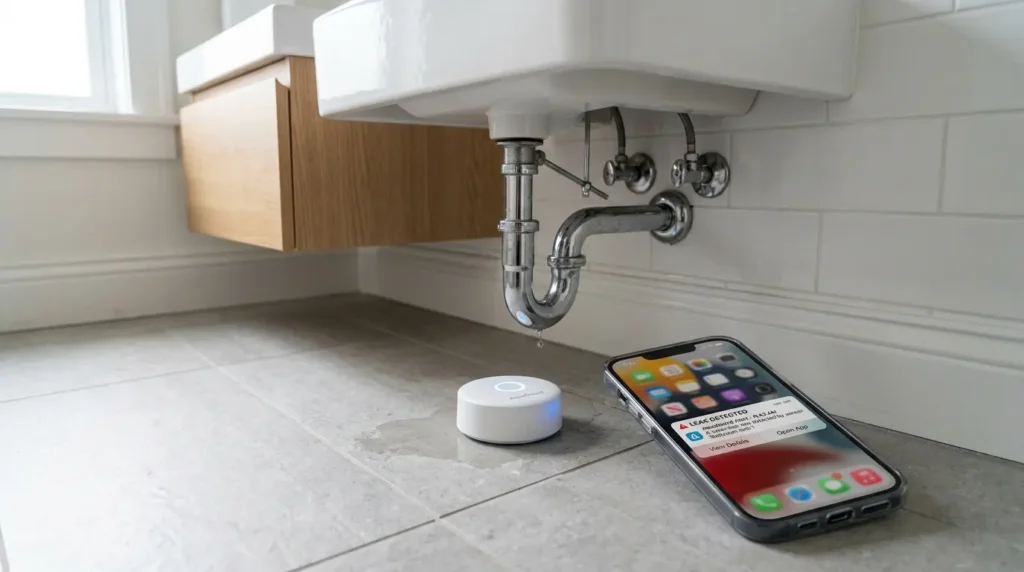
Water damage causes thousands of dollars in repairs for homeowners every year, and most of it starts with a small, undetected leak a slow drip under a sink, a failing washing machine hose, or a water heater that finally gives out. The good news: a $20–$50 water leak sensor can alert you the moment water hits the floor, often preventing damage entirely.
If you want the short answer:
- Best Overall: YoLink Water Leak Sensor 4
- Best Budget Multi-Pack: GoveeLife Water Leak Detector (3-Pack)
- Best for Apple HomeKit: Aqara Water Leak Sensor
- Best No-Hub Standalone: X-Sense Wi-Fi Water Leak Detector
- Best for Samsung SmartThings: Aeotec Zigbee Water Leak Sensor
Below is the complete breakdown, specs comparison, and a full buying guide to help you choose the right sensors for your home plus a quick look at whole-home automatic shutoff systems if you’re considering stepping up to the under-$1000 category.
Why Every Home Needs a Water Leak Sensor
According to industry data,water damage and freezing account for roughly a quarter of all homeowner insurance claims, and the average claim runs well above $10,000. Most of that damage is preventable if you know about the leak before it spreads.
Common high-risk spots:
- Under kitchen and bathroom sinks
- Behind and under washing machines
- Near water heaters and sump pumps
- Basements and crawl spaces
- Behind toilets and dishwashers
A $25 sensor placed in each of these spots is one of the cheapest insurance policies you can buy for your home.
Quick Comparison: Best Water Leak Sensors Under $50
| Model | Connectivity | Hub Required | Alarm | Battery Life | Price |
| YoLink Water Leak Sensor 4 | LoRa | Yes (~$20) | 105 dB | 2–10 years | $25–$35 |
| GoveeLife Water Leak Detector (3-Pack) | Wi-Fi | No | 105 dB | ~1–2 years | $30–$40 |
| Aqara Water Leak Sensor | Zigbee | Yes (Aqara Hub) | Local + app | Up to 2 years | $15–$25 |
| X-Sense Wi-Fi Water Leak Detector | Wi-Fi | No | 110 dB | ~2 years | $25–$40 |
| Aeotec Zigbee Water Leak Sensor | Zigbee | Yes (SmartThings) | Local + app | Up to 2 years | $40–$50 |
1. YoLink Water Leak Sensor 4 (Best Overall)
YoLink stands apart because it uses LoRa radio instead of Wi-Fi or Zigbee meaning it works through concrete walls, in basements, and even in detached garages where Wi-Fi signal doesn’t reach.
Pros
- Real-world range up to 1,000 feet through walls
- 105 dB local alarm, audible from multiple rooms
- Battery lasts 2–10 years depending on model
- Built-in freeze warning sensor
- No monthly subscription required
Cons
- Requires the YoLink Hub (~$20 separately if not bought as a kit)
- Ecosystem is somewhat isolated from mainstream smart home platforms
Best for: Basements, detached structures, and homes with weak Wi-Fi in mechanical rooms. For an in-depth real-world range test, seethis independent LoRa range testing breakdown.
2. GoveeLife Water Leak Detector 3-Pack (Best Budget Multi-Pack)
For straightforward Wi-Fi-direct protection without buying a hub, the GoveeLife 3-pack offers excellent coverage per dollar.
Pros
- No hub needed connects directly to home Wi-Fi
- 105 dB adjustable alarm
- Simple app setup, works with Alexa
- Three sensors cover multiple rooms for under $50 total
Cons
- Wi-Fi direct sensors typically need battery replacement every 1–2 years
- Performance depends on Wi-Fi signal strength at each location
- No automatic shutoff valve integration
Best for: Renters or homeowners who want quick, no-hub coverage across several rooms.
3. Aqara Water Leak Sensor (Best for Apple HomeKit Users)
This compact Zigbee sensor is a favorite among smart home enthusiasts already using an Aqara or compatible hub.
Pros
- Very small footprint fits in tight spaces under sinks and behind toilets
- Battery lasts up to 2 years
- Works with Apple HomeKit, Google Assistant, Alexa, and IFTTT (via hub)
- Among the most affordable sensors on this list
Cons
- Requires an Aqara Hub (not included, and not compatible with third-party Zigbee hubs)
- Sensor must stay within ~33 ft of the hub for a stable connection
Best for: Households already invested in the Aqara or Apple Home ecosystem.
4. X-Sense Wi-Fi Water Leak Detector Kit (Best No-Hub Standalone)
X-Sense kits typically bundle multiple sensors with a slim base station, making this a strong all-in-one option.
Pros
- Ultra-slim sensors fit tight spaces (behind toilets, under appliances)
- App alerts plus a loud 110 dB local alarm
- Kits with multiple sensors often stay just under or near the $50 mark
Cons
- Base station adds a small footprint compared to fully standalone sensors
- Wi-Fi dependency means outages can delay remote alerts
Best for: Buyers who want app notifications without committing to a Zigbee or LoRa ecosystem.
5. Aeotec Zigbee Water Leak Sensor (Best for SmartThings)
A solid choice for anyone already running a Samsung SmartThings hub.
Pros
- Reliable Zigbee connection within SmartThings automations
- Can trigger automated responses (e.g., shutting off a smart valve)
- Compact, battery-powered design
Cons
- Sits at the top of the “under $50” range
- Requires a compatible Zigbee/SmartThings hub to function
Best for: Existing SmartThings households wanting tighter automation integration.
Wi-Fi vs. Zigbee vs. LoRa: Which Connectivity Type Should You Choose?
| Wi-Fi Direct | Zigbee | LoRa | |
| Hub required | No | Yes | Yes |
| Battery life | 1–2 years | Up to 2 years | 2–10 years |
| Range/walls | Limited by router placement | Moderate, mesh-extendable | Excellent through concrete |
| Best for | Quick setup, single rooms | Existing smart home hubs | Basements, outbuildings, weak Wi-Fi |
If you already own a smart home hub, Zigbee sensors are usually the cheapest per-unit option. you don’t, Wi-Fi direct sensors avoid the extra hub cost. If your problem area has weak Wi-Fi basements, garages, crawl spaces LoRa-based YoLink sensors solve that range issue more reliably than anything else on this list.
Where to Place Your Sensors for Maximum Protection
- Water heater place directly underneath or beside the base
- Washing machine behind or under the unit, near hose connections
- Under sinks kitchen and bathroom, near supply lines and P-traps
- Sump pump area basements are highest-risk for slow, unnoticed leaks
- Behind toilets a common but often-overlooked leak point
Start with these five locations before expanding coverage elsewhere in the home. For a more detailed basement-specific protection plan,The Basement Guide’s full sensor breakdown is a useful reference.
Stepping Up to Whole-Home Protection: Systems Under $1000
While individual sensors under $50 are by far the most popular search and purchase category most homeowners start (and stay) here some readers want to know what’s available if they’re ready for whole-home automatic shutoff protection. This is a different category entirely: instead of just alerting you to a leak, these systems physically cut off your home’s water supply the moment a problem is detected.
| System | What’s Included | Automatic Shutoff | Typical Cost |
| Flo by Moen (DIY components) | Smart shutoff valve + optional spot sensors | Yes | $400–$500 |
| Flo by Moen (professionally installed) | Valve + install + spot sensors | Yes | $750–$1,050 |
| Phyn Plus | Whole-home flow monitoring + shutoff | Yes | $500–$700 |
| Guardian by Elexa | Shutoff valve + leak sensors | Yes | $350–$700 |
| Landmark Detection System | Whole-home monitoring + shutoff | Yes | $1,000–$1,500 installed |
Pros of whole-home systems
- Automatically shuts off water before significant damage occurs no need to be home
- Monitors water flow patterns to detect even slow, hidden leaks behind walls
- Can qualify homeowners for insurance premium discounts
- Combines flow-based detection with spot sensors for layered protection
Cons of whole-home systems
- Professional installation often required, roughly doubling the base system cost
- Requires cutting into your home’s main water line
- Higher upfront investment than most homeowners are willing to make for leak detection alone
- Some systems (e.g., Vivint) require ongoing professional monitoring subscriptions
Who this is for: Homeowners with a history of leaks, older plumbing, finished basements, or anyone planning a long absence (vacation homes, frequent travelers) where no one would be home to respond to a spot-sensor alert.
Bottom line: For the vast majority of homes, a handful of under-$50 spot sensors placed at the high-risk locations covered above delivers most of the protection at a fraction of the cost. The under-$1000 whole-home category is worth considering only if automatic shutoff not just alerting is a must-have for your situation.
Do water leak sensors need a subscription? No. Every sensor on this list works without a monthly fee alerts come through the manufacturer’s free app or a local alarm.
How long do the batteries last? Wi-Fi direct sensors (Govee, X-Sense) typically last 1–2 years per battery. Zigbee and LoRa sensors (Aqara, Aeotec, YoLink) are more power-efficient and can last up to 2–10 years depending on the model.
Can these sensors automatically shut off my water? Not on their own. These are detection-only sensors. Automatic shutoff requires a separate smart valve (like Flo by Moen), which typically costs $200+ and is a step up from the under-$50 category.
Do I need a whole-home system, or are spot sensors enough? For most homes, spot sensors under $50 placed at the high-risk locations covered above provide excellent protection at a fraction of the cost. Whole-home systems under $1000 make sense mainly if you want automatic water shutoff or you’re frequently away from home for extended periods.
Do I need a hub for every sensor? Only if the sensor uses Zigbee or LoRa. Wi-Fi direct sensors like GoveeLife and X-Sense connect straight to your home network with no hub.
Final Verdict
For most homeowners, the YoLink Water Leak Sensor 4 offers the best long-term value exceptional range, long battery life, and a loud local alarm that works even without an internet connection. If you want the simplest possible setup with no hub at all, the GoveeLife 3-Pack covers multiple rooms for the price of a single premium sensor.
Whichever you choose, the most important step is simply placing sensors in your highest-risk areas today a $25 device is far cheaper than the repair bill it can prevent.Home

I am Dr. Marcus Reed is an author and researcher focused on sustainable energy, environmental innovation, and clean technology. He is passionate about helping readers understand the future of renewable energy and eco-friendly solutions. Through his writing, he aims to simplify complex energy topics for a wider audience. Learn more at ecopowersence.com.