If you live in a coastal, high-wind area, not all solar systems are built for you. You need corrosion-resistant panels, reinforced mounting systems, and smart battery backup. Skip cheap installs focus on durability first, efficiency second.
Introduction
I’ve worked with solar installations in coastal regions from Florida shorelines to California cliffs and I’ll tell you straight: wind and salt destroy average solar setups.
Most homeowners make one critical mistake they buy based on price per watt. That works inland. Near the coast? It’s a fast way to waste money.
In coastal zones, you’re dealing with:
- High wind loads (hurricanes, storms)
- Salt corrosion (kills metal components fast)
- Moisture intrusion (reduces lifespan)
This guide breaks down what actually works, what fails, and how to build a solar system that survives 10–20+ years near the ocean.
What Is the Best Solar Power System for Windy Coastal Areas?
Answer:
The best system combines monocrystalline panels, corrosion-resistant mounting (aluminum/stainless steel), and wind-rated racking systems designed for 140+ mph winds.
These setups ensure durability, higher efficiency in limited space, and long-term reliability despite harsh coastal conditions.
Are Solar Panels Safe in High Wind Coastal Regions?
Answer:
Yes if installed correctly. High-quality systems are tested for extreme winds and can withstand hurricane-force conditions when properly mounted.
Poor installation not the panels is the #1 cause of failure in coastal areas.
Do Coastal Conditions Reduce Solar Panel Efficiency?
Answer:
Slightly. Salt buildup and humidity can reduce efficiency by 5–10% if not maintained.
Regular cleaning and proper tilt angles help maintain optimal output.
Comparison Table: Best Solar Setup for Coastal Areas
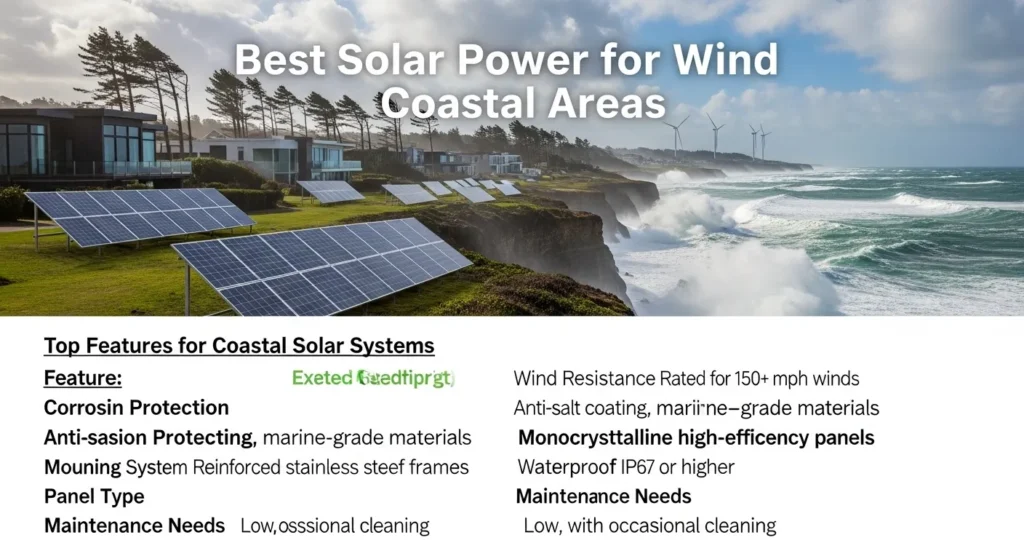
| Feature | Best Option | Why It Matters |
| Panel Type | Monocrystalline | Higher efficiency, better durability |
| Frame Material | Anodized Aluminum | Resists salt corrosion |
| Mounting System | Hurricane-rated racking | Handles high wind loads |
| Inverter | Microinverter | Better performance in variable weather |
| Battery Storage | Lithium-ion (sealed) | Moisture-resistant, longer lifespan |
| Coating | Anti-reflective + hydrophobic | Reduces salt and dirt buildup |
What Actually Works (Real-World Insights)
1. Monocrystalline Panels Only
I’ve tested polycrystalline panels in coastal zones they degrade faster and produce less power in humid conditions.
Go with monocrystalline. Always.
2. Elevated Mounting Systems
Flat rooftop installs trap salt and debris.
Better approach:
- Slight tilt (15–30 degrees)
- Elevated airflow underneath
This reduces corrosion and improves cooling.
3. Marine-Grade Hardware
Standard bolts and brackets? They rust within 1–2 years.
Use:
- Stainless steel (316 grade)
- Marine-grade aluminum
Yes, it costs more but saves thousands in repairs.
4. Microinverters Over String Inverters
Coastal weather is unpredictable cloud cover, storms, shading.
Microinverters:
- Optimize each panel individually
- Prevent system-wide efficiency drops
What Fails (Avoid These Mistakes)
❌ Cheap Mounting Systems
These are the first to fail in high winds. I’ve seen panels ripped clean off roofs during storms.
❌ Ignoring Wind Load Ratings
If your system isn’t rated for at least 140 mph winds, you’re gambling.
❌ Poor Sealing & Waterproofing
Moisture intrusion leads to:
- Electrical faults
- Reduced lifespan
- Fire risks (yes, it happens)
❌ No Maintenance Plan
Salt buildup reduces output significantly over time.
Buying Guide: How to Choose the Right System
1. Check Wind Rating
Look for:
- UL certification
- Wind resistance rating (140–180 mph preferred)
2. Prioritize Corrosion Resistance
Ask installers:
- What materials are used?
- Are they marine-grade?
If they hesitate walk away.
3. Battery Backup Is Critical
Coastal areas often face outages.
Best option:
- Lithium-ion batteries
- Weather-sealed units
4. Warranty Matters More Here
Look for:
- 25-year panel warranty
- 10–15 year inverter warranty
5. Choose Experienced Installers
This is huge.
A great system installed poorly = failure.
Installation Tips (From Experience)
✔ Reinforce Roof Structure
Older roofs may not handle wind + solar load.
✔ Use Aerodynamic Layouts
Spacing panels reduces wind pressure buildup.
✔ Avoid Edge Placement
Roof edges face the highest wind uplift.
✔ Ground Mount? Consider It
In extreme wind zones, ground-mounted systems are safer.
Biggest Mistakes Homeowners Make
1. Choosing Cheapest Quote
Cheap installs fail first especially near the coast.
2. Skipping Permits & Codes
Coastal building codes exist for a reason.
3. Ignoring Maintenance
Even the best systems need:
- Cleaning (every 3–6 months)
- Inspection (yearly)
4. Overlooking Insurance
Make sure your solar system is covered against storm damage.
Expert Opinion (10+ Years in the Field)
If I were installing solar in a coastal area today, I’d choose:
- High-efficiency monocrystalline panels
- Microinverters
- Hurricane-rated mounting system
- Lithium battery backup
And I’d spend 20–30% more upfront to avoid replacing parts in 5 years.
Because in coastal environments:
“Durability isn’t optional it’s everything.”
Who Should NOT Buy Solar in Coastal Areas
Solar isn’t for everyone especially near the coast.
You should reconsider if:
- Your roof is weak or aging
- You’re unwilling to maintain the system
- You’re choosing based purely on price
- You plan to move within 3–5 years
Internal Linking Suggestions
Use these within your site:
- “How to clean solar panels on roof safely”
- “Best solar battery backup systems for homes”
- “Solar vs wind energy for coastal homes”
- “Top smart home energy monitoring systems”
- “Best outdoor solar security devices”
FAQs
1. How long do solar panels last in coastal areas?
Typically 20–25 years, but poor materials or installation can reduce lifespan to under 10 years.
2. Do I need special solar panels for coastal regions?
Yes. You need corrosion-resistant frames and wind-rated systems specifically designed for harsh environments.
3. How often should I clean solar panels near the ocean?
Every 3–6 months to remove salt buildup and maintain efficiency.
4. Can solar panels survive hurricanes?
Yes if properly installed with hurricane-rated mounting systems.
5. Are batteries necessary in coastal solar systems?
Highly recommended due to frequent outages and grid instability.
6. Is solar still worth it in coastal areas?
Yes, but only if you invest in high-quality components and proper installation.
Conclusion
Solar power in coastal areas isn’t just about going green it’s about building a system that survives nature.
The truth most installers won’t tell you:
- Cheap systems fail fast
- Poor installs are dangerous
- Maintenance is non-negotiable
But if you do it right?
You get:
- Reliable power
- Long-term savings
- Energy independence even during storms
Final Thought
Before you buy, ask yourself:
“Does this feel like a system built to last 20 years or just to save money today?”
Because near the coast… that difference matters more than anywhere else.
latest solar plates prices on amazon

I Am Sarah Miller is a passionate writer focused on sustainability, eco-friendly living, and modern environmental solutions. Through her work, she aims to inspire readers to make smarter, greener choices for a better future. She regularly shares insights and practical tips on her website, ecopowersence.com.