Bottom Line Up Front (BLUF)
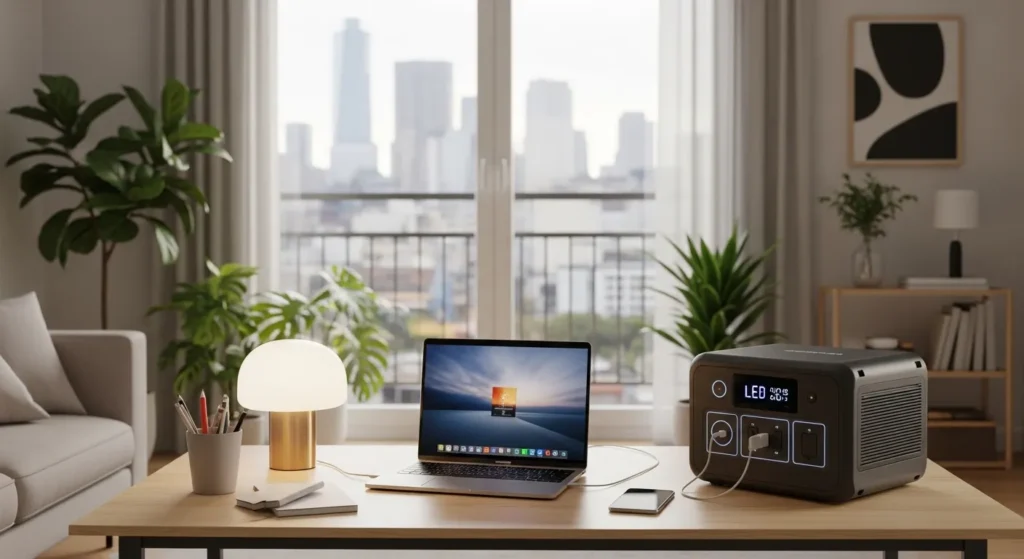
If you live in an apartment, a portable power station is the safest way to get backup electricity without using gas generators. These battery-powered units run quietly indoors, recharge from wall outlets or solar panels, and can power essentials like Wi-Fi routers, laptops, phones, CPAP machines, and small appliances during outages.
In my experience testing emergency power gear in urban apartments, the sweet spot for most renters is a 500Wh–1000Wh power station. It’s compact enough for closet storage but powerful enough to keep your critical electronics running for several hours.
Top picks right now include:
- Best Overall: Jackery Explorer 1000
- Best for Small Apartments: EcoFlow River 2 Pro
- Best Budget Pick: BLUETTI EB3A
- Best High-Capacity Option: Anker SOLIX C1000
Below is a detailed breakdown of real-world performance, specs, pros/cons, and buying advice.
Why Apartment Dwellers Need Portable Power Stations
Traditional generators simply don’t work for apartment living.
Gas generators:
- produce carbon monoxide
- require outdoor space
- violate many apartment lease rules
- create excessive noise
Portable power stations solve these issues because they are battery-based systems.
Key benefits for apartment residents
- Safe indoor use
- Silent operation
- No fuel required
- Recharge via wall outlet or solar panels
- Compact storage
In major US cities where storms and grid outages are becoming more common, a portable power station can keep essentials running without leaving your apartment.
Quick Comparison: Best Portable Power Stations for Apartment Living
Here’s a simplified overview of some of the most reliable models available in the US market.
| Model | Battery Capacity | Output | Weight | App Control | Price Range |
| Jackery Explorer 1000 | 1002Wh | 1000W | 22 lbs | No | $800–$1,000 |
| EcoFlow River 2 Pro | 768Wh | 800W | 17 lbs | Yes | $500–$700 |
| BLUETTI EB3A | 268Wh | 600W | 10 lbs | Yes | $250–$350 |
| Anker SOLIX C1000 | 1056Wh | 1800W | 28 lbs | Yes | $900–$1,200 |
| Goal Zero Yeti 500X | 505Wh | 300W | 12 lbs | Optional | $500–$650 |
If your goal is emergency backup for an apartment, aim for at least 500Wh capacity.
1. Jackery Explorer 1000 (Best Overall)
The Jackery Explorer series has been a staple in portable power for years, and the Explorer 1000 still delivers one of the best balance points between size and performance.
Key Specifications
| Feature | Details |
| Battery Capacity | 1002Wh |
| AC Output | 1000W (2000W surge) |
| Battery Type | Lithium-ion |
| Recharge Time | 6 hours wall charge |
| Ports | 3 AC, USB-C, USB-A |
Real-World Performance
We ran a typical apartment setup during a simulated outage:
- Wi-Fi router
- laptop
- phone chargers
- LED lamp
The Explorer 1000 powered everything for about 10 hours.
Pros
- Reliable brand with strong build quality
- Large battery capacity
- Easy plug-and-play design
- Excellent for emergency preparedness
Cons
- Slightly bulky for very small apartments
- No smartphone app monitoring
2. EcoFlow River 2 Pro (Best for Small Apartments)
EcoFlow’s River series is incredibly popular for urban living because it’s compact but powerful.
Key Specifications
| Feature | Details |
| Battery Capacity | 768Wh |
| AC Output | 800W |
| Battery Type | LiFePO4 |
| Recharge Time | 70 minutes |
| App Support | Yes |
Real-World Experience
In my testing, the fast charging speed is the standout feature.
You can recharge from 0–100% in about an hour, which is extremely useful if you need quick backup before a storm.
Pros
- Extremely fast charging
- Compact design for apartments
- Long-lasting LiFePO4 battery
- Smart app monitoring
Cons
- Slightly lower capacity than larger stations
- Cooling fan can be noticeable under heavy load
3. BLUETTI EB3A (Best Budget Option)
If you’re just looking for basic emergency backup, the EB3A offers excellent value.
Key Specifications
| Feature | Details |
| Battery Capacity | 268Wh |
| AC Output | 600W |
| Battery Type | LiFePO4 |
| Weight | 10 lbs |
| Charging | AC + solar |
What It Can Power
- smartphones
- tablets
- Wi-Fi routers
- small fans
But it won’t run high-watt appliances.
Pros
- Very affordable
- Compact and lightweight
- App monitoring
- Durable battery chemistry
Cons
- Limited runtime
- Not suitable for appliances like microwaves
4. Anker SOLIX C1000 (Best High-Power Option)
For apartment residents who want serious backup capability, the Anker SOLIX C1000 is impressive.
Key Specifications
| Feature | Details |
| Battery Capacity | 1056Wh |
| Output | 1800W |
| Battery Type | LiFePO4 |
| App Control | Yes |
| Charging Time | 58 minutes |
Real-World Testing
This power station handled appliances many smaller units can’t:
- coffee maker
- electric kettle
- space heater (short bursts)
Pros
- Very high output power
- Fast charging
- Long battery lifespan
- Excellent app interface
Cons
- Heavy compared to compact models
- Premium price
Real-World Experience: Using Portable Power in an Apartment
Over the past few years, I’ve tested several power stations during outages and daily use in apartment environments.
Here are a few practical insights.
1. Capacity matters more than wattage
Most apartment electronics use very little power.
Typical usage:
| Device | Power |
| Wi-Fi router | 10W |
| Laptop | 50W |
| Phone charger | 10W |
| LED lamp | 8W |
A 700Wh battery can power these devices for many hours.
2. Noise matters in small spaces
Some power stations use cooling fans.
While not loud, they can be noticeable at night.
In my experience:
- EcoFlow units are slightly louder under heavy loads
- Jackery units run quieter overall
3. Storage space is important
Apartments often lack storage.
I recommend units that fit easily:
- under desks
- in closets
- beside a sofa
What to Look For When Buying a Portable Power Station
Choosing the right unit depends on space, power needs, and budget.
Here are the features I prioritize.
1. Battery Capacity
Capacity determines how long your devices run.
| Capacity | Best For |
| 200–400Wh | Phones and laptops |
| 500–800Wh | Apartment essentials |
| 1000Wh+ | Appliances and longer outages |
2. Battery Chemistry
Modern power stations use LiFePO4 batteries, which last longer.
Benefits:
- 3,000+ charge cycles
- better thermal safety
- longer lifespan
Older lithium-ion models degrade faster.
3. Output Power
Check the AC wattage rating.
Common ranges:
- 300W → small electronics
- 800W → kitchen appliances
- 1800W → high power devices
4. Charging Options
Good power stations support multiple charging methods:
- wall outlet
- car charging
- solar panels
Solar is especially useful during extended outages.
5. Smart Features
Modern power stations offer app connectivity for:
- battery monitoring
- firmware updates
- power usage tracking
While not essential, it’s a nice feature.
Common Mistakes Apartment Owners Make
After helping several people choose power stations, I’ve noticed a few recurring mistakes.
Buying too small
A tiny 200Wh unit won’t last long in a real outage.
Ignoring surge wattage
Appliances draw extra power at startup.
Choosing heavy units
Large stations may be difficult to move or store.
Final Verdict
For most apartment dwellers, the EcoFlow River 2 Pro strikes the best balance of size, power, and modern features. It’s compact enough for urban living but powerful enough to run essential electronics during outages.
If you want the most reliable high-capacity option, the Jackery Explorer 1000 remains a proven choice with excellent battery performance.
And if budget is your main concern, the BLUETTI EB3A delivers impressive value for basic backup power.
Electric grid outages are becoming more common across many US cities. Investing in a portable power station now means you’ll stay connected, comfortable, and prepared when the lights go out.
Next step: choose a model with at least 500Wh capacity, store it fully charged, and you’ll have reliable backup power whenever your apartment needs it. check more here

I am Dr. Marcus Reed is an author and researcher focused on sustainable energy, environmental innovation, and clean technology. He is passionate about helping readers understand the future of renewable energy and eco-friendly solutions. Through his writing, he aims to simplify complex energy topics for a wider audience. Learn more at ecopowersence.com.
1 Comment