By Dr. Marcus Reed
Solar panels are designed to generate clean electricity safely, but a complete solar installation requires more than just photovoltaic modules and an inverter. One of the most important safety features in any solar system is proper grounding.
Many homeowners and businesses ask, why do solar panels need grounding? The reason is simple: grounding helps protect people, solar equipment, and electrical systems from dangerous faults by providing a safe path for unwanted electrical current.
Without proper grounding, a solar system may still produce electricity, but it can create serious safety risks. Consequently, a fault inside a solar panel, inverter, or wiring system could make exposed metal parts dangerous to touch.
In this guide, we will explain how solar panel grounding works, why it is necessary, which components need grounding, common mistakes to avoid, and how grounding requirements change for residential and commercial solar projects.
What Is Solar Panel Grounding?
Solar panel grounding is the process of connecting the exposed conductive parts of a photovoltaic (PV) system to a safe grounding path.
A solar installation contains several metal components, including:
- Solar panel frames
- Mounting rails
- Inverter enclosures
- Electrical boxes
- Metal conduits
Under normal conditions, these parts should not carry electricity. However, electrical faults can occur due to damaged insulation, wiring problems, manufacturing issues, or environmental conditions.
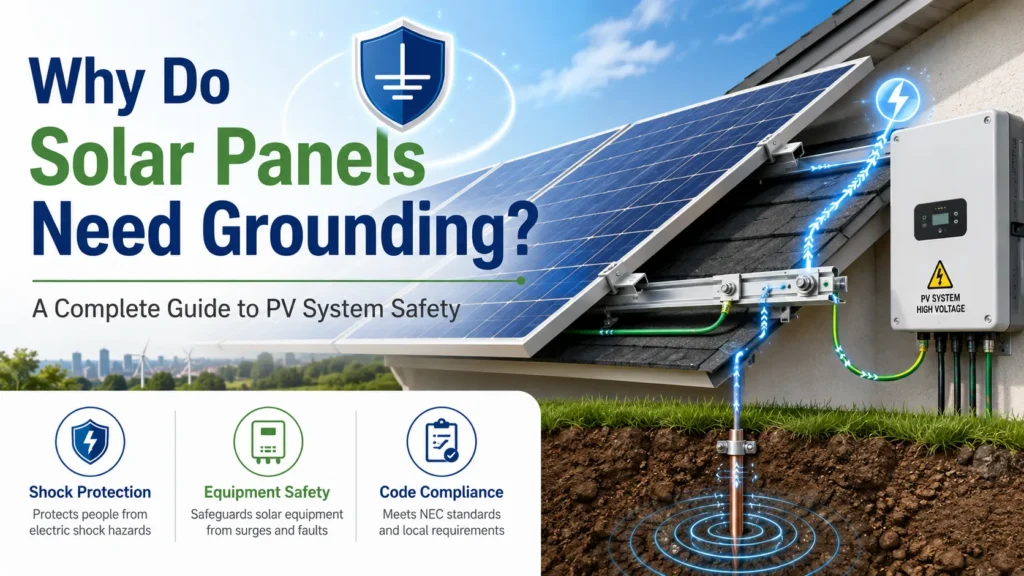
Therefore, grounding provides a controlled path for fault current to travel safely away from people and sensitive equipment. Simply put, grounding acts as a safety route that helps electricity move where it should go during abnormal situations.
How Grounding Works in a PV System
A properly grounded solar system connects equipment through grounding conductors and bonding connections.
If a fault occurs, such as a damaged wire touching a metal frame, the grounding system helps:
- Carry fault current safely.
- Allow protective devices to detect the problem.
- Disconnect the affected circuit.
- Reduce the risk of electric shock.
Importantly, the grounding system does not improve solar panel efficiency or increase electricity production. Instead, its main purpose is safety and protection.
Grounding vs. Bonding Explained
They are closely related, but they perform different jobs.
Grounding creates a connection between electrical equipment and a grounding path. For example, this means connecting solar equipment to grounding conductors, and connecting those conductors to approved grounding electrodes.
Bonding, meanwhile, connects metal parts so they maintain the same electrical potential. For instance, solar panel frames are bonded to mounting rails, mounting rails are bonded to each other, and the complete array is then connected to the grounding system.
Ultimately, both grounding and bonding are necessary for a safe solar installation.
Why Do Solar Panels Need Grounding for Safety?
Solar panels need grounding because electrical faults can create dangerous conditions if exposed metal parts become energized. A solar system operates with electrical current flowing through cables, modules, and power electronics, and while modern equipment includes safety features, no electrical system is completely free from faults. As a result, proper grounding provides an additional layer of protection.
Protecting People From Electric Shock
The biggest reason for solar grounding is protecting people. Notably, solar panels can continue producing electricity whenever sunlight reaches them, which means DC voltage can exist even when the home’s main electricity supply is switched off.
If a fault causes electricity to reach a metal solar panel frame or mounting structure, touching that equipment could become dangerous. However, a grounding system provides a safer path for fault current, helping reduce the possibility of electric shock.
For example, if a damaged cable inside a solar panel contacts the aluminum frame, the grounding system can carry the fault current away instead of allowing the frame to remain energized.
Preventing Solar Equipment Damage
Solar systems are valuable investments, and components such as inverters, batteries, and monitoring equipment can be expensive to repair or replace. Accordingly, grounding helps protect equipment by managing abnormal electrical conditions.
A properly designed grounding system helps reduce risks related to:
- Electrical faults
- Equipment failures
- Damaging voltage conditions
- Long-term reliability problems
This is especially important for larger systems where multiple electrical components operate together.
Helping Fault Protection Systems Work Correctly
Grounding also helps safety devices respond when problems occur, since electrical protection systems depend on proper fault current paths. When grounding is correctly installed, protective equipment such as circuit breakers, ground fault protection devices, and inverter protection systems can identify abnormal conditions and disconnect power when needed. Without a proper grounding path, however, faults may not be detected quickly.
Which Solar Components Need Grounding?
A complete solar grounding system includes multiple components, so grounding only one part of the system is not enough.
Solar panel frames are usually made of aluminum. Although these frames normally do not carry electrical current, they can become dangerous during a fault. Grounding the panel frames helps ensure that if an electrical problem occurs, the fault current has a safe route away from exposed surfaces.
Mounting rails and racking systems are typically made from aluminum or steel. Because these structures connect multiple panels together, they must be properly bonded and grounded — a continuous grounding connection helps maintain electrical safety across the entire solar array.
Solar inverters and electrical equipment also require grounding. The inverter is one of the most important parts of a solar system since it converts DC electricity from solar panels into AC electricity used by buildings. Because inverters contain electrical circuits and metal enclosures, proper grounding is required. Other equipment that may need grounding includes combiner boxes, disconnect switches, junction boxes, battery storage systems, and metal electrical conduits.
Grounding conductors and electrodes connect solar equipment to the grounding system. Depending on the installation design and local requirements, the system may connect to grounding electrodes, building grounding systems, or ground rods. The correct design ultimately depends on factors such as system size, location, and electrical standards.
What Happens When Solar Panels Are Not Properly Grounded?
A solar system without proper grounding can create several risks.
Electrical shock risks are the most serious concern. If exposed metal parts become energized and no proper grounding path exists, a person touching the equipment may receive an electric shock. Furthermore, this risk increases in outdoor environments where solar systems are exposed to rain, moisture, and weather changes.
Fire and equipment failure risks also increase, since electrical faults can create heat and damage system components. Possible consequences include damaged wiring, failed inverters, burned connections, and reduced system reliability. Proper grounding helps reduce these risks by allowing faults to be handled safely.
Code compliance problems can arise too. Incorrect grounding may result in failed inspections, safety concerns, installation delays, and insurance issues. Overall, following electrical codes is important for both residential and commercial solar projects.
Does Solar Grounding Protect Against Lightning?
Many people believe grounding makes solar panels completely protected from lightning. However, this is a common misunderstanding. Grounding improves electrical safety, but it does not guarantee that lightning cannot damage a solar system.
Instead, lightning protection usually requires additional solutions, including surge protection devices, dedicated lightning protection systems, proper equipment design, and correct installation practices. So, while grounding and lightning protection work together, they are not the same thing. For large solar installations, engineers therefore often consider grounding design, surge protection, and system layout together to improve overall safety.
How Solar Panel Grounding Is Installed
The exact grounding method depends on the system type, location, and electrical requirements.
A typical residential rooftop solar grounding process includes bonding solar panel frames, connecting mounting rails, installing grounding conductors, and connecting equipment to the building grounding system. Residential systems usually have simpler designs, but proper installation is still essential.
Commercial solar grounding design, on the other hand, requires more advanced planning because these systems often include large solar arrays, multiple inverters, higher electrical capacity, and complex equipment layouts. As a result, large PV projects may require detailed grounding designs to manage fault currents and maintain system reliability.
For a deeper look at large-scale PV grounding methods, system design, and commercial applications, see our complete guide:Commercial Solar Grounding Solutions: Complete Guide to PV System Grounding Design.
Solar Grounding Requirements and Electrical Standards
Solar grounding is not only a recommended safety practice — it is also an important part of electrical installation standards. Electrical codes exist to make sure photovoltaic systems are installed in a way that protects people, buildings, and equipment.
In the United States, solar PV installations are covered under the National Electrical Code (NEC), including Article 690, which provides requirements related to photovoltaic systems. NEC PV requirements cover equipment grounding, bonding connections, grounding conductors, fault protection, and electrical safety measures. You can review the full photovoltaic electrical requirements through the National Electrical Code (NEC) resources.
For solar professionals and installers, following approved electrical standards is essential, since grounding mistakes can create serious safety hazards.
NEC Article 690 and PV Grounding Rules
NEC Article 690 provides guidelines specifically for solar photovoltaic systems. The purpose of these rules is to ensure that exposed conductive parts are properly grounded, fault currents have safe pathways, electrical equipment operates safely, and protection devices can respond during failures. The exact grounding method depends on factors such as solar system size, equipment type, installation location, and local electrical requirements. Because solar technology continues to evolve, installers must therefore follow the latest applicable standards and manufacturer instructions.
Why Professional Installation Matters
Solar grounding may look simple, but a reliable grounding system requires proper planning. A qualified solar installer understands electrical code requirements, equipment compatibility, correct grounding materials, proper bonding techniques, and local inspection requirements.
Incorrect grounding can create hidden problems that may not appear immediately after installation. Professional design and installation, therefore, help ensure the solar system remains safe throughout its operating life.
Common Solar Grounding Mistakes
Even though grounding is a basic safety concept, several mistakes can reduce the effectiveness of a solar grounding system.
Confusing grounding with lightning protection is one common mistake. Grounding helps manage electrical faults, but lightning protection requires additional planning such as surge protection devices, proper equipment placement, and correct wiring design.
Using incorrect grounding materials is another issue, since solar systems operate outdoors for many years. Grounding components must handle rain, heat, humidity, temperature changes, and corrosion risks. Using unsuitable materials or poor-quality connections can weaken the grounding system over time, so proper installations use approved grounding components designed for outdoor electrical applications.
Ignoring bonding connections is also a frequent oversight. Some installers focus only on the grounding wire and forget about bonding. However, if solar panel frames, mounting rails, and electrical equipment are not properly connected, the grounding system may not work as intended.
Assuming the inverter grounds everything is a final misunderstanding worth noting. The inverter is only one part of the system — solar panel frames, mounting structures, electrical boxes, and other metal components may also require proper bonding and grounding.
How Solar Grounding Improves Long-Term System Reliability
Grounding is not only about immediate safety; it also supports long-term solar system performance. A properly designed grounding system helps reduce electrical stress, protect sensitive equipment, improve fault response, and support safer maintenance. This becomes especially important as solar systems age, since outdoor exposure can affect wiring insulation, electrical connections, and mounting components over time.
The Role of Grounding in Commercial Solar Projects
Commercial solar installations often require more detailed grounding designs compared with residential systems. Large solar projects may include hundreds or thousands of solar modules, multiple inverter stations, extensive metal structures, and large electrical distribution systems.
Because of their size, commercial systems require careful planning to ensure proper fault protection. Important factors include soil conditions, array layout, equipment locations, electrical capacity, and local standards. Consequently, businesses planning large solar installations should consider grounding during the early design stage rather than treating it as an installation detail.
For a complete overview of commercial PV grounding strategies, system design considerations, and large-scale solar safety planning, explore our pillar guide:Commercial Solar Grounding Solutions: Complete Guide to PV System Grounding Design.
Frequently Asked Questions About Solar Panel Grounding
Do all solar panels need grounding? Most permanent solar installations require grounding of exposed conductive parts, including panel frames and mounting structures. However, exact requirements depend on system design, equipment specifications, and local electrical regulations.
Can solar panels work without grounding? Yes, solar panels may still produce electricity without proper grounding, but that does not mean the system is safe. Operating without proper grounding increases risks of electric shock, equipment damage, and electrical failures. A solar system should always be installed according to approved safety standards.
Does grounding affect solar panel efficiency? No. Grounding does not reduce solar panel efficiency or decrease electricity production. Its purpose is safety, not energy generation. A properly grounded solar system can continue producing power normally while protecting against fault conditions.
Do portable solar panels need grounding? Portable solar systems may have different grounding requirements compared with permanent rooftop or commercial installations. The correct approach depends on product design, manufacturer instructions, and how the system is being used. Always check the equipment documentation before installation.
Can homeowners install solar grounding themselves? Solar grounding involves electrical safety considerations and code requirements. Although some basic concepts may seem simple, incorrect grounding can create dangerous conditions. Permanent solar systems should therefore be installed and inspected according to local electrical requirements by qualified professionals.
Final Thoughts: Why Proper Solar Panel Grounding Should Never Be Ignored
Grounding is one of the most important safety features in a solar photovoltaic system. When people ask, why do solar panels need grounding?, the answer comes down to protection.
A properly grounded solar system helps protect people from electric shock, protect equipment from electrical faults, allow safety devices to respond correctly, and support reliable long-term operation. Whether it is a small residential rooftop system or a large commercial solar installation, grounding should never be treated as an optional feature.
A safe solar project ultimately starts with proper design, quality components, correct installation practices, and compliance with electrical standards. As solar adoption continues to grow, understanding grounding helps homeowners, businesses, and renewable energy professionals make better decisions and build safer energy systems.

I am Ethan Brooks is an author dedicated to exploring sustainability, technology, and forward-thinking solutions. His writing highlights simple yet powerful ways to improve everyday life while protecting the planet. He believes knowledge can drive meaningful change. Discover more at ecopowersence.com.