Outdoor equipment is only as reliable as the hardware holding it in place. Whether you are installing solar panels, security cameras, wireless antennas, or smart sensors, choosing the right vertical pole mount bracket plays a critical role in long-term system performance. Many installers focus heavily on the device itself, but poor mounting hardware often causes vibration, alignment issues, and premature equipment failure.
A quality mounting system solves these problems by providing stability, durability, and flexibility. Furthermore, the right design helps sensitive equipment withstand wind, rain, snow, and constant outdoor exposure. This comprehensive guide explains how pole mounting systems work, which materials perform best, and how to choose the right solution for your project.
What Is a Vertical Pole Mount Bracket?
A vertical pole mount bracket is a specialized hardware system designed to attach utility equipment to a vertical pole, mast, structural column, or utility pillar.
These brackets create a rigid, secure connection between the equipment and the support structure. As a result, installers can position devices at optimal heights for maximum performance, line-of-sight signal transmission, and wide-area coverage.
Common applications include:
- Solar energy systems (small off-grid panels to mid-sized arrays)
- CCTV and surveillance cameras
- Wi-Fi access points and IoT gateways
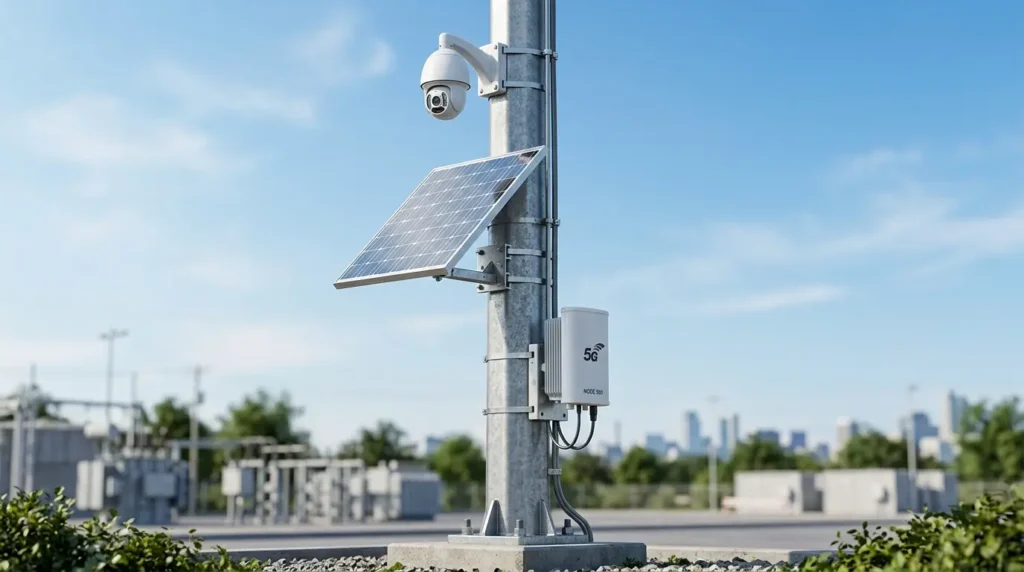
- Wireless telecom antennas (LTE, 5G, and Point-to-Point)
- Environmental and weather sensors
- Smart city infrastructure and outdoor lighting
Consequently, pole-mounted hardware has become a standard engineering solution across residential, commercial, and industrial projects.
Why Heavy-Duty Pole Mounting Hardware Matters Outdoors
Outdoor equipment faces constant environmental stress. High wind loads, thermal expansion, moisture, and UV exposure can gradually weaken poorly designed mounting systems. Therefore, choosing durable, heavy-duty hardware is essential.
A quality bracket offers several distinct advantages:
- Improved Structural Stability: Minimizes mechanical play and fatigue.
- Better Equipment Protection: Prevents physical damage from drops or shifts.
- Increased Public Safety: Reduces the risk of hardware falling in public spaces.
- Longer Service Life: Minimizes total cost of ownership (TCO).
- Easier Maintenance Access: Allows technicians to service units safely.
In addition, proper mounting drastically reduces high-frequency vibration. This helps surveillance cameras deliver stable footage and ensures directional wireless antennas maintain precise alignment.
Common Designs of a Pole Mounting Bracket System
Different projects require different structural approaches. Understanding the mechanical variations of a pole mounting bracket helps ensure the best fit for your specific installation site.
                  [ POLE ]
                     ||
    (Side-Mount)     ||     (Top-of-Pole)
   [Device] --- [Bracket]       [Solar/Light]
                     ||              |
                     ||          [Bracket]
                     ||              |
                     ||=============( )
Side-Mounted Bracket Designs
Side-mounted systems attach equipment directly to the vertical profile of a pole. This design works exceptionally well for security cameras, small omnidirectional antennas, and traffic monitoring devices. Furthermore, technicians can access side-mounted equipment more easily during routine inspections.
Top-of-Pole Configurations
Top-mounted configurations position the equipment directly above the support mast. This arrangement provides 360-degree clear views, making it the preferred choice for wide-area camera coverage, lightning rods, and maximum solar exposure.
Adjustable Pole Mount Bracket Systems
Adjustable brackets feature integrated articulation joints or tilt-rotational slots. These systems are ideal for directional antennas and solar panels, allowing installers to optimize tilt angles based on geographic coordinates without replacing the entire supporting framework.
Universal Equipment Brackets
Universal mounting systems feature multi-hole patterns and adjustable steel strapping bands. They support multiple device brands and types, making them highly popular for municipal projects that require future-proof infrastructure upgrades.
Material Selection: Choosing the Right Metal for Longevity
Material science directly impacts the lifespan of an outdoor vertical pole mount bracket. Choosing the wrong metal can lead to galvanic corrosion and structural failure.
| Material | Best For | Pros | Cons |
|---|---|---|---|
| Marine-Grade Aluminum | Coastal zones, light equipment | Lightweight, rust-resistant | Lower structural load limit |
| Hot-Dip Galvanized Steel | Industrial, high-load solar | Exceptional strength, cost-effective | Heavy, industrial appearance |
| Stainless Steel (304/316) | Chemical plants, high-moisture | Ultimate corrosion resistance | Premium pricing |
Industry Applications for Pole Mounting Systems
1. Solar Panel Infrastructure
Solar installations frequently rely on pole-mounted arrays when ground space is constrained or roof orientation is sub-optimal. According to the U.S. Department of Energy Solar Energy Technologies Office, precise panel orientation and structural stability significantly affect long-term photovoltaic efficiency.
Similarly, data from the National Renewable Energy Laboratory (NREL) highlights that utilizing an adjustable pole mounting bracket allows seasonal tilt adjustments, maximizing annual kilowatt-hour (kWh) output.
2. Surveillance and CCTV Deployments
Security cameras require zero-vibration mounting to ensure video analytics and facial recognition software operate accurately. For public infrastructure, robust steel bands and anti-tamper brackets prevent unauthorized physical interference or alignment displacement during extreme storm events.
3. Wireless Antennas and Telecom Hardware
As telecom networks expand, positioning radios correctly is critical. Detailed deployment framework updates from the Federal Communications Commission (FCC) Wireless Services emphasize the need for standardized, structurally sound wireless infrastructure to sustain high-frequency 5G and LTE microcells.
Key Features to Evaluate Before Buying
Before purchasing a commercial vertical pole mount bracket, verify these engineering metrics:
- Wind and Load Capacity: Ensure the bracket rated weight capacity accommodates your equipment plus localized wind-velocity loads and potential ice accumulation.
- Pole Diameter Compatibility: Measure the target pole’s outer diameter (OD). Ensure the bracket clamping system (e.g., U-bolts, strapping bands) matches the pole’s shape (round, square, or octagonal).
- Corrosion Resistance Engineering: Look for hardware utilizing hot-dip galvanization (ASTM A153 standard) or architectural-grade outdoor powder coatings.
Step-by-Step Installation Best Practices
[Inspect Pole Structural Integrity]
               │
               ▼
[Pre-assemble Bracket & Set Tilt Angle]
               │
               ▼
[Secure Clamps/Straps to Vertical Mast]
               │
               ▼
[Mount Device & Torque All Fasteners]
- Inspect the Support Structure: Before securing the pole mounting bracket, verify that the utility pole or mast is free of internal structural rot, deep rust, or micro-cracks.
- Avoid Dissimilar Metal Contact: Use isolation washers where aluminum brackets meet steel poles to prevent galvanic corrosion.
- Adhere to Safety Protocols: Outdoor installations often involve high elevations and proximity to power lines. Ensure all field technicians strictly follow OSHA Fall Protection Standards during deployment.
- Execute Routine Maintenance Inspections: Schedule annual checks to retorque loose hardware bolts, inspect weathering seals, and correct minor alignment drifts caused by wind shedding.
Frequently Asked Questions
What is a vertical pole mount bracket used for?
It is a specialized structural hardware kit used to securely anchor electronics, solar panels, lighting, and networking gear to vertical poles, utility masts, or columns.
Which material lasts the longest in coastal areas?
Grade 316 stainless steel or marine-grade anodized aluminum offers the longest lifecycle in high-salinity coastal environments.
How do I calculate the wind load for a pole mount system?
Wind load is calculated based on the surface area of your equipment, local wind speeds, and the drag coefficient. For larger setups, always consult an engineer to ensure your bracket can handle regional wind speeds.
Final Verdict
Selecting the appropriate vertical pole mount bracket is vital for the survival of your outdoor technical infrastructure. Investing in heavy-duty, corrosion-resistant brackets up front dramatically reduces long-term operational maintenance costs and avoids catastrophic equipment loss.
For standard commercial use, aluminum and galvanized configurations provide an optimal balance of structural strength and value. However, for critical marine or heavy industrial sites, premium stainless steel remains the safest choice. As smart grid systems, distributed wireless infrastructure, and off-grid solar arrays continue to scale through 2026, high-quality mounting components remain the foundation of operational reliability.HOME

I Am Sarah Miller is a passionate writer focused on sustainability, eco-friendly living, and modern environmental solutions. Through her work, she aims to inspire readers to make smarter, greener choices for a better future. She regularly shares insights and practical tips on her website, ecopowersence.com.