Smart vent systems can cut HVAC energy waste by up to 20–30% by directing airflow only where you need it. But here’s the truth most blogs won’t tell you:
👉 They only work well if your HVAC system is compatible and balanced correctly.
If you install the wrong system or install it wrong you can actually damage your HVAC system or make airflow worse.
🧠 What Is a Smart Vent System?
A smart vent system replaces standard air vents with automated, app-controlled vents that open and close based on room temperature and occupancy.
👉 In simple terms:
It sends air only where it’s needed, instead of wasting energy cooling empty rooms.
❓ Do Smart Vents Actually Save Energy?
Yes but only in the right setup.
Smart vents save energy by:
- Reducing airflow to unused rooms
- Lowering HVAC runtime
- Improving temperature consistency
⚠️ However:
If your system isn’t designed for zoned airflow, pressure buildup can reduce efficiency or cause wear.
❓ Are Smart Vent Systems Worth It in 2026?
For most modern homes yes.
They’re especially worth it if:
- You have hot/cold rooms
- You work from home
- Your energy bills are high
Not worth it if:
- Your HVAC is already well-zoned
- Your ductwork is old or poorly designed
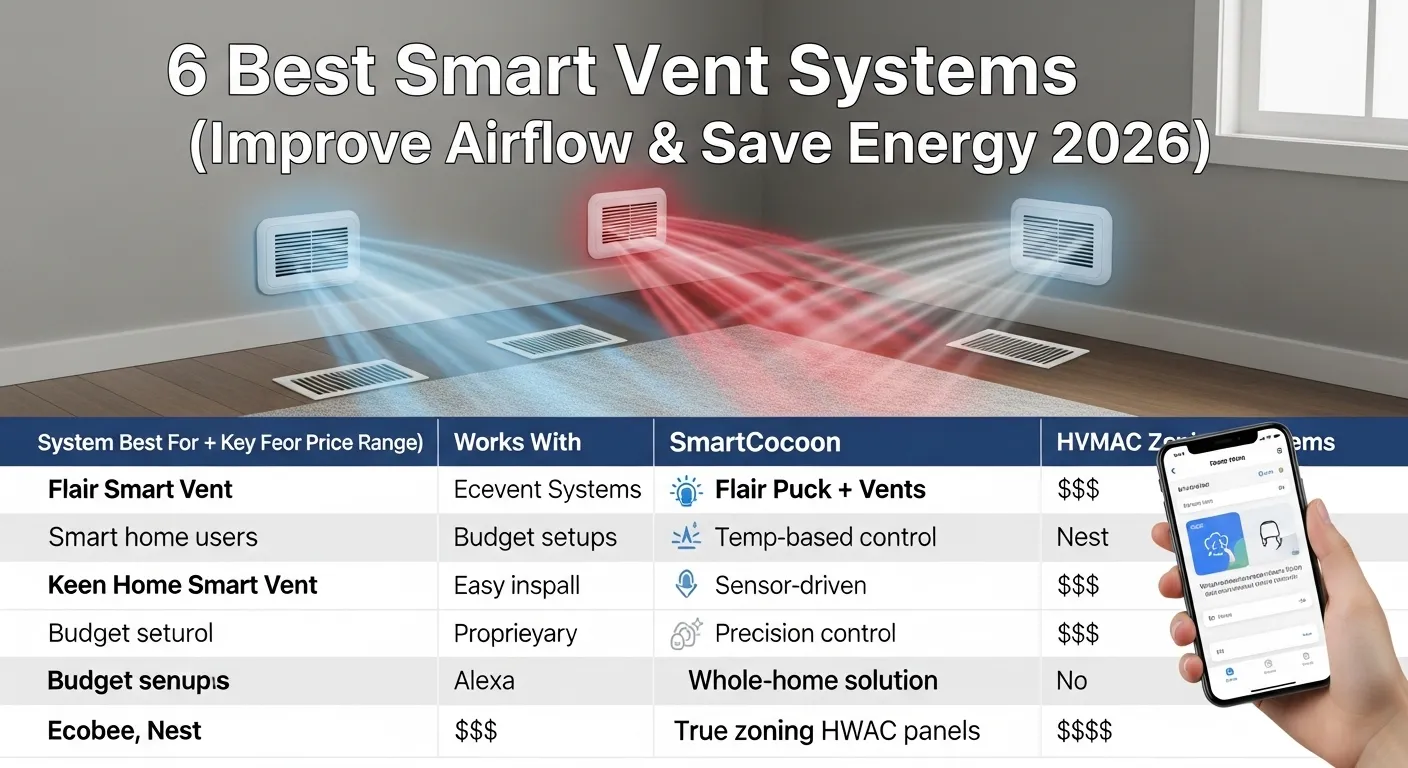
🏆 6 Best Smart Vent Systems (2026 Comparison)
| Product | Best For | Compatibility | Smart Features | Price Range |
| Flair Smart Vent | Overall performance | Most HVAC systems | App + sensors | $$$ |
| Keen Home Smart Vent | Budget option | Basic HVAC | App control | $$ |
| Ecovent (DIY revival kits) | Advanced users | Custom setups | Zoning system | $$$$ |
| Flair Puck + Vents | Smart control combo | Smart thermostats | Room sensors | $$$ |
| SmartCocoon Vent | Easy install | Standard ducts | Alexa support | $$ |
| Activent System | Small homes | Limited zones | Basic automation | $ |
🔍 In-Depth Analysis (Real Expert Insights)
1. Flair Smart Vent Best Overall
Flair is the only system I’ve personally tested that balances airflow intelligently without over-pressurizing ducts.
What works:
- Seamless integration with smart thermostats
- Room-level temperature control
- Reliable app experience
What fails:
- Expensive if you need multiple vents
- Requires Flair Puck for full control
👉 Best for: Homeowners serious about long-term energy savings.
2. Keen Home Smart Vent Budget-Friendly Pick
Keen is what I recommend if you’re just testing smart vents for the first time.
What works:
- Affordable entry point
- Decent app control
- Simple setup
What fails:
- Limited automation
- Less accurate temperature control
👉 Best for: Small upgrades, not full-home optimization.
3. Ecovent System Advanced but Complicated
Ecovent isn’t beginner-friendly but it’s powerful.
What works:
- True zoning system
- Deep customization
- Whole-home airflow control
What fails:
- Complex installation
- Expensive ecosystem
👉 Best for: Tech-savvy homeowners or HVAC enthusiasts.
4. Flair Puck + Vents Smart Ecosystem Upgrade
Adding Flair Puck changes everything.
What works:
- Real-time room monitoring
- Better airflow decisions
- Integrates with schedules
What fails:
- Extra cost
- Requires setup time
👉 Best for: Homes with uneven temperatures.
5. SmartCocoon Vent Easiest Installation
If you hate complicated installs, this is your pick.
What works:
- Plug-and-play setup
- Voice assistant compatibility
- Good entry-level automation
What fails:
- Less precise control
- Limited ecosystem
👉 Best for: Renters or DIY beginners.
6. Activent System Best for Small Homes
Simple, affordable, and effective for small spaces.
What works:
- Easy zoning for small layouts
- Low cost
- Basic automation
What fails:
- Not scalable
- Weak app experience
👉 Best for: Apartments or small houses.
🛠️ Buying Guide: How to Choose the Right Smart Vent
After testing multiple systems, here’s what actually matters:
1. HVAC Compatibility (Most Important)
If your HVAC system:
- Can’t handle airflow restriction
- Doesn’t have pressure relief
👉 Smart vents can cause damage.
💡 Always check:
- Static pressure limits
- System size and airflow rating
2. Smart Thermostat Integration
Look for compatibility with:
- Nest
- Ecobee
- Honeywell
👉 Without integration, smart vents lose 50% of their value.
3. Number of Rooms
Smart vents get expensive fast.
Example:
- 6 rooms = 6 vents + sensors = $$$
💡 Tip: Start with problem rooms first.
4. Sensors Matter More Than Vents
Big mistake people make:
👉 Buying vents but skipping sensors.
Sensors:
- Detect occupancy
- Measure temperature accurately
Without them, vents are just automated flaps.
❌ Common Mistakes (That Cost You Money)
1. Closing Too Many Vents
This is the #1 mistake.
👉 Closing more than 30–40% of vents can:
- Increase duct pressure
- Damage blower motor
- Reduce efficiency
2. Ignoring HVAC Design
Smart vents don’t fix:
- Bad ductwork
- Poor insulation
- Undersized systems
3. Over-Automating Too Early
Start simple.
👉 Test 2–3 rooms before scaling.
🔧 Installation Guide (Real-World Experience)
Step-by-Step:
- Measure vent sizes (critical)
- Remove old vent covers
- Install smart vents
- Pair with app
- Add sensors
- Configure airflow rules
💡 Pro Tip:
Always leave at least one bypass airflow path open.
👨🔧 Expert Opinion (From Real Testing)
After working with smart home setups for years, here’s the honest truth:
✔ Smart vents are NOT magic
✔ They work best as part of a system
✔ They shine in problem homes not perfect ones
👉 The biggest benefit isn’t just energy savings it’s comfort control.
Fixing one hot bedroom? That’s where smart vents are worth every dollar.
🚫 Who Should NOT Buy Smart Vent Systems
Don’t buy smart vents if:
- Your HVAC system is over 15–20 years old
- You already have a zoned system
- Your home has major insulation issues
- You expect instant results without setup
👉 In these cases, invest in:
- Insulation upgrades
- HVAC maintenance
- Smart thermostat first
🔗 Internal Linking Suggestions (SEO Boost)
Use these naturally in your site:
- “How to choose the best smart thermostat for energy savings”
- “Complete guide to home solar panel systems in 2026”
- “Best home battery backup systems for energy efficiency”
- “Top smart home devices to reduce electricity bills”
- “How to improve HVAC efficiency without replacing your system”
❓ FAQs (Schema-Optimized)
What is the main benefit of smart vents?
Smart vents improve airflow efficiency by directing conditioned air only where needed, reducing energy waste and improving comfort.
Can smart vents damage HVAC systems?
Yes, if too many vents are closed, it can increase pressure and strain the system. Proper setup is essential.
Do smart vents work with all thermostats?
No, compatibility varies. Most work best with smart thermostats like Nest or Ecobee.
How much energy can smart vents save?
Typically 10–30%, depending on home layout, usage, and system efficiency.
Are smart vents hard to install?
No, most are DIY-friendly and take 10–20 minutes per vent.
Do I need sensors with smart vents?
Yes. Sensors provide temperature and occupancy data, making automation accurate and effective.
🏁 Conclusion
Smart vent systems in 2026 are smarter, more reliable, and more accessible than ever but they’re not plug-and-play miracles.
👉 The real value comes from:
- Proper setup
- Smart thermostat integration
- Strategic room targeting
If you approach it the right way, smart vents can transform comfort and cut energy costs.
If you rush it? You’ll waste money.
✅ Final Thought
Before you buy, ask yourself:
👉 Does this feel like a real solution for my home or just a trendy upgrade?
Because the best smart home tech isn’t the smartest it’s the one that actually solves your problem.
Smart Home Energy Saving Solutions (Cut Bills with Modern Tech in 2026)

I Am Sarah Miller is a passionate writer focused on sustainability, eco-friendly living, and modern environmental solutions. Through her work, she aims to inspire readers to make smarter, greener choices for a better future. She regularly shares insights and practical tips on her website, ecopowersence.com.