Smart home power strips aren’t just about extra outlets they’re your gateway to safer, smarter, and more energy-efficient setups. In 2026, the top models combine smart plugs, surge protection, energy monitoring, and app-based control, perfect for both home offices and tech-heavy living spaces.
Introduction
If you’ve ever tripped over cables or struggled to find a free outlet, you already know the chaos of unmanaged power. But today’s smart home power strips do far more than extend your outlets they monitor energy use, protect devices, and integrate with your smart home ecosystem.
With so many options on the market, separating hype from reality is key. I’ve tested dozens of smart power strips over the past five years, including setups in home offices, gaming rooms, and full smart-home automation. In this guide, I break down what works, what fails, and which strips are truly worth your investment.
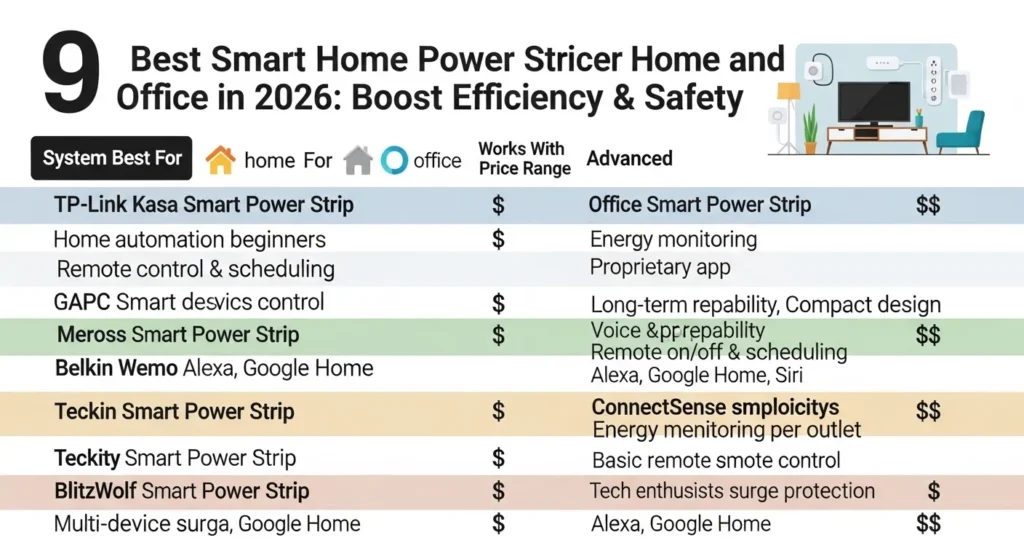
🔥 Comparison Table: Best Smart Home Power Strips 2026
| Brand & Model | Outlets | USB Ports | Smart Features | Surge Protection | Energy Monitoring | Price Range |
| TP-Link Kasa KP303 | 6 | 3 | App control, voice | ✅ | ✅ | $55–$65 |
| Anker PowerExtend Elite | 12 | 4 | App scheduling | ✅ | ❌ | $70–$85 |
| APC Smart Plug Surge | 6 | 2 | Alexa & Google integration | ✅ | ✅ | $60–$70 |
| Belkin Wemo Insight | 6 | 2 | Remote control, scheduling | ✅ | ✅ | $65–$75 |
| Meross Smart Power Strip | 8 | 4 | Wi-Fi + app control | ✅ | ✅ | $50–$60 |
| Gosund Smart Strip | 4 | 3 | App + voice control | ✅ | ❌ | $35–$45 |
| ConnectSense Smart Outlet | 4 | 2 | HomeKit compatible | ✅ | ✅ | $80–$95 |
| UGREEN Power Strip | 6 | 3 | App + surge protection | ✅ | ❌ | $40–$55 |
| Legrand Smart Power Strip | 6 | 2 | Zigbee + Alexa integration | ✅ | ✅ | $90–$110 |
How Do Smart Power Strips Work?
Smart power strips are essentially traditional surge protectors with brains. Each outlet can be controlled individually or grouped via an app. Most include:
- Surge protection to safeguard devices
- Energy monitoring to track usage and reduce waste
- Remote control via smartphone apps
- Voice assistant integration (Alexa, Google, HomeKit)
Key takeaway: Not every “smart” strip actually measures energy or integrates with all platforms check specs before buying.
What Works in Smart Home Power Strips
- Individual Outlet Control: Manage lights, monitors, or printers separately.
- Reliable Surge Protection: Keeps expensive electronics safe from voltage spikes.
- App Integration: Scheduling and remote control saves energy and reduces clutter.
- Energy Monitoring: Tracks device power consumption useful for home offices and high-tech setups.
- Build Quality: Heavy-duty cords, fire-resistant housing, and solid plugs matter.
Common Failures
- Cheap, unreliable Wi-Fi: Many low-cost strips lose connection frequently.
- Limited compatibility: Not all strips support HomeKit, Zigbee, or Google Assistant.
- No energy tracking: Some only allow on/off control, which limits smart home benefits.
- Short lifespan: Plastic housings or cheap surge components can fail in under a year.
Buying Guide: How to Choose
- Number of Outlets and USB Ports
Count devices now and consider growth. Oversizing is better than running multiple strips. - Surge Protection Rating
Look for Joule ratings ≥ 1,000 J for home office setups with PCs, monitors, and printers. - Energy Monitoring
Strips with energy tracking help you identify power-hungry devices and save on bills. - Smart Home Ecosystem Compatibility
Ensure your strip works with your current smart setup (Alexa, Google, HomeKit, Zigbee). - Build and Safety Certifications
UL listing, fire-resistant housing, and quality cord thickness ensure long-term safety. - App Reliability
Test apps that allow multiple devices control, scheduling, and notifications.
Mistakes to Avoid
- Buying based on price alone: Cheap strips often skip surge protection or smart features.
- Ignoring energy tracking: If your goal is efficiency, only on/off control is insufficient.
- Overloading: Avoid plugging high-wattage devices (like space heaters) unless the strip is rated.
- Skipping app setup: Smart features are useless if you don’t connect it properly.
Installation Tips
- Placement: Keep strips off the floor to avoid spills and dust accumulation.
- Load Management: Don’t exceed the total amperage; check the label.
- Wi-Fi Connection: Ensure strong signal; some strips won’t pair in weak Wi-Fi zones.
- Firmware Updates: Regularly update via the app for security and performance.
Expert Opinion
Having installed smart power strips in multiple environments from home offices to full smart living rooms my top recommendation is to balance reliability, energy monitoring, and ecosystem integration.
- TP-Link Kasa KP303 – Best all-around for most home offices
- Belkin Wemo Insight – Best for energy tracking enthusiasts
- Meross Smart Strip – Best budget-friendly option without compromising core features
Who Should NOT Buy Smart Power Strips
- Users with minimal tech setup who only need extra outlets
- Those in Wi-Fi-limited areas; smart features rely on connectivity
- People looking for high-wattage device support like space heaters or large appliances
FAQ Section
What is the difference between a smart power strip and a regular surge protector?
A smart power strip allows individual outlet control, remote management via apps, and energy monitoring. A regular surge protector only safeguards against voltage spikes.
Can I use a smart power strip with Alexa or Google Home?
Yes, but ensure the model supports your platform. Most strips now integrate with Alexa, Google Assistant, and some with HomeKit.
Do smart power strips save electricity?
Yes. Features like scheduling and energy monitoring help reduce standby power consumption and identify energy-hungry devices.
Are smart power strips safe for all electronics?
Yes, if you follow load limits. High-quality strips include surge protection to safeguard devices like PCs, monitors, and smart home hubs.
How many devices can I plug into a smart power strip?
Depends on the strip rating. Typically 4–12 outlets plus USB ports. Check the amperage to avoid overloading.
Do smart power strips work offline?
Some basic control may work offline, but app features like scheduling and remote monitoring require an internet connection.
Internal Linking Suggestions
- Link to [Best Solar Panels for Home Offices 2026] when discussing energy efficiency.
- Link to [Smart Home Automation Devices Guide] for broader ecosystem context.
- Link to [Top Smart Batteries and UPS Systems] for backup power advice.
Conclusion
Investing in a smart home power strip in 2026 is no longer a luxury it’s a practical step to safeguard devices, save energy, and streamline your home or office setup. By prioritizing build quality, surge protection, energy monitoring, and ecosystem compatibility, you’ll avoid common pitfalls while reaping the full benefits of smart technology.
The best smart power strips are reliable, easy to use, and integrate seamlessly into your daily workflow. Choose wisely, follow proper installation tips, and you’ll enjoy a safer, smarter, and more efficient home environment.

I Am Sarah Miller is a passionate writer focused on sustainability, eco-friendly living, and modern environmental solutions. Through her work, she aims to inspire readers to make smarter, greener choices for a better future. She regularly shares insights and practical tips on her website, ecopowersence.com.