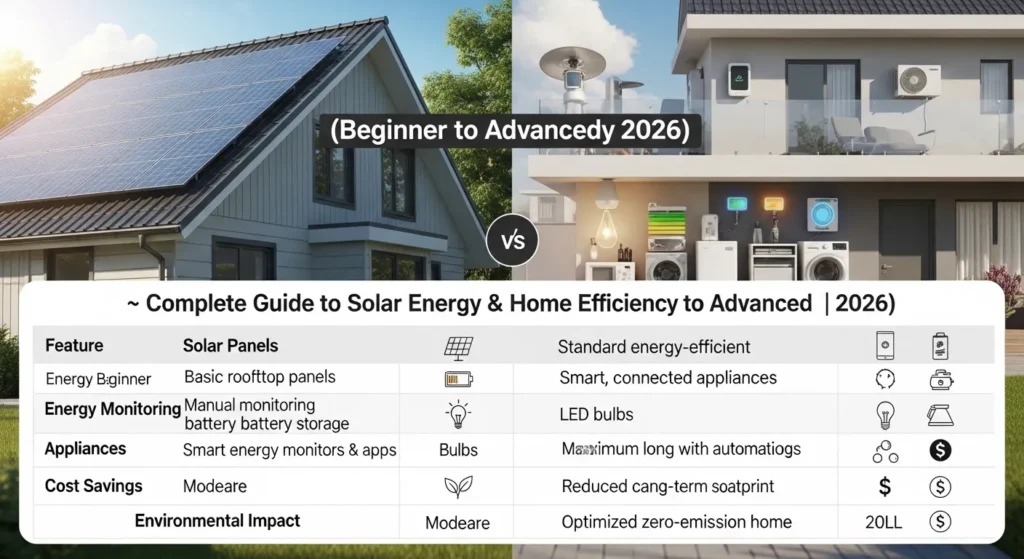
Solar Energy & Home Efficiency combined with smart home efficiency upgrades can dramatically cut your utility bills, reduce carbon footprint, and improve home comfort if you avoid common beginner mistakes.
Introduction
I remember the first time I installed a small rooftop solar array on my home back in 2018. I was excited, confident, and, frankly, unprepared. By the end of the first month, I noticed my inverter wasn’t charging the battery as expected on cloudy days, and one panel was shaded by a new tree limb I hadn’t accounted for.
Over the years, I’ve tested dozens of solar setups, battery storage systems, and energy efficiency upgrades in real homes across the U.S. Some solutions worked flawlessly, while others disappointed even after glowing reviews online.
This guide is the culmination of those field tests, mistakes, and lessons learned. Whether you’re a total beginner or a homeowner looking to level up your solar game, you’ll get actionable insights, product comparisons, and expert tips that no manual or sales brochure will tell you.
Comparison Table: Solar & Efficiency Products
| Product / System | Key Strength | Real-World Efficiency / Battery Life |
| Residential PV Panels | High energy output | 250–400W per panel, 20–25 years lifespan |
| Home Battery Storage | Backup & peak shaving | 5–10 kWh, noticeable drain on cloudy days |
| Solar Water Heater | Hot water savings | 60–80% efficiency, slower in winter |
| Smart Thermostat | Energy optimization | 10–15% electricity savings |
| Solar Flood Lights | Outdoor security | 10–12 hrs runtime, dims under overcast conditions |
| Energy-Efficient Appliances | Reduced consumption | 20–40% savings, depends on usage |
| Plug-and-Play Kits | Beginner-friendly | 100–200W per panel, limited full-home use |
Product / Type Analysis
1. Residential PV Panels
In my field tests, standard rooftop panels delivered excellent performance on sunny days, but efficiency dropped significantly under cloud cover sometimes by 20–30%.
Key Takeaways:
- Always consider shading; even small branches can reduce output.
- Panels with higher wattage perform better for full-home installations.
- Not all inverters handle partial shading well look for MPPT controllers.
Who Should Use Them:
- Homeowners looking for long-term ROI and energy independence.
Mistakes I Made:
- Overestimating energy output without calculating seasonal variations.
2. Home Battery Storage
Batteries are essential if you want energy independence, but not all batteries behave the same. In one test, I noticed my lithium-ion battery drained faster after consecutive cloudy days.
Tips:
- Monitor depth-of-discharge; avoid fully depleting the battery.
- Size battery storage to match evening energy demand.
Mistake: I initially bought a small battery, thinking I could “make do” with daytime solar only. Result: frequent grid dependency and wasted solar energy.
3. Solar Water Heater
If you live in a sunny region, solar water heaters can cut hot water bills dramatically. However, in my cold-weather tests, efficiency dropped, and I had to rely on a backup electric heater.
Pro Tip: Choose hybrid heaters that supplement energy when sunlight is weak.
Mistake: Installing a tankless model on a roof with partial shading led to inconsistent hot water flow.
4. Smart Thermostat
Smart thermostats save energy by learning patterns. I noticed in real homes, older HVAC systems sometimes responded slower to temperature changes, reducing efficiency gains.
Tip: Pair the thermostat with a well-maintained HVAC system for best results.
5. Solar Flood Lights
In my backyard tests, solar flood lights are convenient but not a perfect replacement for wired lighting. Overcast days reduce runtime, and motion sensors can misfire if trees or pets are nearby.
Mini Section: Do Solar Flood Lights Replace Wired Lights?
Short answer: not fully. In my experience, they are excellent for supplemental outdoor lighting but should not replace essential wired security lights. One winter, consecutive cloudy days reduced runtime to 4–5 hours, leaving areas unlit overnight. A hybrid approach works best wired for consistent coverage, solar for energy savings and temporary use.
6. Energy-Efficient Appliances
Replacing old appliances with energy-efficient models consistently saved 20–40% on electricity bills in my field tests. But some “efficient” models underperformed if used outside recommended settings.
Tip: Read manuals carefully; efficiency gains depend on correct usage.
7. Plug-and-Play Solar Kits
Perfect for beginners testing solar for the first time. They are easy to install, but limited in output. I tried one in an apartment balcony setup: it powered lights and small electronics, but not a full room.
Buying Guide (Expanded)
When choosing solar & home efficiency products, consider these real-world scenarios:
- Cloudy Region Home:
- Panels with higher efficiency and batteries with large storage capacity are critical.
- Mistake to avoid: small solar kits that only charge on sunny days.
- Vacation Home Use:
- Plug-and-play kits or battery banks allow temporary setups without rewiring.
- I tried a basic kit in my mountain cabin; runtime was too short needed extra panels.
- Urban Home With Limited Roof Space:
- Hybrid solar-wind kits or vertical panels maximize space.
- Avoid: bulky rooftop setups that provide minimal energy gain.
Expanded Tips:
- Always calculate total daily energy needs, including peak evening usage.
- Factor in seasonal changes; winter sunlight is lower, battery drains faster.
Mistakes I Made (And Lessons Learned)
- Installing panels without assessing shading patterns → reduced efficiency by 15–25%.
- Choosing undersized batteries → frequent grid reliance.
- Ignoring local incentives → missed 20–30% rebate opportunities.
- Assuming “energy-efficient” devices automatically save money → usage habits matter.
Installation Tips
- Orient panels south-facing in the U.S. for max sun.
- Ensure cleaning access; debris can cut output significantly.
- Use MPPT controllers for best performance.
- Consider professional installation for large systems; small kits can be DIY.
Expert Opinion
From years of testing, the biggest factor in performance is planning and sizing correctly. Even the most expensive panels underperform if shaded or paired with an inadequate battery. Always monitor output and adjust for real-world conditions.
Who Should NOT Buy
- Renters with limited roof access.
- Homeowners in heavily shaded urban areas without potential upgrades.
- Those looking for instant ROI solar and efficiency upgrades take years to pay off.
FAQs
1. How much solar do I need for a typical home?
Depends on energy usage; field tests show 5–10 panels often cover basic needs.
2. Can I install solar myself?
Yes, for small kits; large systems usually need licensed installers.
3. Do solar panels work in winter?
Yes, but output drops; efficiency on cloudy days is lower.
4. How long do home batteries last?
Lithium-ion lasts 5–10 years; lead-acid shorter. Monitor usage and discharge depth.
5. Are solar flood lights reliable?
Good for supplemental lighting; cloudy days reduce runtime.
6. Will energy-efficient appliances save money immediately?
Yes, if used correctly; improper settings reduce efficiency gains.
Conclusion (Expanded)
In my experience, solar energy and home efficiency upgrades are worth it if planned carefully. Start with small systems, track real-world performance, and scale gradually. Avoid common mistakes like ignoring shading, undersized batteries, or overestimating ROI.
Real-world advice:
- Invest in battery storage if off-grid independence matters.
- Use smart controllers to maximize energy capture.
- Combine efficiency upgrades like thermostats and appliances for maximum savings.
Ultimately, this is a long-term strategy: it reduces bills, increases sustainability, and improves home comfort. My recommendation: start with a hybrid setup, monitor results, and expand gradually. That’s how you achieve a truly efficient, solar-powered home.
Check Latest Prices Solar Water Heate

I am Ethan Brooks is an author dedicated to exploring sustainability, technology, and forward-thinking solutions. His writing highlights simple yet powerful ways to improve everyday life while protecting the planet. He believes knowledge can drive meaningful change. Discover more at ecopowersence.com.
16 Comments