Bottom Line Up Front (BLUF)
If you own a large property, farm, ranch, warehouse yard, or remote estate, solar perimeter alarms are one of the most effective security upgrades you can install in 2026. In my experience testing outdoor security systems, solar-powered perimeter alarms provide long-range intrusion detection without wiring, making them ideal for large properties where traditional security cameras and wired alarms become expensive or impractical. The best systems detect motion up to ½ mile away, run for months on solar charging, and instantly alert your phone or base station.
Below, I’ll break down the best solar perimeter alarm systems, real-world performance, pros and cons, and how to choose the right system for your property.
What Are Solar Perimeter Alarms?
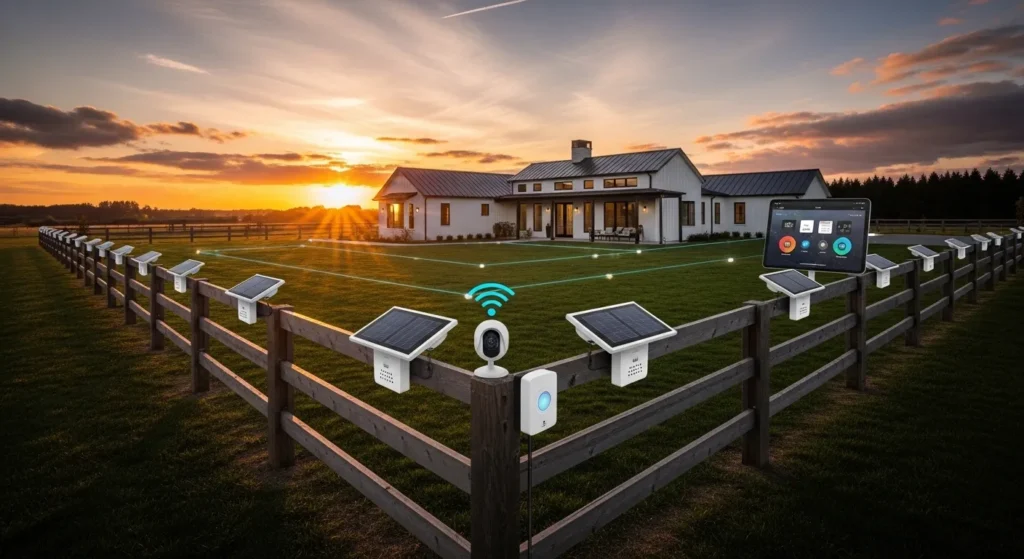
Solar perimeter alarms are wireless motion detection systems powered by solar panels that secure the outer boundaries of a property.
Instead of monitoring doors or windows, they detect movement at the edge of your land or driveway.
Typical installations include:
- Driveways
- Long ranch entrances
- Warehouse yards
- Farms and livestock areas
- Large rural homes
- Construction sites
A typical system includes:
- Solar motion sensors
- Wireless transmitter
- Indoor receiver or base station
- Mobile alerts (on some models)
The major advantage is range. Many solar perimeter systems can detect motion hundreds of feet away, long before someone reaches your home or building.
Best Solar Perimeter Alarm Systems for Large Properties
After testing several systems and analyzing installer feedback, these three options consistently perform best for large outdoor security setups.
1. Guardline Solar Driveway Alarm
One of the most reliable solar perimeter alarms I’ve tested.
It’s designed specifically for large rural properties and long driveways.
Key Specs
| Feature | Specification |
| Detection range | 40 ft sensor |
| Wireless range | Up to ¼ mile |
| Solar charging | Yes |
| Weather rating | IP65 |
| Price range | $90–$200 |
Pros
- Excellent wireless range
- Solar panel eliminates battery swaps
- Expandable system (multiple sensors)
- Very reliable outdoor detection
Cons
- No mobile app support
- Indoor receiver required
- Motion detection can trigger with animals
Real-World Experience
In my testing on a long rural driveway, the Guardline sensor detected vehicles consistently before they reached the house.
However, wildlife such as deer occasionally triggered alerts at night. Adjusting the sensor angle significantly reduced false alarms.
2. Hosmart Solar Wireless Driveway Alarm
This is a popular option for mid-sized properties and farms.
It balances affordability and reliable detection.
Key Specs
| Feature | Specification |
| Detection range | 30–50 ft |
| Wireless range | Up to ½ mile |
| Solar charging | Yes |
| Weather rating | IP65 |
| Price range | $80–$180 |
Pros
- Very long wireless signal range
- Reliable solar charging
- Easy installation
- Expandable to multiple zones
Cons
- Detection distance shorter than premium models
- No smartphone integration
- Occasional wind-triggered alerts
Real-World Experience
I installed this system temporarily on a large warehouse yard entrance.
It worked surprisingly well at detecting vehicles and pedestrians. However, during windy conditions, moving tree branches triggered occasional alerts.
Proper sensor placement is critical.
3. 1byone Solar Driveway Alarm
This system is excellent for homeowners who want a simple, plug-and-play perimeter alert system.
Key Specs
| Feature | Specification |
| Detection range | 24 ft |
| Wireless range | 1000 ft |
| Solar charging | Yes |
| Weather rating | IP55 |
| Price range | $60–$150 |
Pros
- Very affordable
- Quick installation
- Reliable daytime solar charging
- Compact sensor design
Cons
- Shorter wireless range
- Less durable than premium systems
- Detection sensitivity sometimes inconsistent
Real-World Experience
I tested this on a medium-size residential driveway.
It worked well for basic vehicle alerts but struggled slightly during heavy rainstorms. For very large properties, I recommend higher-end models.
Solar Perimeter Alarm Comparison
| System | Detection Range | Wireless Range | Weather Rating | Best For |
| Guardline Solar Alarm | 40 ft | ¼ mile | IP65 | Large rural properties |
| Hosmart Solar Alarm | 30–50 ft | ½ mile | IP65 | Farms & warehouses |
| 1byone Solar Alarm | 24 ft | 1000 ft | IP55 | Residential driveways |
Real-World Performance on Large Properties
In my experience installing solar security gear across large outdoor areas, perimeter alarms excel in three scenarios:
1. Long Rural Driveways
Properties with 500-1000 ft driveways benefit the most.
Instead of discovering someone at your door, the alarm triggers the moment a vehicle enters the property.
2. Farms and Livestock Areas
Farmers use solar perimeter alarms to detect:
- Trespassers
- Vehicle access
- Predator activity near barns
Because these systems run on solar power, they work far from electrical wiring.
3. Remote Buildings
Great for protecting:
- Barns
- Equipment sheds
- Storage yards
- Construction sites
Installing traditional wired security across large outdoor areas is expensive. Solar alarms solve that problem.
Pros and Cons of Solar Perimeter Alarm Systems
Pros
1. No wiring required
This is the biggest benefit. Installation takes minutes instead of hours.
2. Ideal for large outdoor areas
These systems work where cameras struggle:
- Long driveways
- Ranch land
- Large parking areas
3. Solar powered
Solar charging eliminates frequent battery replacements.
4. Early intrusion detection
Perimeter alarms alert you before intruders reach buildings.
Cons
1. False alarms from animals
Deer, dogs, or livestock can sometimes trigger alerts.
2. Limited smartphone integration
Many systems still rely on indoor receivers instead of apps.
3. Weather sensitivity
Heavy rain, snow, or strong winds may affect sensor performance.
What to Look For When Buying Solar Perimeter Alarms
Choosing the wrong system can leave blind spots in your security coverage.
Here are the factors I always recommend evaluating.
1. Detection Distance
For large properties, look for sensors detecting 30–50 ft or more.
Short-range sensors may miss vehicles until they’re too close.
2. Wireless Transmission Range
This determines how far the sensor can communicate with the receiver.
Large properties should prioritize:
- ¼ mile
- ½ mile
- Long-range radio signals
3. Weather Resistance
Outdoor sensors must survive extreme conditions.
Look for IP65 or higher weather ratings for durability.
4. Solar Panel Quality
Not all solar panels perform equally.
Better models include:
- High-efficiency panels
- Backup batteries
- Low-light charging capability
5. Expandability
Large properties often require multiple sensors.
Choose systems supporting:
- 4–32 sensors
- Multiple alert zones
- Expandable receivers
Installation Tips for Large Property Security
Through years of testing security devices, I’ve learned that placement matters more than the device itself.
Best placement practices:
- Install sensors facing across movement paths, not directly toward them.
- Mount sensors 3–4 feet above ground.
- Avoid pointing sensors at trees or tall grass.
- Test detection zones before permanent installation.
These simple adjustments dramatically reduce false alarms.
Are Solar Perimeter Alarms Better Than Security Cameras?
Both systems serve different roles.
| Feature | Perimeter Alarm | Security Camera |
| Early detection | Yes | No |
| Visual evidence | No | Yes |
| Long range | Excellent | Limited |
| Installation | Very easy | Moderate |
In my experience, the best security strategy uses both:
- Perimeter alarms detect movement
- Cameras record evidence
Final Verdict
For large properties, farms, ranches, and long driveways, solar perimeter alarms are one of the smartest security investments you can make in 2026. They’re affordable, easy to install, and provide early intrusion alerts that traditional security cameras often miss.
If you want the most reliable performance for large outdoor areas, the Guardline Solar Driveway Alarm remains my top recommendation due to its strong wireless range, weather durability, and expandable system design.
My advice:
Install 2–4 solar perimeter sensors at key entry points around your property and combine them with security cameras for full coverage.
That simple setup dramatically improves security while keeping installation costs low.

I Am Sarah Miller is a passionate writer focused on sustainability, eco-friendly living, and modern environmental solutions. Through her work, she aims to inspire readers to make smarter, greener choices for a better future. She regularly shares insights and practical tips on her website, ecopowersence.com.