To keep a tent cool in summer without electricity, start before the heat enters.
Pitch your tent in afternoon shade. Raise a reflective tarp above it. Keep an air gap between the tarp and tent. Open mesh vents for cross-breeze. Remove the rainfly only when the forecast is dry.
Then cool your body with water, loose clothing, light bedding, and rest during peak heat.
A tent is not like a house. It has thin fabric, little insulation, and limited air volume. Once the sun heats the fabric, the inside can feel like a small greenhouse.
So your goal is simple: block sunlight, move air, reduce stored heat, and protect your body from heat stress.
Why Tents Get So Hot in Summer
Tents heat up quickly because fabric absorbs solar energy.
Direct sun hits the tent roof and walls. The fabric warms up, then radiates heat inside. At the same time, warm air gets trapped under the roof.
Small tents feel hotter because there is less air volume. Dark tents also heat faster than light-colored tents.
Poor ventilation makes the problem worse. Without airflow, sweat evaporates slowly, moisture builds up, and the tent feels sticky.
Choose the Right Campsite First
Your campsite choice matters more than any cooling trick.
A tent pitched in full afternoon sun will get hot, even with good gear. A tent pitched in deep shade with airflow can feel much better.
Pick Afternoon Shade
Morning sun is easier to manage. Afternoon sun is stronger and hotter.
Look for shade that covers your tent from noon to sunset. Trees, cliffs, boulders, and natural landforms can all help.
Do not judge shade only when you arrive. The sun moves during the day. Stand at the site and imagine where the shadow will fall later.
The U.S. Department of Energy explains that shade can reduce solar heat gain. That same passive-cooling principle works for tents too. You can read their guidance on landscapingfor shade.
Face the Door Toward the Breeze
Before pitching, check the wind direction.
Watch grass, leaves, smoke, or dust. You can also wet one finger and hold it up to feel the breeze.
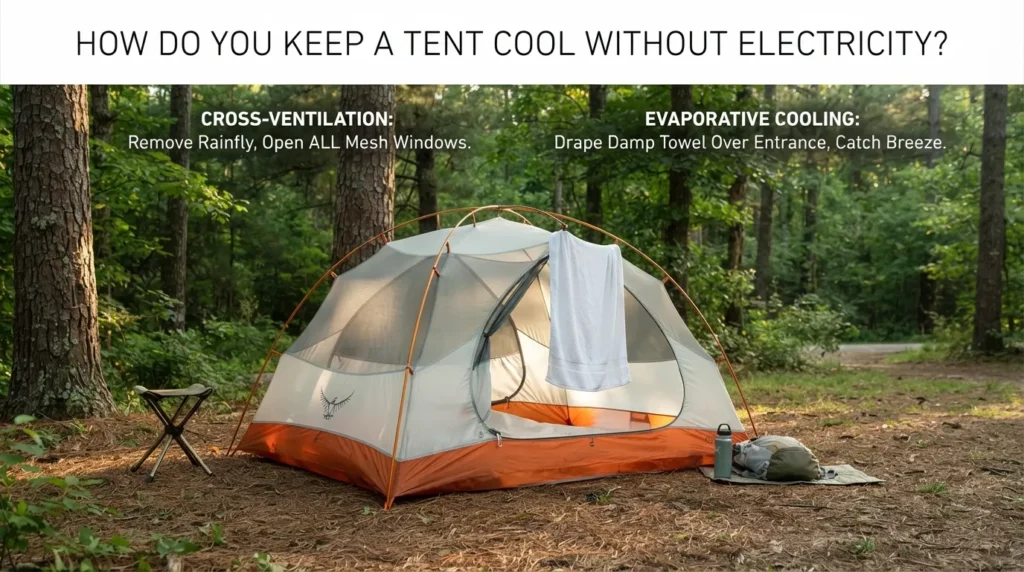
Point the main mesh door toward the airflow. Open a rear window or roof vent on the opposite side. This creates cross-ventilation.
Even a light breeze can make the tent feel less trapped.
Avoid Hot Ground
Do not pitch on asphalt, concrete, exposed gravel, or bare rock in direct sun.
These surfaces store heat during the day. At night, they release that heat back into your tent.
Shaded soil, forest floor, dry grass, or an established campsite usually feels cooler.
Stay Near Water, But Not Too Close
Water can cool the local air slightly. However, do not pitch directly beside lakes, rivers, or streams.
Leave No Trace recommends camping on durable surfaces and staying away from fragile water edges when possible. The National Park Service also promotes low-impact camping through its LeaveNo Trace principles.
A good rule is to camp about 200 feet from water where practical.
This protects wildlife paths, vegetation, and water quality.
For more low-impact outdoor habits, read our guide to sustainablecamping tips.
Use a Reflective Tarp Above the Tent
A reflective tarp is one of the best ways to cool a tent without electricity.
But placement is everything.
Do not place the tarp directly on the tent. That traps heat. Instead, hang it above the tent with open space underneath.
How to Set Up the Tarp
Hang a silver, white, or light-colored tarp 12 to 24 inches above your tent.
Tie it to trees, poles, trekking poles, or a canopy frame. Keep the sides open so hot air can escape.
Angle one side slightly lower. This helps rain drain away if the weather changes.
The tarp should cover the tent roof and the sun-facing wall. This blocks the strongest heat before it reaches your tent fabric.
Why the Air Gap Matters
The tarp blocks direct sunlight.
The air gap lets hot air move away before it heats the tent body. Without that gap, the tarp can act like a hot blanket.
The EPA explains that reflective surfaces reduce heat absorption by reflecting more solar energy. Their coolroof guide explains this principle in buildings, but the same idea helps with camping tarps.
Best Tarp Color for Summer Camping
Use silver, white, light gray, or reflective material.
Avoid black tarps in full sun. Black material absorbs heat and can radiate warmth downward.
If you use an emergency blanket, keep the shiny side facing outward. Secure it well because thin foil blankets tear easily in the wind.
Improve Airflow Inside the Tent
Ventilation removes trapped heat and moisture.
The best setup lets cool air enter low and warm air escape high.
Open Mesh Doors and Windows
Use mesh panels whenever possible.
Mesh allows airflow while keeping insects out. If privacy is not an issue, unzip the solid fabric panels and leave the mesh closed.
This single step can make the tent feel less stuffy.
Open Roof Vents
Hot air rises.
If your tent has roof vents, open them fully. They allow warm air to escape from the top of the shelter.
If your rainfly has vents, prop them open. Guy out the rainfly so it sits away from the inner tent.
That small gap improves airflow.
Create Cross-Ventilation
Open two opposite sides of the tent.
One opening brings air in. The other lets hot air leave.
This works best when the door faces the breeze. Even weak airflow helps reduce humidity and trapped heat.
Remove the Rainfly Only When Safe
A rainfly protects against rain and dew. But it also traps heat.
On dry, clear nights, removing the rainfly can cool the tent quickly. However, always check the forecast first.
If rain or dew is likely, loosen the fly instead. Stake it wider and use guy lines to create more airflow.
Take the Tent Down During the Day
This method works well at festivals, car camps, and long summer base camps.
If you do not need the tent during the day, take it down after sunrise. Store it in the shade. Re-pitch it near sunset.
This stops the fabric, floor, and bedding from baking for hours.
It takes extra effort, but the difference can be huge in extreme heat.
Only use this method where campsite rules allow it. Also, keep your gear secure.
Choose a Summer-Friendly Tent
Some tents handle heat better than others.
You do not always need a new tent. But if you camp often in summer, design matters.
Look for Large Mesh Panels
A good summer tent should have mesh doors, mesh windows, and roof ventilation.
More mesh means more airflow. It also reduces condensation at night.
Double-wall tents can still work well if the rainfly is raised, loosened, or removed in dry weather.
Choose Light Colors
Light-colored tents reflect more sunlight.
White, tan, light gray, and pale green usually stay cooler than black, navy, or dark red.
Dark tents may look stylish, but they are not ideal for summer heat.
Use the Right Tent Size
A tiny tent heats up fast.
A slightly larger tent gives warm air more space to move. It also helps sleepers stay apart, which reduces body heat buildup.
For backpacking, balance comfort with weight. For car camping, choose more interior space when possible.
REI has a useful guide on choosinga camping tent if you are comparing shapes, sizes, and seasonal ratings.
Keep the Ground Cooler
The ground under your tent affects comfort more than many campers realize.
Hot ground radiates heat upward. Damp ground increases humidity.
Use a Proper Tent Footprint
A footprint protects the tent floor and adds a small barrier from the ground.
Keep it fully tucked under the tent. Do not let it stick out beyond the edges.
Exposed groundsheet edges can collect rain and moisture.
Avoid Black Plastic Sheets
Black plastic heats up fast in direct sun.
If you need an extra ground layer, choose a light-colored material. Keep it shaded whenever possible.
Sleep on a Cot or Breathable Pad
A camping cot allows air to move under your body.
This can feel cooler than sleeping directly on a foam pad. For backpacking, use a lightweight pad and a thin sheet instead of a heavy sleeping bag.
A hammock can also feel cooler where it is allowed. Use wide tree straps to protect bark.
Cool Your Body, Not Just the Tent
A cooler tent helps, but body cooling matters most.
Your body can overheat even if your tent setup looks perfect. Heat risk rises when temperature, humidity, and sun exposure combine.
The CDC recommends staying hydrated, staying cool, and watching for heat illness during hot weather. Their heatand health guidance is worth reading before summer trips.
Drink Before You Feel Thirsty
Keep water close all day.
Sip often instead of waiting for a strong thirst. In hot weather, thirst can arrive late.
Your urine should usually look pale yellow. Dark urine can signal dehydration.
Limit alcohol during high heat. It can make dehydration worse.
Use a Wet Bandana
Wet a bandana or cooling towel and place it on your neck.
You can also cool your wrists, temples, and inner elbows. These areas help you feel relief quickly.
In dry climates, evaporation works well. In humid climates, it works less effectively, but cool water still helps.
Rinse Before Bed
A quick rinse before sleeping can lower skin temperature.
If you use natural water sources, follow local rules. Do not use soap directly in lakes, rivers, or streams.
Carry water away from the source before washing.
If safe drinking water is a concern on longer trips, our guide to a solar-poweredwater purifier for backpacking may help.
Wear Loose, Light Clothing
Choose breathable and light-colored clothing.
Loose clothing allows air to move across your skin. Light colors reflect more sunlight during the day.
At night, sleep in a thin shirt, shorts, or a light base layer.
Replace the Sleeping Bag With a Sheet
Most summer campers do not need a full sleeping bag.
Use a cotton sheet, silk liner, or lightweight sleeping bag liner. Keep the sleeping bag nearby only if temperatures drop.
This reduces trapped body heat inside the tent.
Use Water-Based Cooling the Right Way
Water helps, but it can also make your tent humid.
Use water on your body more than on your shelter.
Mist Your Skin
A small spray bottle can help in hot weather.
Mist your face, neck, arms, and legs. Avoid soaking tent walls or bedding.
Wet fabric inside the tent can increase condensation and odor.
Hang a Damp Cloth in Dry Heat
In dry climates, a damp cloth near an open vent may cool incoming air slightly.
This is basic evaporative cooling. It works best when humidity is low and airflow is steady.
In humid weather, skip this method. It can make the tent feel sticky.
Use Frozen Water Bottles
If you have a cooler, freeze water bottles before the trip.
At night, wrap one in a towel and place it near your feet or core. As it melts, you also gain drinking water.
This method does not need campsite electricity.
Use Solar Gear Only as a Bonus
This article focuses on cooling without electricity.
Still, some campers mean “without campsite hookup,” not “without any battery.” In that case, a small solar generator can help.
A best solar tent fan can improve airflow when the natural breeze is weak. It works best when paired with shade and open vents.
For longer off-grid trips, a portable solar power bank for backpacking can charge small devices without relying on campsite power.
If you hike to remote campsites, you may also find our solar panels for hiking guide useful.
Just remember one thing: solar gadgets support comfort, but they do not replace shade, hydration, and heat awareness.
What Not to Do
Some cooling tricks sound helpful, but cause problems.
Avoid these mistakes.
Do Not Seal a Tarp Around the Tent
A tarp should shade the tent, not wrap it.
If you seal the sides, hot air gets trapped. Always leave airflow gaps.
Shade without ventilation can make the tent hotter.
Do Not Dig Trenches or Pits
Old camping advice sometimes suggests digging around the tent.
Avoid this. It damages campsites, increases erosion, and violates low-impact camping ethics in many areas.
Use existing durable campsites instead.
Do Not Camp Too Close to Water
A lakeside breeze feels nice, but water edges are fragile.
Camping too close can damage plants, disturb wildlife, and increase bugs. It can also increase condensation around your tent.
Stay back when possible.
Do Not Rely on Ice Alone
A bowl of ice will not cool a tent for long.
It melts quickly and can add moisture. It may help briefly in a tiny tent, but it is not a real cooling system.
Do Not Ignore Heat Illness
A hot tent can become dangerous.
The National Weather Service lists heat exhaustion symptoms such as heavy sweating, dizziness, weakness, nausea, headache, and fainting. Heat stroke can involve confusion, hot skin, loss of consciousness, and very high body temperature.
Read the NWS guide toheat illness symptoms.
If someone becomes confused, stops responding normally, or shows heat stroke signs, seek emergency help fast.
No-Electricity Tent Cooling Checklist
Use this checklist before sunset.
Campsite Checklist
- Choose afternoon shade.
- Avoid asphalt, concrete, and exposed rock.
- Face the tent door toward the breeze.
- Use an existing durable campsite.
- Stay away from fragile water edges.
Tent Setup Checklist
- Use a light-colored tent if possible.
- Open mesh doors and windows.
- Open roof vents.
- Raise a reflective tarp above the tent.
- Keep a 12 to 24-inch air gap.
- Loosen or remove the rainfly only when safe.
Sleep Setup Checklist
- Use a sheet instead of a sleeping bag.
- Sleep on a cot, hammock, or breathable pad.
- Keep water within reach.
- Use a wet bandana on your neck.
- Wear loose, breathable clothing.
Daytime Checklist
- Take the tent down if allowed.
- Store bedding in shade.
- Avoid hard activity during peak heat.
- Drink water regularly.
- Re-pitch near sunset.
Best Gear for Keeping a Tent Cool Without Electricity
You do not need expensive gear.
A few simple items can make a big difference.
Reflective Tarp
This is the most useful item.
Choose a tarp large enough to shade the roof and sun-facing wall. Add strong guylines and stakes.
Extra Guylines
Guylines help create the air gap above your tent.
They also stop the tarp from sagging onto the fabric.
Lightweight Sheet
A sheet or sleeping liner replaces a heavy sleeping bag.
It packs small and reduces trapped body heat.
Wide-Mouth Water Bottle
A wide-mouth bottle is easy to refill and freeze.
It can also work as a cold pack when wrapped in a towel.
Cooling Towel or Bandana
A simple bandana works well.
Wet it, wring it out, and place it on your neck or wrists.
Solar Lantern
A solar lantern will not cool the tent, but it reduces battery waste and keeps your setup simple.
For low-power camp lighting, check our guide to the best solar lanterns for patio camping.
Festival Camping: How to Keep the Tent Cool
Festival camping is harder because shade is limited.
You often camp in open fields. The ground heats quickly. Crowds also make airflow worse.
Use this setup:
- Arrive early and choose the least exposed legal spot.
- Raise a reflective tarp or canopy above the tent.
- Keep all tarp sides open for airflow.
- Open every mesh vent.
- Remove bedding during the day.
- Keep drinking water beside your sleeping area.
- Sleep early when the air starts cooling.
If the festival allows canopies, a shade canopy over the tent works better than a small tarp.
Beach Camping: How to Keep the Tent Cool
Beach camping brings sun, glare, wind, and salt air.
Pitch above the tide line and follow local rules. Use sand anchors instead of normal stakes.
Face the tent toward the sea breeze. Raise a reflective tarp above the tent, but secure it well.
Coastal wind can tear loose fabric quickly.
Avoid sealing the tent. Sand already holds heat, so airflow is essential.
Desert Camping: How to Stay Cool Without Electricity
Desert camping needs shade, airflow, and timing.
Camp where rules allow, but avoid dry washes. Flash floods can happen even if the sky above you looks clear.
Use a reflective tarp with a large air gap. Open all vents. Wet a bandana and let evaporation cool your skin.
Do camp chores in the morning and evening. Rest during peak heat.
Desert nights can drop fast, so keep a light layer nearby.
Humid Weather: What Works Best?
Humid heat is difficult because sweat evaporates slowly.
In this climate, airflow matters more than wet towels. A soaked towel inside the tent can make everything feel damp.
Choose the breeziest legal campsite. Open every mesh panel. Sleep with space between people.
Use light bedding and drink water often.
If the night stays hot and still, think carefully before camping with children, pets, older adults, or anyone with health issues.
When Is It Too Hot to Camp?
Sometimes the safest decision is changing the plan.
Avoid camping when heat alerts are active, nights stay hot, water is limited, or shade is unavailable.
Be extra careful with:
- Young children
- Older adults
- Pregnant campers
- Pets
- People with heart, lung, kidney, or metabolic conditions
- Anyone taking heat-sensitive medication
If a person becomes confused, faints, vomits repeatedly, or stops sweating normally in extreme heat, leave the tent and seek urgent help.
Final Verdict: Block Heat First, Then Move Air
The best way to keep a tent cool in summer without electricity is to use passive cooling.
Start with shade. Add a reflective tarp above the tent. Face the door toward the breeze. Open mesh vents. Loosen the rainfly. Keep bedding light.
Then focus on your body. Drink water, rest during peak heat, wear loose clothing, and cool your neck or wrists.
One trick may help a little. A complete setup works much better.
When you combine smart campsite choice, airflow, reflective shade, and heat-safety habits, your tent becomes cooler, safer, and far more comfortable.
FAQs
Can a tent be cooler than the outside air?
Usually, a tent cannot become much cooler than the outside air without active cooling. However, shade and airflow can stop extra heat buildup and make the tent feel cooler.
Does putting a tarp over a tent keep it cool?
Yes, but the tarp must sit above the tent with an air gap. A tarp touching the tent can trap heat.
What color tent is best for summer?
Light-colored tents are best for summer. White, tan, light gray, and pale green usually stay cooler than dark colors.
Should I remove the rainfly in hot weather?
Remove it only when the weather is dry and stable. If rain or dew is possible, loosen the rainfly instead.
How do I keep a tent cool at night?
Open vents, loosen the rainfly, use a sheet instead of a sleeping bag, sleep on a breathable pad, and use a damp bandana on your neck.
Can wet towels cool a tent?
Wet towels can help in dry climates with airflow. In humid climates, they often make the tent feel damp and sticky.
Is a solar tent fan useful?
Yes, a solar tent fan can improve airflow. It works best with shade, open mesh vents, and a raised tarp.
Is it safe to sleep in a hot tent?
It depends on the heat, humidity, airflow, and your health. If you feel dizzy, weak, nauseous, confused, or faint, leave the tent and cool down immediately.

I Am Sarah Miller is a passionate writer focused on sustainability, eco-friendly living, and modern environmental solutions. Through her work, she aims to inspire readers to make smarter, greener choices for a better future. She regularly shares insights and practical tips on her website, ecopowersence.com.